
24/7 Customer Support

Free returns

Same-day & Next-day Delivery

Quality Guaranteed

Unlock Your Welcome Offers: FREE Delivery | Up to 80% OFF | Free 30-day JoyPlus trial
Download the APP
A non-contact forehead thermometer can make temperature checks easier when a baby is asleep, a child is unsettled or an older adult needs monitoring. However, not every digital infrared thermometer offers the same flexibility. Some are designed only for body temperature, while others can also check milk, food, bath water or room temperature.
The right choice depends on measurement modes, display clarity, cleaning requirements and how the device behaves at night. This guide explains the main buying pitfalls, the specifications worth checking and our top recommendations for 2026.
A product may advertise an instant temperature reading, but speed alone does not tell you whether the device is suitable for your household. Infrared thermometers rely on correct distance, positioning and environmental conditions. Cold rooms, direct sunlight, perspiration or an incorrect angle can affect the result.
Look for clear instructions covering forehead distance, measurement position and when to repeat a reading. A distance guide or positioning sensor may be useful, particularly for parents checking a moving child.
Some products describe themselves as an ear and forehead thermometer but do not include an object mode. If you want to check milk, food, bath water or room temperature, confirm that “object temperature” is listed as a dedicated function.
Object mode measures a surface or nearby item rather than internal body temperature. It should not be used as a substitute for a body reading and the instructions should explain the appropriate distance and conditions.
A loud fever alert can wake a sleeping baby, while a small display may be difficult for an elderly user to read. Features such as silent mode, a backlit screen, colour indicators and vibration alerts can make regular checks more manageable.
Also check whether the probe can be wiped clean, whether batteries are included and whether a storage case is supplied. A thermometer that is difficult to clean or easy to misplace may become inconvenient after the first few weeks.
For general family use, a thermometer for adults and children may offer forehead measurement with no skin contact. Some models add ear measurement for users who prefer a second body-temperature method. Object mode is helpful for checking the temperature of baby milk, food, bath water and rooms, but it is not equivalent to body mode.
A pen-style contact thermometer can also be useful as a simple backup. It normally takes longer than a digital infrared thermometer and requires correct placement, but it may suit households looking for a compact fever thermometer for a medicine cabinet.
A large LED or LCD screen is easier to read in dim bedrooms and by users with reduced vision. Colour-coded backlighting can provide a quick visual indication based on the device’s configured thresholds, while beeps or vibration confirm that a reading is complete.
For repeated monitoring, check the number of stored readings. A 35-reading memory can help compare measurements over time, although records should be interpreted alongside the thermometer’s instructions and, where appropriate, medical advice.
Choose a smooth, wipeable ABS body and follow the supplied cleaning instructions. Do not immerse the complete device in water unless the manufacturer specifically states that it is waterproof. Keep AAA or coin-cell batteries away from children and dispose of them through appropriate UK recycling facilities.
For products marketed as a medical thermometer, review the packaging and documentation for the applicable UK conformity information, responsible-person details and instructions for use. A CE mark alone should not be treated as a guarantee of a particular reading in every situation. Temperature results are for reference and do not replace medical diagnosis.
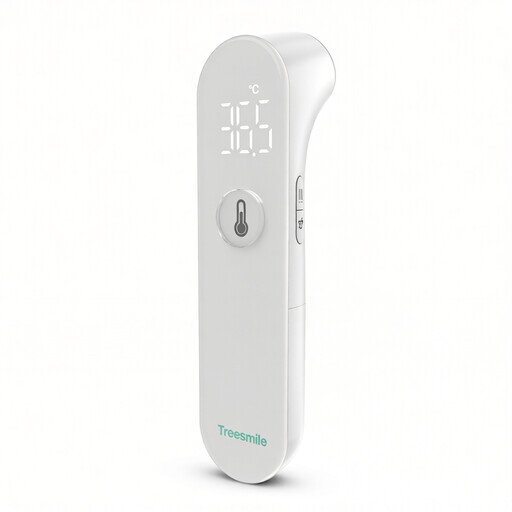
Why This Fits Their Persona: A straightforward option for a first family thermometer, with forehead and object modes for everyday checks at home or while travelling.
It clearly provides a separate object-temperature mode and includes a one-key mute function, helping avoid confusion between body checks and household temperature checks.
Forehead and object modes, large LED display, 35 memory sets, two included AAA batteries and a storage bag.
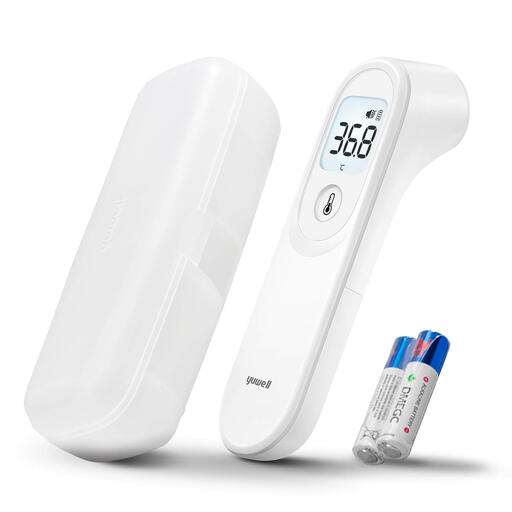
Why This Fits Their Persona: Designed for users who prioritise guided forehead positioning, a large backlit display and quieter operation for regular household monitoring.
A distance detection sensor is listed to guide positioning, while mute mode helps reduce disruption during night-time readings.
One-button operation, 1-second display, Celsius/Fahrenheit switching, carrying case and included AAA batteries.
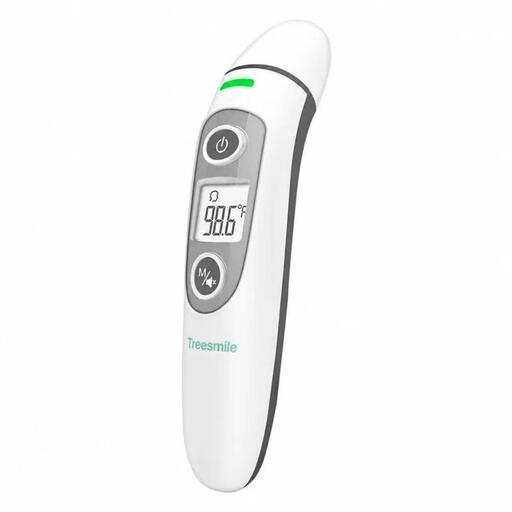
Why This Fits Their Persona: Suitable for households, nurseries or carers wanting forehead, ear and object readings in one compact device.
Its three listed measurement modes make the intended uses explicit, while a silent mode addresses the common problem of audible night-time alerts.
Ear, forehead and object modes, 35 memory groups, three-colour LCD backlight and optional ear tips.
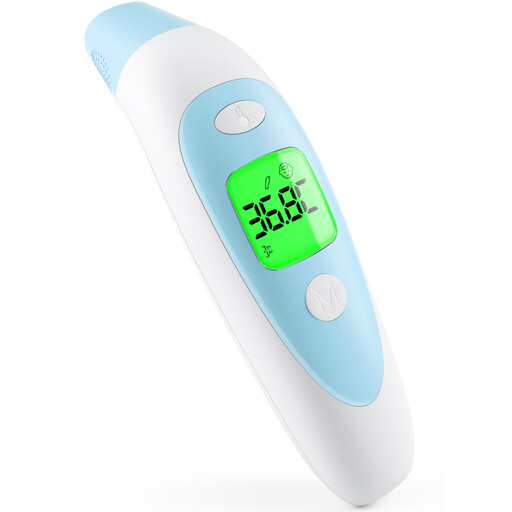
Why This Fits Their Persona: A practical choice for families comparing forehead, ear and object readings, with controls intended for adults caring for children or older relatives.
It lists three distinct modes rather than implying that one measurement method suits every situation. Silent and non-silent settings also make alerts easier to manage.
32-reading memory, green/orange/red backlit indicators, Celsius/Fahrenheit switching and carrying case.
For babies, children, elderly people and sleeping users, a silent mode thermometer can reduce disturbance. If a reading is concerning, persistent or inconsistent with how someone feels, seek advice from an appropriate healthcare professional.
We have compiled a complete, real-time list of products that fully satisfy these strict selection criteria and UK safety regulations.
There is no single fixed lifespan. Battery condition, storage, cleaning and sensor care all affect continued use. Replace batteries when the display becomes faint or readings behave inconsistently. Follow the manufacturer’s instructions and replace the device if the casing, display or sensor is damaged.
Most household models use AAA batteries, while some compact pen-style models use a coin cell. Running cost is generally limited to replacement batteries. Auto power-off, such as a 30-second shut-off on some models, can help reduce unnecessary battery use.
Only if the product has an object temperature mode. Use that setting exactly as described and remember that an infrared reading may represent the surface temperature rather than the temperature throughout the liquid. Stir liquids where appropriate and check carefully before use, particularly for babies.