
24/7 全天候客户支持

免费退货

当日/次日达

品质保障

开启新人专享福利: 全场免邮 | 低至 2 折 | 免费试用 30 天 JoyPlus 会员
下载 Joybuy
A reliable yoga mat is the foundation of any good practice, whether you're flowing through a vinyasa sequence or holding a challenging pose in Pilates. However, a mat that slips and slides can be more than just a distraction; it can disrupt your focus and compromise your stability. Finding a dependable non-slip yoga mat is crucial for a safe and effective workout.
As a Joybuy Product Recommendation Officer, my role is to help you navigate the options. This guide cuts through the clutter, focusing on the practical features that matter most, so you can choose a mat that supports your fitness journey. We will look at key materials, thickness and features to help you find the right workout mat for home or studio use.
Before we look at specific products, let's break down the key considerations. Understanding these will help you identify the mat that best suits your practice.
The material of your mat is the single most important factor for grip and durability.
The thickness of your exercise mat affects both comfort and balance.
If you plan to take your mat to a studio or even the park, portability is key. Look for a lightweight mat that comes with a yoga mat with carry strap. This simple addition makes transport and storage much more convenient. Many mats also feature alignment lines to help guide your posture, which can be particularly useful for beginners.
Here are our recommendations based on different needs and preferences, focusing on materials, thickness and overall function.
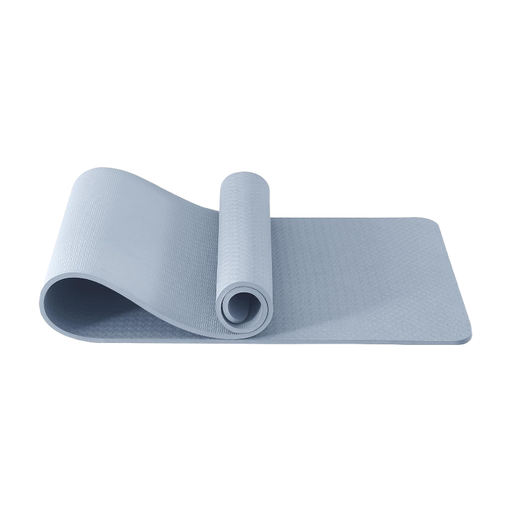
Why It Stands Out: This mat’s primary feature is its generous 10mm thickness. It's designed to provide superior cushioning, making it an excellent choice for floor-based workouts where joint support is a priority. The high-density TPE material ensures it rebounds quickly and resists compression, while the double-sided textured surface provides a secure grip.
Pros:
Who is it for? This mat is ideal for individuals who practise Pilates, gymnastics or restorative yoga. It's also a great option for beginners or anyone with sensitive joints who needs extra padding during their home workouts.
View Product Details on Joybuy.co.uk
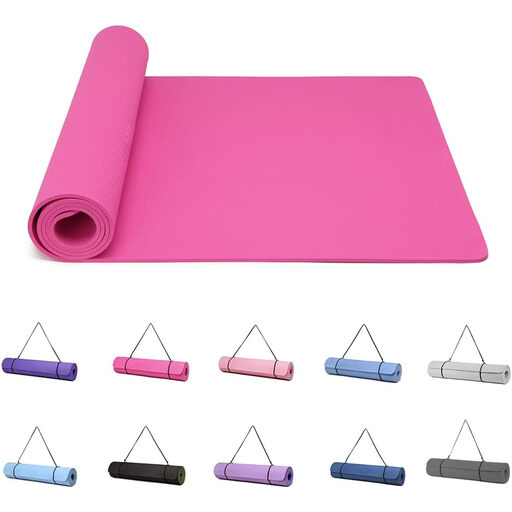
Why It Stands Out: This mat strikes an excellent balance between comfort and stability with its 6mm thickness. The dual-textured surfaces—lines on one side and waves on the other—are engineered to provide a secure grip on various floor types. Made from resilient TPE, it's a versatile and lightweight pilates mat suitable for a wide range of activities.
Pros:
Who is it for? This is a great all-rounder for yoga and fitness enthusiasts who need a single mat for various types of workouts, from dynamic vinyasa flows to static holds. Its portability makes it perfect for those who move between home and the studio.
View Product Details on Joybuy.co.uk

Why It Stands Out: This mat combines the best of both worlds: a natural cork top layer and a TPE base. The cork surface is the star feature, as its grip intensifies with sweat, making it an outstanding hot yoga mat. The material is also naturally odour-resistant and provides a smooth yet firm surface for your practice.
Pros:
Who is it for? This mat is a must-have for hot yoga practitioners or anyone who sweats significantly during workouts. It's also an excellent choice for those who prioritise using natural, sustainable products in their fitness routine.
View Product Details on Joybuy.co.uk
The recommendations above cover a range of needs, but the world of yoga mats is vast. If you are particularly interested in the lightweight and durable properties of TPE, there are many other styles and thicknesses to consider.
Explore our full collection to find the perfect fit for your practice.
1. What is the most effective material for a non-slip yoga mat? Both TPE and cork are excellent materials for a non-slip surface. TPE offers a reliable, slightly 'sticky' grip from the start, while cork's grip uniquely improves with moisture, making it ideal for more intense, sweaty practices like hot yoga.
2. How thick should my yoga mat be? This depends on your primary activity. For dynamic yoga with many balancing poses, a thinner mat (4-6mm) provides better stability. For Pilates, stretching or if you have sensitive joints, a thicker mat (8-10mm) offers more comfortable cushioning.
3. How can I prevent my hands from slipping on my yoga mat? Start by choosing a mat with a textured, non-slip surface like TPE or cork. Ensure your hands are clean and free of lotions before practice. For very sweaty sessions, especially on a TPE mat, you might also consider using a yoga towel on top of your mat to absorb excess moisture.