
24/7 Customer Support

Free returns

Same-day & Next-day Delivery

Quality Guaranteed

Unlock Your Welcome Offers: FREE Delivery | Up to 80% OFF | Free 30-day JoyPlus trial
Download the APP
A non-slip yoga mat can make floor-based exercise feel more stable, but choosing one involves more than checking the word “grip” in a product title. A mat may feel secure during gentle stretching yet move during dynamic poses, become slippery with sweat or prove too bulky for regular travel.
UK shoppers should also consider the floor beneath the mat, available storage space, cleaning requirements and whether the mat will be used by adults, children or the whole family. The following guide explains the practical features to check before buying, followed by product recommendations matched to different routines.
A textured or embossed surface can improve traction, but it cannot eliminate slipping on a wet or dusty floor. Sweat, condensation and smooth laminate may all affect grip. Product descriptions should be read alongside care and safety information, particularly for a hot yoga mat.
Place the mat on a clean, dry and level surface. If sweat accumulates, pause to wipe the surface or use a suitable towel designed for exercise mats.
A thick yoga mat offers more cushioning, but extra depth can make balancing poses feel less direct. A thinner mat may pack and carry more easily, while a 6 mm or 7 mm option can feel more comfortable for floor exercises, Pilates and stretching.
Thickness is not the same as overall quality. Check the material, surface texture, dimensions and construction rather than relying on one measurement.
PVC, TPE, cork and EVA foam have different characteristics:
For general home use, a 3 mm to 4 mm yoga mat can offer a relatively close connection to the floor and is easy to roll away. A 5 mm to 7 mm cushioned workout mat may be more appropriate for Pilates, ab exercises, stretching and floor workouts on hard flooring.
Length matters if you are tall or regularly lie flat. Common widths around 24 inches, or approximately 61 cm, provide room for most standard routines. Longer 72-inch designs offer additional space without necessarily becoming much wider.
Look for a clearly described embossed, textured or dry-grip surface. Grip should be considered in two ways:
A mat can have a textured top but still shift if placed on dust, loose rugs or a highly polished surface. For home gym or floor workout use, clear the area first and test the mat with low-impact movements before starting a full routine.
A wipe-clean surface is useful for shared household equipment. Follow the product instructions: a damp cloth and mild soap are generally suitable for the PVC mats described below, followed by complete air drying before rolling.
Avoid prolonged direct sunlight and do not store a mat while damp. Inspect it regularly for peeling, tearing or excessive wear. Replace it if the surface becomes damaged enough to affect stability.
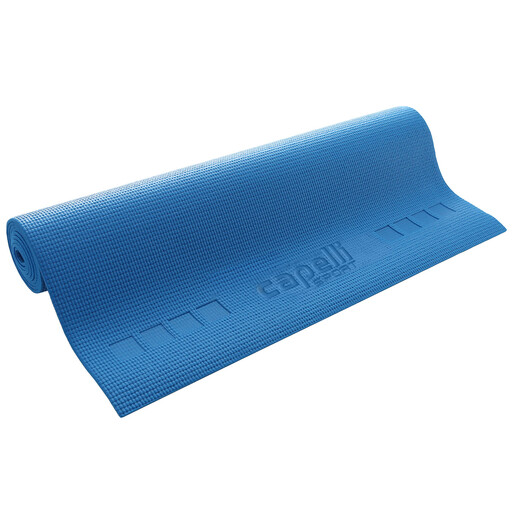
Why This Fits Their Persona: A practical size and moderate thickness for beginners building a home yoga, Pilates or fitness routine without selecting a bulky mat.
The embossed surface is specified as non-slip and cushioned, while the PVC construction is described as resistant to peeling, fading and tearing. It should still be used dry.
4 mm thickness; 68 x 24 inch dimensions; wipe-clean PVC surface.

Why This Fits Their Persona: Suitable for shoppers who prefer a cork surface and want one mat for yoga, Pilates, stretching and more active workouts.
The product combines a cork top with a TPE bottom rather than leaving the material unspecified. Its description also addresses use during heated sessions, but normal caution is still needed when wet.
5 mm thickness; 61 x 183 cm size; cork and TPE construction.
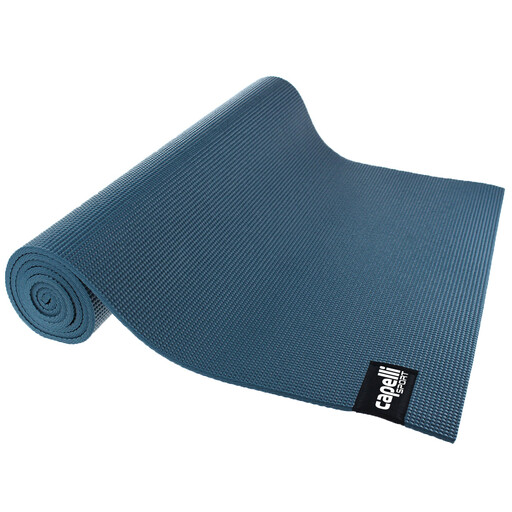
Why This Fits Their Persona: A thicker option for frequent Pilates, floor workouts, stretching and home fitness sessions where added cushioning is a priority.
The specification states a 7 mm thickness and non-slip coating, making the cushioning and grip features clear instead of relying on vague comfort wording.
7 mm cushioned construction; 72 x 24 inch dimensions; PVC material.
We have compiled a complete, real-time list of products that fully satisfy these strict selection criteria and UK safety regulations.
If the priority is creating a larger cushioned area rather than carrying one rolled mat to class, interlocking foam floor mats may be more practical. The Benrita 18-pack contains 12 x 12 inch EVA foam squares with edge pieces. They can be assembled into a playroom, children’s activity area or exercise space and separated for storage.
EVA foam is softer than a conventional PVC yoga mat, making it suitable for low-impact floor activities and children’s play. However, interlocking tiles may separate under repeated lateral movement, so check that the pieces are fully connected and keep the surface clear of small objects.
Clean and dry both the floor and mat before use. Unroll it fully and allow curled edges to settle. Avoid placing it over a loose rug, and do not use it if the underside shows damage. For dynamic routines, test stability with controlled movements before exercising at full intensity.
Usually, a 5 mm to 7 mm mat can provide more cushioning for kneeling, seated and lying exercises. A very soft surface may feel less stable for standing balance work, so choose according to the main activity rather than thickness alone.
Lifespan depends on frequency of use, body weight, footwear, sweat, cleaning and storage. Regularly inspect the surface for peeling, tearing, flattening or loss of grip. Wipe the mat after use, let it dry fully and store it away from prolonged direct sunlight to help maintain its condition.