
24/7 Customer Support

Free returns

Same-day & Next-day Delivery

Quality Guaranteed

Unlock Your Welcome Offers: FREE Delivery | Up to 80% OFF | Free 30-day JoyPlus trial
Download the APP
A non-slip yoga mat should provide steady contact with the floor without becoming uncomfortable, difficult to clean or awkward to carry. Yet product listings often focus on phrases such as “strong grip”, “extra thick” or “suitable for hot yoga” without explaining the details that matter during everyday use.
Three common buying traps are worth avoiding:
The right choice depends on how you exercise, where you use the mat and how much cushioning your joints require.
For general yoga, a 4–6 mm yoga mat offers a balance between floor feedback and cushioning. The 6 mm format is commonly suitable for yoga, Pilates, stretching and floor workouts, particularly on hard flooring.
A thick yoga mat measuring around 7–12 mm can provide more padding for knees, hips, elbows and the back. This can be useful for Pilates, core exercises, mobility work and home workouts where you spend a lot of time on the floor. However, extra cushioning may make balancing movements feel less direct.
A 3–4 mm mat is lighter and easier to store but offers less separation from a hard floor. Consider using a thinner gym yoga mat on carpet or a softer studio surface rather than choosing purely by the lowest price.
Look for an embossed, textured or patterned surface rather than relying only on the word “non-slip”. Texture can help your hands and feet maintain contact during transitions, while a backing with some traction may help the mat stay in place.
Sweat changes the way many surfaces feel. A hot yoga mat should be used with care, as moisture can reduce traction depending on the material. A towel designed for exercise may be useful during heated sessions. Always place the mat on a clean, dry and level surface before use.
A cork yoga mat with a TPE base may appeal to people who want a natural-feel upper surface and a grippy backing. Cork can feel different from PVC or foam and may require a short adjustment period.
The standard mat size in this selection is approximately 183 cm long and 61 cm wide, or around 72 x 24 inches. This suits many adults, although taller users may prefer a longer design if space allows.
A yoga mat with carry strap is practical if you travel to a studio, gym or class. Also check the rolled or folded dimensions, since a mat that is comfortable at home may be inconvenient on public transport.
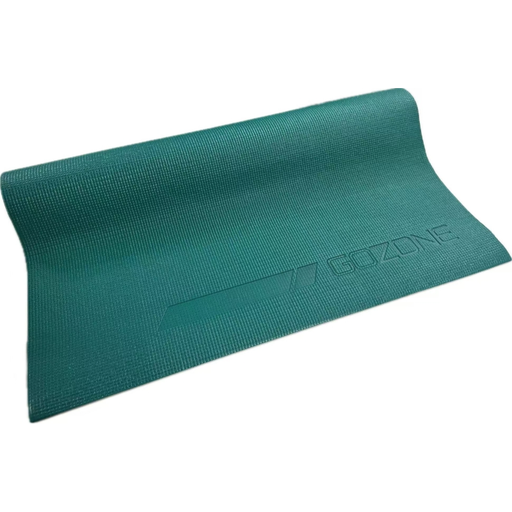
Why This Fits Their Persona: A compact option for beginners trying yoga, Pilates or occasional floor workouts at home without choosing a bulky mat.
Its embossed PVC surface provides texture rather than relying solely on a marketing label, while the 3 mm thickness avoids unnecessary bulk.
68 x 24 inch dimensions; PVC surface can be wiped with a damp cloth and mild soap.

Why This Fits Their Persona: Suits users who prefer a cork surface and want one mat for yoga, stretching, Pilates and general workouts.
The listing identifies both the cork top and TPE bottom, allowing buyers to assess the materials instead of choosing from an unspecified “eco” claim.
Cork and TPE construction; 61 x 183 cm size for full-length practice.
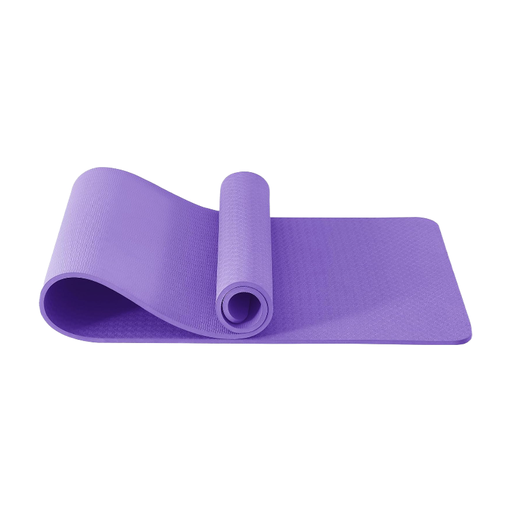
Why This Fits Their Persona: Designed for users prioritising cushioning during Pilates, stretching, gymnastics, weight training and floor-based home workouts.
The 10 mm thickness is clearly specified, and the double-sided textured surface gives more information than an unqualified grip claim.
High-density TPE; 10 mm cushioning; supplied with a carry strap.
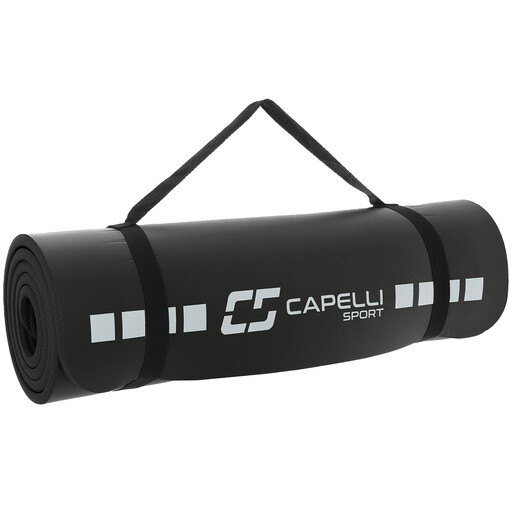
Why This Fits Their Persona: A practical match for commuters, gym members and users who carry their mat between home, classes and outdoor exercise areas.
The thickness and NBR foam material are stated clearly, while the textured surface addresses traction more directly than a generic fitness label.
1.2 cm NBR cushioning; 61 x 183 cm dimensions; elastic carrying strap included.
We have compiled a complete, real-time list of products that fully satisfy these strict selection criteria and UK safety regulations.
Place the mat on a clean, dry and level floor before each session. Wipe PVC, TPE and foam surfaces with a damp cloth and mild soap, then allow them to dry completely before rolling or folding. Avoid machine washing unless the product instructions specifically permit it.
Do not leave a mat in prolonged direct sunlight, near radiators or beside open flames. Inspect it regularly for peeling, tears, thinning or loss of surface texture. Replace it if damage affects stability or comfort. During hot yoga or sweaty workouts, use caution because moisture may make a surface slippery.
Often, a thicker mat provides more padding for knees, hips and the spine during floor exercises. However, it may feel less stable for balance poses. For mixed yoga and Pilates, 6–10 mm can be a practical range; choose based on the amount of floor work and balance training you do.
Lifespan depends on frequency of use, body weight, cleaning, storage and floor type. Regularly check for compressed areas, cracks, peeling or reduced traction rather than relying on a fixed time period. Keeping the mat dry and away from abrasive surfaces can help preserve it.
Yes. A yoga mat can also function as a Pilates mat, fitness exercise mat or home workout mat when its dimensions and cushioning suit the movements. For kneeling, rolling and lying exercises, a thicker cushioned design may be more comfortable than a lightweight 3 mm option.