
24/7 Customer Support

Free returns

Same-day & Next-day Delivery

Quality Guaranteed

Unlock Your Welcome Offers: FREE Delivery | Up to 80% OFF | Free 30-day JoyPlus trial
Download the APP
A non-slip yoga mat should provide dependable contact with the floor without becoming difficult to clean, carry or store. Yet product listings often use “grip”, “cushioning” and “sweat-resistant” without explaining how those features work in everyday UK homes, gyms and studios.
Before buying, watch for three common pitfalls:
Thickness affects comfort, stability and portability. A 3 mm exercise mat is relatively light and gives closer contact with the floor, which may suit balance work and users who prefer a firmer feel. A 4 mm yoga mat offers a modest increase in cushioning without becoming especially bulky.
For floor-based Pilates, stretching and home workouts, a 6 mm cushioned yoga mat can provide more padding beneath the knees, hips, elbows and back. A 7 mm option offers additional cushioning, although it may take longer to roll and can feel less stable for some standing poses.
Thickness is not a substitute for a stable surface. Place the mat on a clean, dry and level floor, particularly on laminate, tiles or polished wood.
A non-slip yoga mat may use an embossed PVC texture, a coated surface, cork, suede microfibre or a natural rubber base. Each behaves differently:
Look for clear cleaning instructions rather than relying only on phrases such as “sweat-resistant”. Wipe-clean PVC is practical for frequent use, while cork and suede surfaces may require gentler care.
The standard width for many mats is around 24 inches, providing room for most yoga and Pilates movements. A 24 x 68 inch yoga mat is approximately 61 x 173 cm, while a 24 x 72 inch yoga mat is approximately 61 x 183 cm. Taller users may prefer the longer format, particularly for lying-down stretches.
For a yoga mat for home workouts, storage space is usually the main consideration. If you travel by public transport or carry equipment to a gym, a foldable or thin travel yoga mat may be more convenient than a thick design.
The following options match different priorities rather than using one specification for every user.
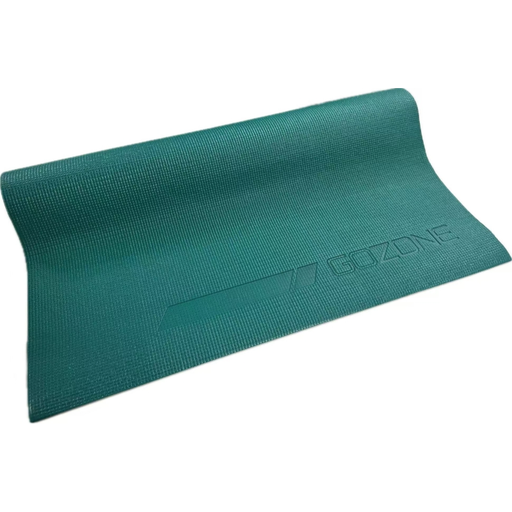
Why This Fits Their Persona: A practical starting point for beginners doing yoga, Pilates or light floor workouts at home or in a UK gym.
Its 3 mm specification avoids paying for unnecessary bulk, while the embossed PVC surface gives a defined texture for everyday use. The surface may become slippery when wet, so wipe it after use.
PVC construction; 24 x 68 inch size; embossed surface; wipe-clean care instructions.
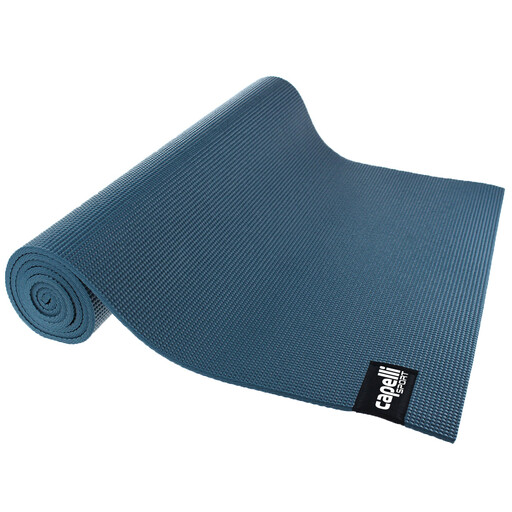
Why This Fits Their Persona: Suits users who prioritise extra cushioning for Pilates, stretching and floor-based fitness on hard indoor flooring.
The 7 mm thickness makes the cushioning specification clear, rather than leaving comfort to vague wording. Its non-slip coating is intended for grip, but the mat should still be kept dry.
7 mm PVC construction; 61 x 183 cm dimensions; cushioned support; stated non-slip coating.

Why This Fits Their Persona: A suitable format for regular yoga flows, Pilates, stretching and heated sessions where moisture management is a key consideration.
The listing identifies both the cork top and TPE underside, avoiding uncertainty about the surface and base. Cork may feel more grippy when slightly damp, but heavy sweat should still be managed carefully.
5 mm thickness; natural cork top; TPE base; 61 x 183 cm size; suitable for yoga, Pilates and workouts.
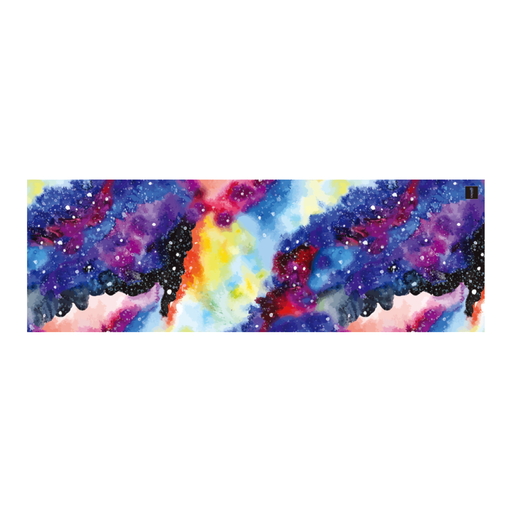
Why This Fits Their Persona: Its thin, foldable format is convenient for carrying to a class, taking on UK breaks or placing over a studio mat.
At 2 mm, it is clearly positioned as a travel layer rather than a heavily cushioned exercise mat. The suede microfibre surface is described as sweat-absorbent, while the rubber base provides floor contact.
Foldable 2 mm construction; 61 x 183 cm dimensions; suede microfibre top; natural rubber base; storage bag included.
We have compiled a complete, real-time list of products that fully satisfy these strict selection criteria and UK safety regulations.
Often, yes. Pilates includes kneeling, lying and seated movements, so a 6 mm or 7 mm thick yoga mat may feel more comfortable on hard floors. However, users who prioritise balance and close floor contact may prefer 3 mm or 4 mm.
Use it on a clean, dry floor and remove dust from both the mat and the flooring. Unroll it fully and allow curled edges to settle. If sweat collects on the surface, dry it during the session rather than assuming the texture will remain secure when wet.
For regular home or gym use, wipe the mat after each session and allow it to dry before rolling. Deeper cleaning depends on the material: PVC can generally be wiped with mild soap, while cork, suede and natural rubber may require the specific care method supplied with the product.