
24/7 Customer Support

Free returns

Same-day & Next-day Delivery

Quality Guaranteed

Unlock Your Welcome Offers: FREE Delivery | Up to 80% OFF | Free 30-day JoyPlus trial
Download the APP
A non-slip yoga mat should provide dependable footing, enough cushioning for floor exercises and a surface that remains manageable to clean. Yet product listings often focus on attractive patterns or vague phrases such as “extra grip” without explaining the specifications that matter during daily use.
Before buying, UK shoppers should look beyond appearance and check three common pitfalls:
Thickness is commonly listed in millimetres, but the right choice depends on how you exercise and where you use the mat.
For standing balance poses, very thick cushioning may feel softer underfoot and can require a short adjustment period. For sit-ups, stretching and kneeling movements, additional padding may be more comfortable.
PVC remains a common material for an anti-slip fitness mat because it can be wiped clean and offers a firm, structured surface. Look for a product description that identifies the material rather than relying only on terms such as “premium” or “professional”.
An embossed or textured surface can improve contact between your hands, feet and the mat. It can also help reduce the slippery feel that may occur on smooth flooring. However, no mat should be treated as automatically slip-proof in every condition. Keep the surface clean, dry it fully after wiping and position it on a clear, flat floor.
A width of around 24 inches is common for a yoga Pilates mat, while lengths of 68 or 72 inches provide different amounts of space for taller users and extended stretches. Check the dimensions in both inches and centimetres where available.
For an exercise mat for home and gym, also consider:
For hot yoga, sweat can change the feel of any surface. A towel designed for exercise may help manage moisture, but users should follow the mat manufacturer’s care guidance and avoid storing the mat while damp.
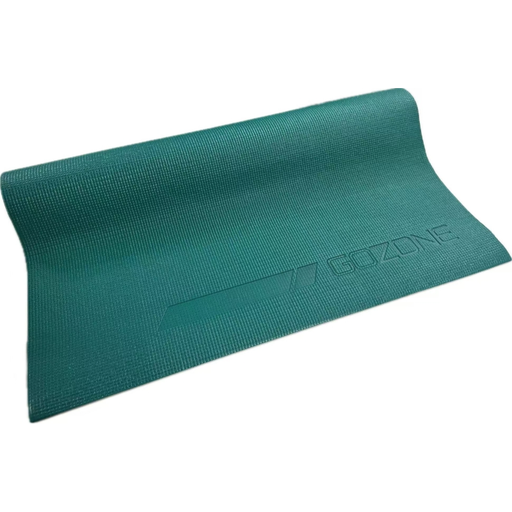
Why This Fits Their Persona: Its 3 mm profile and 24 x 68 inch dimensions provide a straightforward starting point for beginners practising yoga, stretching or Pilates at home or in a UK gym.
The listing specifies PVC, an embossed surface and cushioned construction rather than relying only on an unqualified grip statement.
PVC construction; embossed, cushioned surface; listed for yoga, Pilates and floor workouts.
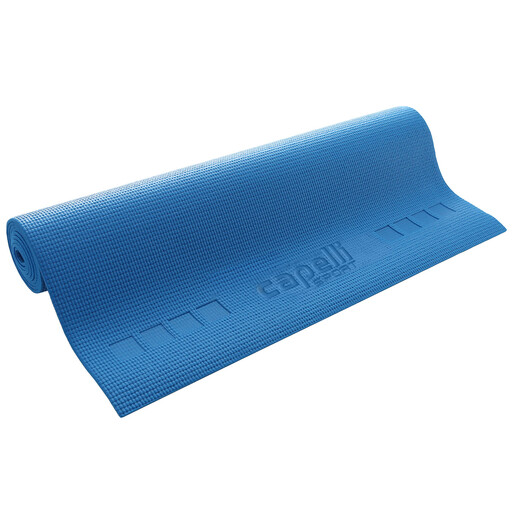
Why This Fits Their Persona: The 4 mm format suits users seeking a balanced everyday mat for yoga, Pilates, core work and stretching without moving to a thicker profile.
Its listed thickness, 24 x 68 inch size and PVC material make comparison with other mats more transparent.
4 mm cushioned construction; embossed non-slip surface; wipe-clean PVC material.
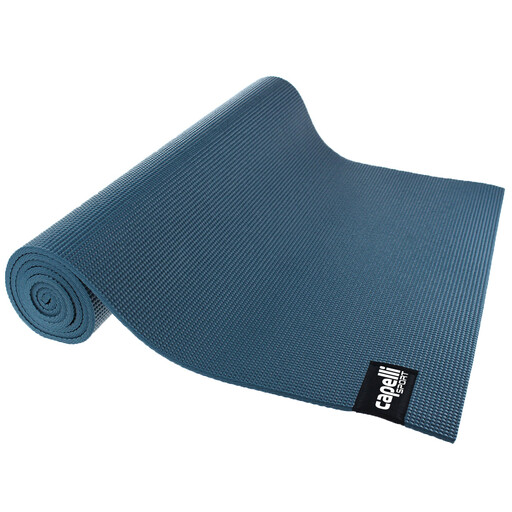
Why This Fits Their Persona: Users who regularly perform Pilates, kneeling exercises, stretching or floor workouts may prefer the additional padding of a 7 mm mat.
The product specifies both its 7 mm thickness and non-slip coating, helping shoppers assess cushioning and surface construction separately.
7 mm cushioned PVC design; 72 x 24 inch format; listed for yoga, Pilates, home fitness and gym use.
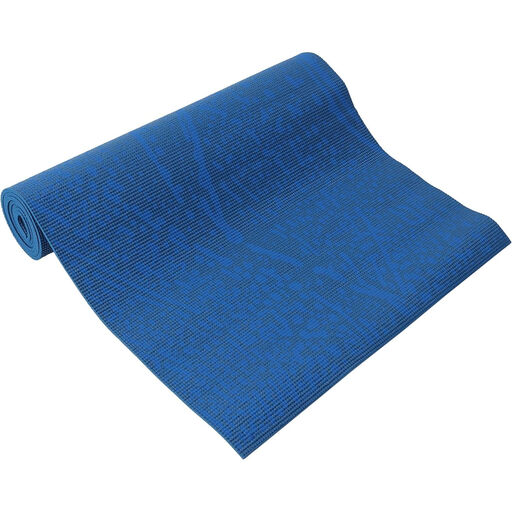
Why This Fits Their Persona: A longer 72 inch surface and printed design suit home users who want extra floor coverage for yoga, stretching and general exercise.
The textured surface is identified alongside the 6 mm thickness, so decoration is not the only stated feature to consider.
6 mm PVC construction; textured grip surface; lightweight design intended for home, gym and studio transport.
We have compiled a complete, real-time list of products that fully satisfy these strict selection criteria and UK safety regulations.
Place the mat on a clean, flat and dry surface. On laminate, tile or wooden flooring, check that the mat lies flat and does not bunch at the edges before beginning. Allow a newly unrolled mat to settle according to the product instructions.
For regular care:
A mat’s usable lifespan depends on frequency of use, body weight, cleaning routine, storage conditions and the type of exercises performed. Heavy daily use may create wear sooner than occasional stretching. Replace a mat when it no longer lies securely, develops damaged areas or cannot be cleaned effectively.
A thicker yoga mat generally provides more material between your body and the floor, which can feel more comfortable during kneeling, seated and lying exercises. However, thickness can also affect balance and portability. Choose 3–4 mm for a firmer feel, or 6–7 mm when cushioning is a higher priority.
A 24-inch width is a common choice for yoga and Pilates. A 68-inch length can suit many standard routines, while a 72-inch mat offers more room for taller users and full-body stretches. Compare the listed measurements with your height and available floor space.
Yes, many mats are designed for multiple uses, including yoga, Pilates, stretching, ab exercises and floor workouts. Check the thickness, cushioning, dimensions and surface texture to ensure they match your routine. For high-impact training, confirm that the product is intended for that type of exercise rather than assuming every yoga mat has the same level of support.