
24/7 Customer Support

Free returns

Same-day & Next-day Delivery

Quality Guaranteed

Unlock Your Welcome Offers: FREE Delivery | Up to 80% OFF | Free 30-day JoyPlus trial
Download the APP
A non-slip yoga mat should do more than look attractive in a product photograph. It needs to remain stable on a household floor, provide suitable cushioning for your joints and be practical to clean and store. However, marketing language can make it difficult to compare products properly.
Before buying, watch for three common pitfalls:
The right choice depends on where you exercise, how much cushioning you need and whether you will carry the mat to a gym or studio.
Thickness affects comfort, stability and portability.
A cushioned fitness mat is not automatically suitable for every exercise. If you perform balance poses, check the surface texture and how firmly the mat sits on the floor, rather than focusing only on its thickness.
Look for an embossed, textured or double-sided surface. These features can help your hands and feet maintain contact during Pilates, stretching and standing poses. A textured underside may also reduce movement on hard floors.
For a hot yoga mat, moisture management is especially important. Cork surfaces may feel more grippy as they become slightly damp, according to the product description supplied for the cork model below. Nevertheless, sweat can make many surfaces slippery, so use a towel where necessary and wipe the mat after class.
Place every non-slip Pilates mat or yoga mat on a clean, dry and level surface. Dust, damp patches and uneven flooring can affect traction.
Common materials include:
A standard width of around 61 cm or 24 inches suits many adults, while a length of 68–72 inches gives useful coverage for lying-down exercises. Always check the actual measurements before ordering. A yoga mat with carry strap can be more convenient if you travel by public transport, cycle to class or store equipment in a small flat.
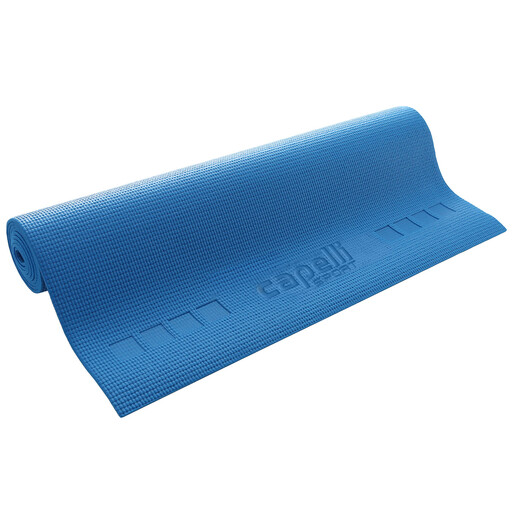
Why This Fits Their Persona: Its 4 mm profile and 68 x 24 inch dimensions provide a straightforward starting point for yoga, Pilates and floor workouts at home or in a gym.
The embossed PVC surface gives a defined texture rather than relying on thickness alone. It should still be used on a clean, dry floor.
4 mm thickness; PVC construction; wipe-clean surface; suitable for yoga, Pilates and general floor exercise.

Why This Fits Their Persona: The 5 mm cork-and-TPE construction suits users who value a distinctive surface and want one mat for yoga, Pilates, stretching and heated sessions.
The product description identifies both the cork top and TPE base, making the material combination clear instead of presenting a vague “natural” label.
5 mm thickness; 61 x 183 cm size; cork top; TPE underside; designed for yoga and workouts.
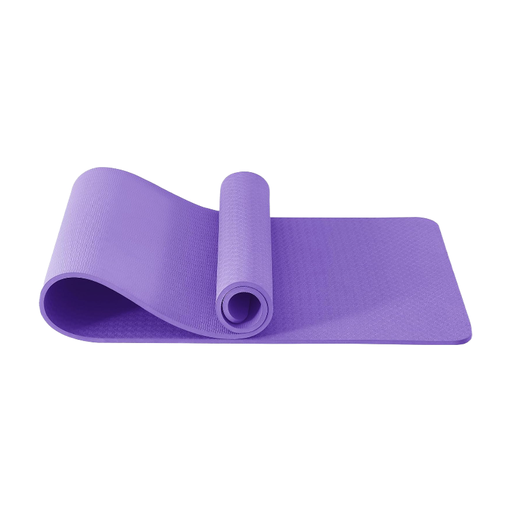
Why This Fits Their Persona: Users wanting substantial padding for Pilates, stretching, gymnastics or home floor workouts may prefer its 10 mm format and 183 x 61 cm coverage.
The specification states both thickness and material: high-density TPE with a double-sided textured surface. This helps buyers assess cushioning and floor contact separately.
10 mm thickness; double-sided texture; high-density TPE; includes a carry strap.
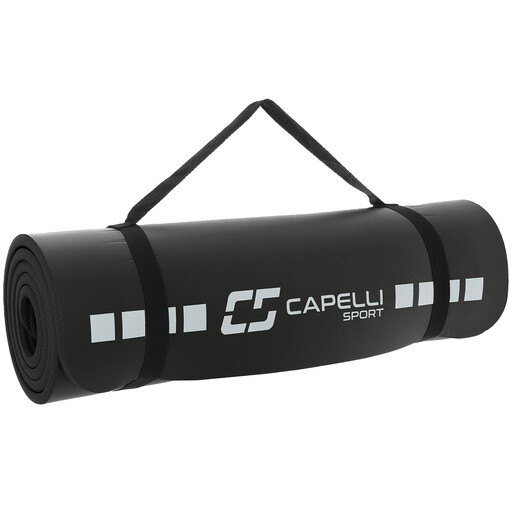
Why This Fits Their Persona: This 1.2 cm NBR foam mat is designed for users who prioritise cushioning and need to transport their exercise mat between home and the gym.
Its stated 1.2 cm thickness makes the cushioning level easy to compare. The care guidance also warns against sharp objects and abrasive surfaces.
1.2 cm NBR foam; 61 x 183 cm dimensions; textured surface; elastic carrying strap included.
We have compiled a complete, real-time list of products that fully satisfy these strict selection criteria and UK safety regulations.
To help a non-slip yoga mat last longer:
Avoid placing a yoga mat beneath heavy equipment unless the product specifically states that it is suitable for that purpose.
For general yoga and Pilates, 3–6 mm is a practical range. Choose 7–12 mm if joint cushioning is a higher priority, but remember that extra thickness can reduce floor feel and standing stability.
Clean both the floor and mat, remove dust and place the mat on a completely dry, level surface. A textured underside may help, but wet flooring or sweat can still reduce grip. Replace the mat if it has become damaged or its surface is visibly worn.
Lifespan depends on frequency of use, body weight, exercise type, storage and cleaning. Check regularly for thinning, cracks, peeling, loss of texture or permanent compression. These signs indicate that the mat may no longer provide the intended support or traction.