
24/7 Customer Support

Free returns

Same-day & Next-day Delivery

Quality Guaranteed

Unlock Your Welcome Offers: FREE Delivery | Up to 80% OFF | Free 30-day JoyPlus trial
Download the APP
A good non-slip yoga mat is the foundation of any practice, whether you're flowing through a vinyasa sequence at home or holding a plank in a Pilates class. Yet, finding the right one can be a frustrating experience. Many mats fail to live up to their promises, leaving you with a purchase that hinders rather than helps your workout.
As a Joybuy Product Recommendation Officer, my role is to help you navigate the market and identify the features that truly matter. Before you spend your money, it's crucial to be aware of a few common pitfalls that can lead to disappointment.
thick yoga mat can feel plush but may compromise your stability in balancing poses.By understanding a few core parameters, you can confidently select a mat that provides the safety, comfort and longevity you need.
To avoid these issues, focus on two non-negotiable factors: the material and the thickness. These specifications will determine the mat's grip, durability and suitability for your specific activities.
The material of your exercise mat dictates its grip, texture, weight and durability. Here’s a straightforward breakdown of the most common options available in the UK:
pilates mat where joint support during floor exercises is the priority. Its grip can sometimes be less effective than TPE or rubber when wet.The thickness of a mat, measured in millimetres (mm), directly impacts your comfort and balance. There is no single "correct" thickness; it depends entirely on your needs.
travel yoga mat is perfect for taking to the studio or on trips but offers minimal cushioning.gym mat for both men and women.thick yoga mat (often 10mm or more) offers maximum cushioning. This is ideal for restorative yoga, Pilates or individuals with sensitive joints who need extra support during floor-based exercises. The trade-off is reduced stability for advanced balancing postures.To help you make a decision, we’ve matched some products to common user profiles. These selections are based on their specifications and how well they address the pitfalls mentioned earlier.
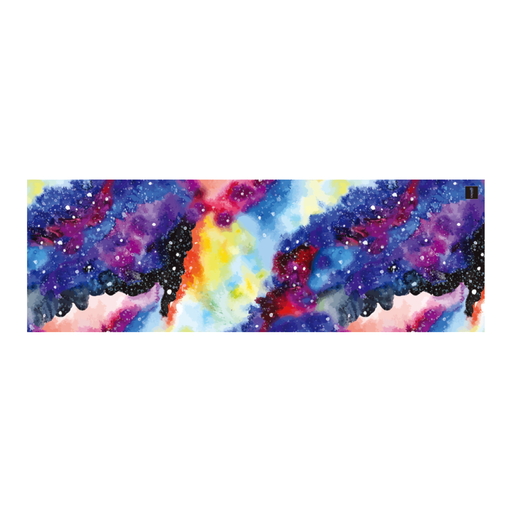
Why This Fits Their Persona: For the practitioner who is always on the move, this mat is designed for ultimate portability. Its 2mm profile allows it to be folded compactly into a bag, making it easy to carry to a studio, a park or on holiday. It can also be used as a hygienic topper over a studio mat.
It directly counters the "non-slip illusion." The suede surface is engineered to increase grip as it absorbs sweat, making it ideal for hot yoga or intense sessions where other mats would fail.
Its primary advantage is its foldable, lightweight design. The natural rubber base ensures it stays put on the floor, while the suede top provides a soft, grippy surface.
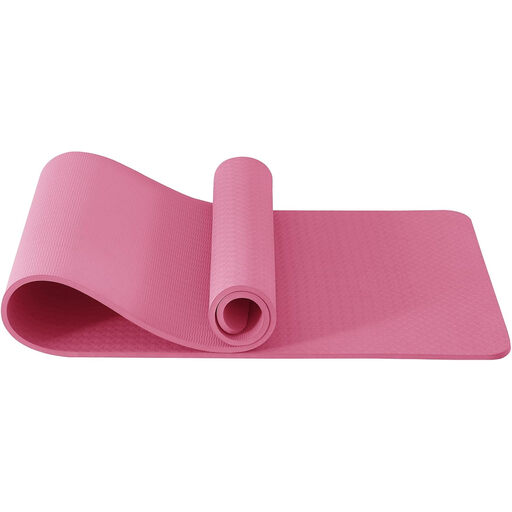
Why This Fits Their Persona: This mat is for those in the UK who practice on hard floors and prioritise joint protection. The 10mm high-density TPE material provides substantial cushioning for the spine, hips and knees, making it an excellent cushioned fitness mat for Pilates, stretching and general floor workouts.
It avoids the "durability deception." Unlike cheap foam mats that flatten over time, its high-density TPE construction offers quick rebound and compression resistance, ensuring it maintains its supportive structure.
Its main benefit is the superior cushioning from the 10mm thickness. The double-sided non-slip texture provides a secure grip and it includes a yoga mat with strap for easy storage and transport.
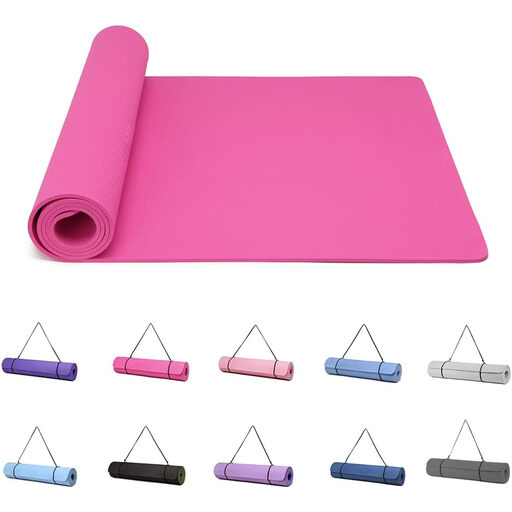
Why This Fits Their Persona: This mat is an excellent choice for the user who enjoys a mix of activities, from dynamic yoga to core-strengthening Pilates. The 6mm thickness provides the ideal middle ground: cushioned enough for comfort during floor work, yet firm enough for stable balancing poses.
It successfully avoids the "thickness trap" by hitting the sweet spot. It's not so thin that it's uncomfortable, nor so thick that it compromises balance. The dual-sided TPE texture also ensures reliable grip, preventing slips.
The balanced 6mm thickness combined with the durable, dual-textured TPE material makes it a highly versatile and reliable exercise mat for women and men. It is lightweight and includes a carrying strap.
We have compiled a complete, real-time list of products that fully satisfy these strict selection criteria and UK safety regulations.
For most TPE, rubber and PVC mats, cleaning is simple. Wipe the surface with a damp cloth and a mild soap or a specialised mat cleaner after each use. Avoid harsh chemicals that can degrade the material. Always allow the mat to air dry completely before rolling it up to prevent moisture build-up and odours. Never put your mat in a washing machine.
While a 10mm mat provides excellent cushioning for sensitive joints, it is not ideal for all yoga styles. For practices with many standing or balancing poses, such as Vinyasa or Ashtanga, the extra thickness can make it difficult to feel grounded and maintain stability. It is better suited for restorative yoga, Yin or general fitness and Pilates exercises.
The main differences are in their composition, performance and environmental impact. TPE is a more modern, eco-friendlier blend of plastic and rubber polymers. It is generally more elastic, lighter and offers better grip than PVC. PVC is a very durable and long-lasting plastic but is less environmentally friendly and can be slippery, especially before it's broken in. TPE is often considered a higher-performance material for a dedicated yoga or Pilates practice.