
24/7 Customer Support

Free returns

Same-day & Next-day Delivery

Quality Guaranteed

Unlock Your Welcome Offers: FREE Delivery | Up to 80% OFF | Free 30-day JoyPlus trial
Download the APP
As a Joybuy Product Recommendation Officer, I often hear from home bakers and cooks about their frustrations with bakeware that promises much but delivers little. A perfect bake can be ruined by a pan that sticks, warps or rusts. The market is filled with options, but not all non-stick bakeware is created equal. Before you invest in new cake tins or roasting tins, it's crucial to understand the common issues that lead to disappointment and wasted money.
Let's cut through the marketing clutter and focus on what truly matters. Here are the three most common pitfalls to watch for:
To avoid these issues, you don't need to be a materials scientist. You just need to know which features have the biggest impact on performance and longevity.
The material of your bakeware is its foundation. The two most common choices each have distinct advantages:
A non-stick surface is only as good as its application and durability. A quality coating should be robust and applied in multiple layers. To protect it, always avoid using metal utensils, which can cause scratches that lead to peeling. While many items are listed as dishwasher safe, hand washing with a soft sponge is the most reliable way to extend the life of the coating.
Furthermore, pay attention to the construction. A heavier gauge (thicker) metal is a clear indicator of a well-made baking tray or bread tin that is less likely to warp.
Clever design features can make a significant difference in your baking experience.
Based on these practical criteria, we've matched several products to different types of users, from those just starting out to seasoned home cooks.
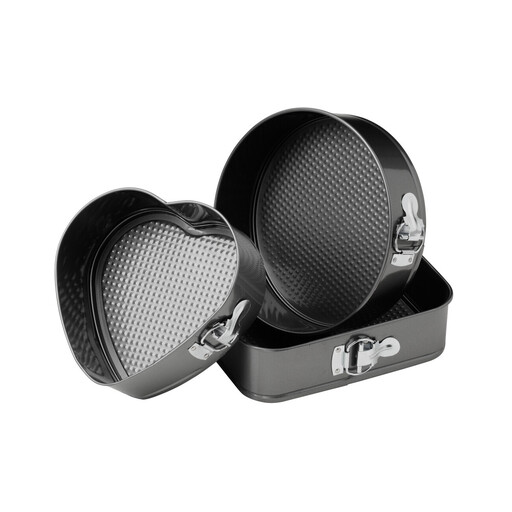
Why This Fits Their Persona: This set is an excellent starting point. It provides three different shapes (round, square and heart) to experiment with, and the springform mechanism is very forgiving for beginners learning to release delicate cakes. It covers the basics without a large initial investment.
The springform design directly addresses the problem of damaging a cake during removal, a common frustration that can discourage new bakers. The non-stick coating simplifies the process further.
Versatility: Three shapes in one set. Easy Release: Springform sides and detachable base make demoulding straightforward.
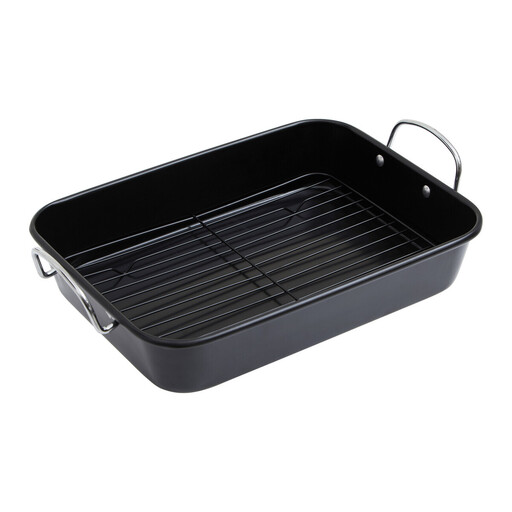
Why This Fits Their Persona: For the person cooking Sunday roasts or weeknight traybakes, durability and practicality are key. This tin is made from durable metal for everyday use, and the included wire rack is a non-negotiable feature for achieving a perfect roast.
Its durable metal construction is designed to resist warping under the high heat required for roasting. The non-stick coating simplifies the cleanup of roasted-on fats and juices, a common pain point.
Included Rack: Elevates food for even cooking and fat drainage. Durable Build: Made from metal intended for frequent, everyday use.
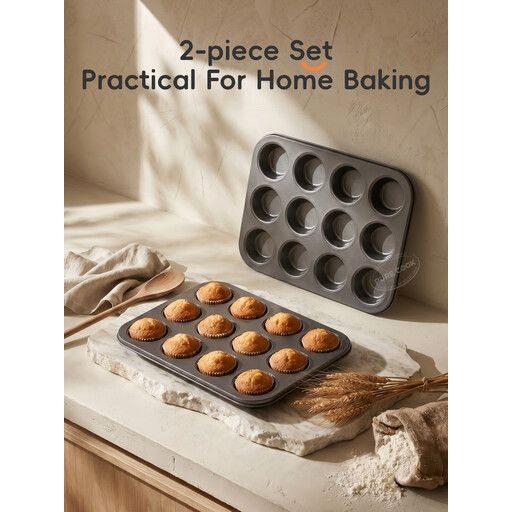
Why This Fits Their Persona: Ideal for home-baking businesses, café owners or class instructors who need efficiency. This pan allows for baking 12 uniform items at once. The carbon steel ensures consistent heat for reliable results across the entire batch, which is critical for commercial use.
The carbon steel construction provides the even heat distribution needed to prevent inconsistent results—a major pitfall for batch baking. The multi-layer non-stick coating is designed for easy release, increasing efficiency and reducing waste.
High Efficiency: Bakes 12 items simultaneously. Consistent Heating: Carbon steel ensures all cavities bake evenly.
We have compiled a complete, real-time list of products that fully satisfy these strict selection criteria and UK safety regulations.
Warping is almost always caused by thermal shock acting on thin metal. When a cool, thin baking tray is placed in a very hot oven, the rapid expansion can cause it to twist. To minimise this, look for carbon steel bakeware with a heavier weight and thickness, as it is more stable and resistant to temperature changes.
While many manufacturers state their products are dishwasher safe, we generally advise against it for long-term care. The high heat and harsh detergents used in dishwashers can degrade non-stick coatings over time. For a longer lifespan, hand washing with warm, soapy water and a soft sponge is the most effective method.
Proper care is key. Follow these three simple rules: