
24/7 Customer Support

Free returns

Same-day & Next-day Delivery

Quality Guaranteed

Unlock Your Welcome Offers: FREE Delivery | Up to 80% OFF | Free 30-day JoyPlus trial
Download the APP
A great bake often starts long before you preheat the oven. It begins with choosing the right tools. Yet, the market for non-stick bakeware is filled with promises that often fall flat, leaving you with buckled trays and cakes that refuse to leave the tin. Before you invest in your next set, it pays to know the common pitfalls that can turn a passion for baking into a frustrating chore.
Many of us have been there. You buy a new baking tray, and after one roast dinner, it emerges from the oven with a permanent warp. Or perhaps you've experienced the "one-wash wonder"—a non-stick coating that looks pristine in the shop but starts to flake and scratch after its first encounter with a sponge, rendering it useless. Another frequent issue is navigating the confusing world of coatings, with vague assurances that leave you wondering about the materials you're cooking with. These problems don't just waste money; they compromise your results in the kitchen.
To avoid these traps, it helps to look past the marketing and focus on a few core specifications. Understanding these will help you select durable, reliable cake tins for baking and roasting that perform as they should.
The material of your bakeware is the single most important factor for durability and performance. While many options exist, carbon steel bakeware is a popular choice for good reason.
A non-stick surface is about more than just easy food release; it's also about safety and longevity.
The shape and mechanism of a cake tin can make all the difference, especially for delicate bakes.
To help you find the right fit for your kitchen, we've matched some reliable options to different types of home cooks.
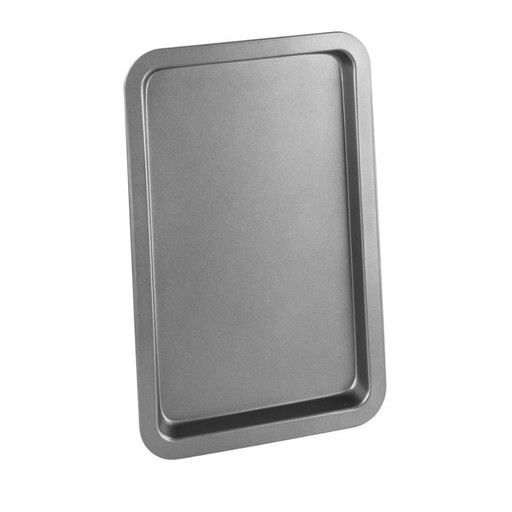
Why This Fits Their Persona: This is a versatile, no-fuss workhorse for everyday tasks. Its freezer-to-oven capability is a genuine time-saver for busy UK households, perfect for meal prep or cooking frozen items directly.
Its carbon steel construction resists warping, while the explicitly stated PFAS, PTFE and BPA-free coating addresses safety concerns head-on.
Extreme versatility (fridge, freezer and oven safe) and ultimate convenience with its dishwasher-safe design.
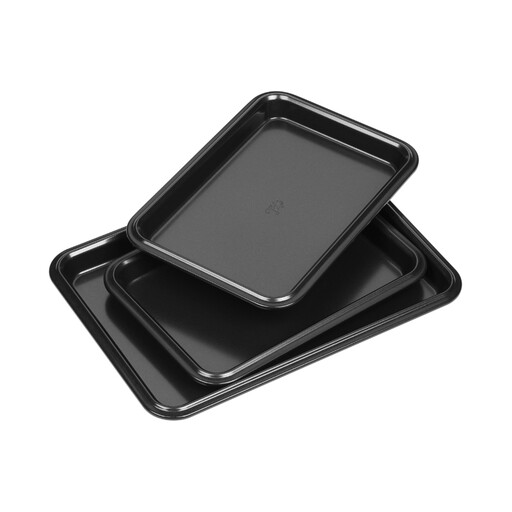
Why This Fits Their Persona: For those who bake or roast frequently and are tired of replacing flimsy trays. This set is an investment in consistent, reliable results for everything from roast potatoes to delicate biscuits.
Built from robust 1.0mm commercial-weight carbon steel, it is engineered to eliminate warping. The superior double-layer non-stick coating is durable enough to be metal-utensil safe, directly countering the "one-wash wonder" pitfall.
Exceptional durability backed by a 10-year guarantee and professional-grade heat distribution for even cooking.
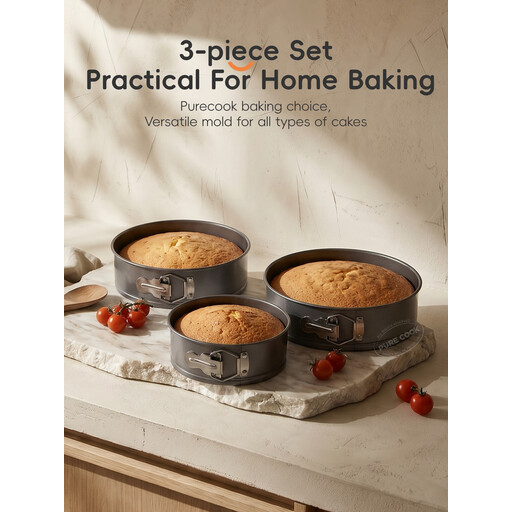
Why This Fits Their Persona: This set is perfect for anyone who loves making delicate cakes, cheesecakes or tortes where a clean, damage-free release is non-negotiable. The three sizes offer versatility for different recipes and occasions.
The adjustable metal buckle and tight-locking seam are specifically designed to prevent the batter leakage that plagues lesser-quality springform tins, especially with thin batters or water baths.
The quick-release buckle design makes demoulding virtually foolproof, preserving the cake's delicate structure and giving beginners confidence.
We have compiled a complete, real-time list of products that fully satisfy these strict selection criteria and UK safety regulations.
The primary advantage of carbon steel bakeware is its superior heat conductivity and durability. It heats evenly, which leads to more consistent baking results without burnt edges or raw centres. Its strength, especially in thicker gauges, makes it highly resistant to warping at high oven temperatures, ensuring it remains flat and functional for years.
To prolong the life of your non-stick coating, it's advisable to avoid using metal utensils, which can cause scratches. Opt for silicone, wood or nylon tools instead. While many modern tins are dishwasher safe bakeware, hand washing with a soft sponge and mild soap is often the gentlest method. Finally, avoid using abrasive scouring pads or harsh chemical cleaners.
Once a non-stick coating is significantly scratched or begins to peel, it can lose its food-release properties, and small particles of the coating could potentially flake into your food. For both performance and peace of mind, it is generally recommended to replace bakeware that has a compromised non-stick surface. Choosing a durable, multi-layer coating from the outset can help prevent this issue.