
24/7 Customer Support

Free returns

Same-day & Next-day Delivery

Quality Guaranteed

Unlock Your Welcome Offers: FREE Delivery | Up to 80% OFF | Free 30-day JoyPlus trial
Download the APP
Choosing non-stick baking trays can seem straightforward until a tray warps, food sticks after a few uses or its dimensions do not suit your oven. UK home cooks often buy based on attractive finishes or broad claims such as “easy clean”, without checking the construction, coating care instructions or usable cooking area.
This guide explains the practical details that matter when comparing a non-stick baking sheet, roasting tray, cake tin or muffin tray. It also matches several options to different cooking habits, from occasional baking to batch cooking and family meals.
A champagne gold or sleek black finish may look appealing, but appearance does not indicate how a tray handles repeated oven use. Check the underlying material first. Carbon steel is commonly used for bakeware because it conducts heat efficiently while remaining relatively light. However, thickness and handling still matter, particularly for large oven baking trays.
Non-stick surfaces vary, and care instructions can differ between products. Some trays are listed as dishwasher-safe, while others recommend hand washing to help maintain the coating. Metal utensils, abrasive cleaners and scouring pads may scratch surfaces that are not designed for them.
A non-stick coating can make food release and cleaning easier, but it is not a reason to ignore the manufacturer’s instructions. Always check whether the tray is suitable for dishwasher use and whether a lining, light greasing or hand washing is recommended.
A tray may fit inside an oven but still be too small for a family-sized meal or too shallow for roasting. A flat baking sheet is suitable for biscuits, cookies and pastries, whereas a deeper roasting tin is more practical for meat, vegetables and dishes with cooking juices.
Before buying, measure the oven shelf and cupboard space. Allow room around the tray for safe handling and airflow, and check the internal cooking area rather than relying only on the listed external dimensions.
For everyday use, carbon steel bakeware offers a useful balance between heat conduction, weight and durability. It is found in cookie sheets, cake tins, roasting trays and muffin trays. A sturdier construction may be less likely to flex or warp, especially when used at higher temperatures.
A lightweight tray can be convenient for lifting and storage, while a heavier sheet may feel more stable when loaded with food. Match the weight to your routine: occasional biscuit baking does not require the same construction as frequent roasting or batch meal preparation.
Look for clear information about the non-stick coating and cleaning method. A dishwasher-safe baking tray can reduce washing up, but hand washing may still be recommended for certain finishes. Avoid assuming that all non-stick products are suitable for metal tools.
For coated trays, use silicone, nylon or wooden utensils where appropriate. Let hot bakeware cool before washing, and avoid sudden temperature changes unless the product specifically supports them.
Consider the food you cook most often:
Some products also offer freezer-to-oven bakeware functionality. This can support meal preparation, but always follow the product’s temperature and handling instructions. Do not move a product between extreme temperatures unless the manufacturer states that it is suitable.
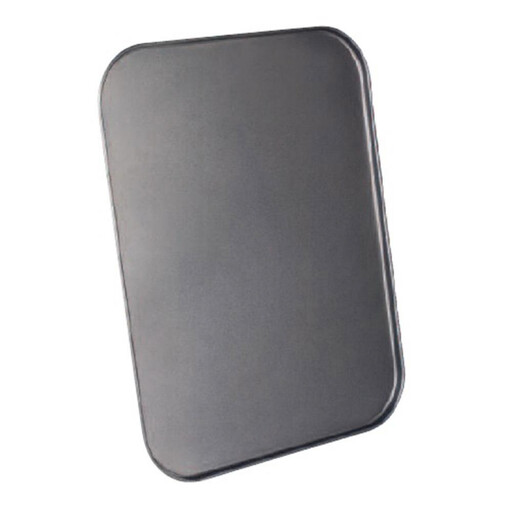
Why This Fits Their Persona: A practical choice for smaller households, first kitchens and everyday biscuit baking, with a stated 34.5 x 26 cm size.
Its carbon steel construction and Goldflon non-stick coating address the common combination of uneven heating and difficult food release.
Suitable for cookies, biscuits, meringues and roasted vegetables; listed as stackable, dishwasher-safe and fridge- and freezer-safe.
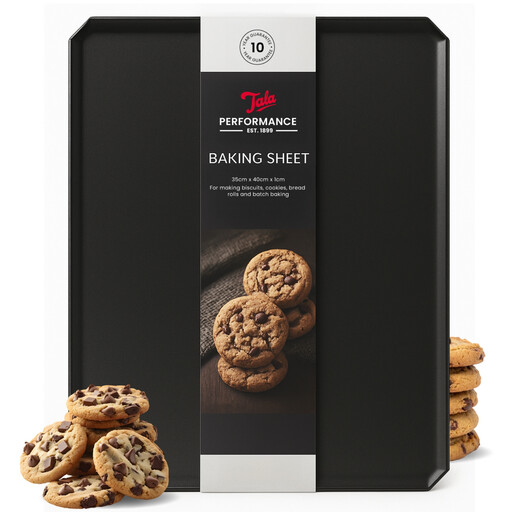
Why This Fits Their Persona: The generous approximately 35.5 x 42 cm format suits regular batch baking and larger family meals where oven space is available.
The professional-gauge carbon steel construction is intended for a sturdier feel than very thin sheets, while the double-layer Eclipse coating supports food release.
Large cooking surface; listed as oven-, fridge-, freezer- and dishwasher-safe, with a non-stick coating stated as suitable for metal utensils.
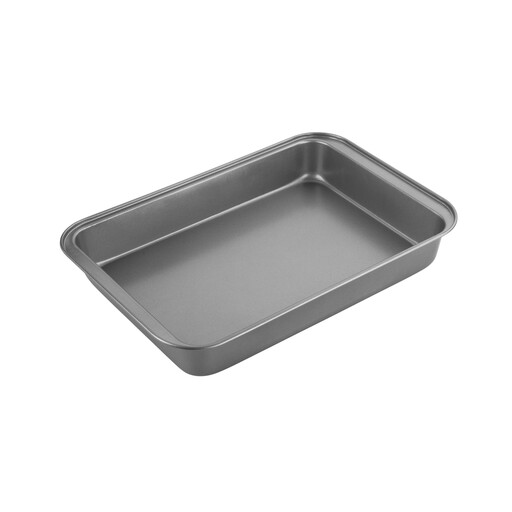
Why This Fits Their Persona: Designed for Sunday lunches, larger portions and regular roasting of meat, poultry or vegetables.
Its deep sides help contain juices and splatters, avoiding the limitations of a shallow cookie sheet when preparing a substantial roast.
Approximate 36.5 x 24.5 x 5.5 cm dimensions; carbon steel construction and listed freezer-to-oven use support meal preparation.
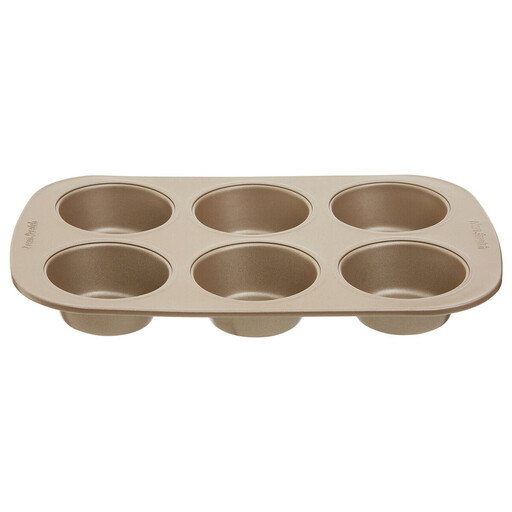
Why This Fits Their Persona: A compact six-compartment format suits cupcakes, muffins and small-batch baking in kitchens where cupboard space matters.
The six defined compartments remove the guesswork of portion spacing, while the stated hand-wash recommendation clarifies how to care for the coating.
Carbon steel with Xylan non-stick coating; approximately 29 x 18 x 3 cm and 0.24 kg, making it slim and easy to store.
We have compiled a complete, real-time list of products that fully satisfy these strict selection criteria and UK safety regulations.
They can be suitable for everyday baking and roasting when their size, temperature guidance and care requirements match your routine. Use appropriate utensils, avoid abrasive cleaning products and inspect the coating periodically. If the surface becomes visibly damaged or begins to deteriorate, replace the tray.
There is no single lifespan because it depends on oven temperature, frequency of use, cleaning method, storage and utensil choice. A tray used several times a week may experience more wear than one used occasionally. Hand washing, careful stacking and avoiding scratches can help preserve the surface.