
24/7 Customer Support

Free returns

Same-day & Next-day Delivery

Quality Guaranteed

Unlock Your Welcome Offers: FREE Delivery | Up to 80% OFF | Free 30-day JoyPlus trial
Download the APP
A reliable cake tin is the unsung hero of any baker's kitchen. Yet, finding one that delivers flawless results can feel like a lottery. Many of us have been let down by a tin that promised a perfect release, only to be left scraping out a broken sponge. Before you invest in new bakeware, it's worth knowing the common issues that can turn a joyful baking session into a frustrating chore.
As the Joybuy Product Recommendation Officer, I see many products and hear a lot of feedback. The most frequent complaints about non-stick cake tins aren't about fancy features, but about fundamental flaws that render them useless after just a few bakes. Here are the main pitfalls to watch for:
To sidestep these issues, focus on a few core parameters. Understanding these will help you choose reliable baking tins UK retailers offer, ensuring your money is well spent.
The material of your tin directly impacts how your cake bakes.
For cakes that cannot be inverted, the release mechanism is critical.
Consider what you bake most often. A single round cake tin is a staple, but if you enjoy variety, a bakeware set can be more economical. These sets often include a mix of round and square cake tin options, a muffin tin and a loaf pan, equipping you for almost any recipe.
Based on these practical considerations, here are a few options from our catalogue that align with different baking needs and profiles.
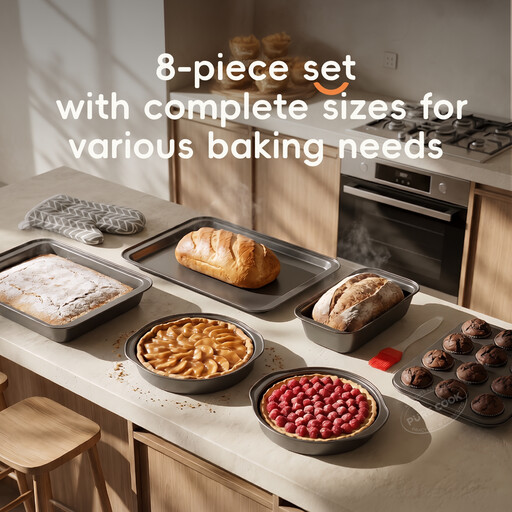
Why This Fits Their Persona: For the baker who loves trying everything from brownies to chiffon cakes, this set provides a comprehensive toolkit. It's ideal for family baking projects or small-batch orders, offering multiple shapes and sizes in one package.
The carbon steel construction ensures even heat distribution, tackling the pitfall of warping and uneven baking. The non-stick coating simplifies release, provided it's cared for properly.
Exceptional Versatility: An 8-piece set that covers square cakes, round trays and rectangular bakes. Consistent Material: All pieces are made from carbon steel for reliable performance.
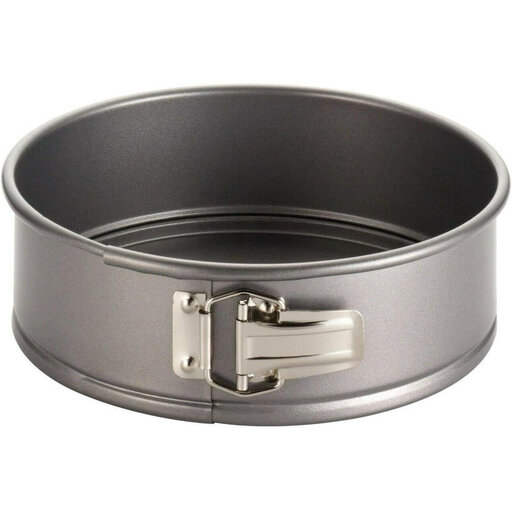
Why This Fits Their Persona: This baker prioritises presentation. They create cheesecakes, tortes and layered desserts where a clean, damage-free release is non-negotiable. A reliable springform is their most important tool.
Its primary function is to solve the "awkward release" problem with a well-designed springform mechanism. The 0.8mm metal thickness also helps prevent warping and promotes even heating.
Damage-Free Removal: The removable sides are designed for clean presentation. Sturdy Build: The thicker gauge metal resists bending and improves heat distribution for consistent results.
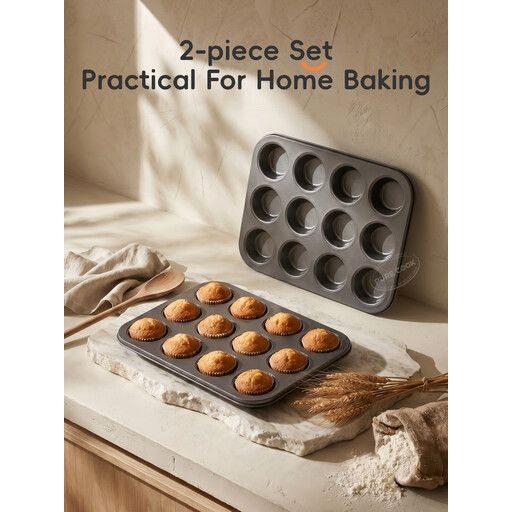
Why This Fits Their Persona: Perfect for school bake sales, afternoon tea parties or small dessert shop orders. This baker needs to produce multiple, uniform items efficiently. This 2-piece set allows for baking up to 24 mini cakes at once.
The single-piece carbon steel construction ensures heat is spread evenly across all 12 cavities, preventing the common issue where cakes on the edge bake faster than those in the centre.
High-Volume Efficiency: Bake 12 uniform mini cakes or muffins at once. The 2-piece set doubles that capacity. Easy Release: The non-stick coating allows for quick turning out of multiple items.
We have compiled a complete, real-time list of products that fully satisfy these strict selection criteria and UK safety regulations.
The lifespan of a cake tin depends heavily on its material and how it's cared for. A quality carbon steel bakeware tin can last for many years. The non-stick coating is usually the first component to degrade. With proper care—avoiding metal utensils and harsh scrubbing—a good coating should remain effective for several years of regular home baking.
While some manufacturers state their tins are dishwasher safe, we generally advise against it for long-term care. The high heat and abrasive detergents used in dishwashers can accelerate the breakdown of non-stick coatings. Hand-washing with warm, soapy water and a soft sponge is the most reliable way to protect your investment.
For many recipes, a high-quality non-stick surface is sufficient on its own. However, for particularly sticky or delicate batters (like those with a high sugar content), lightly greasing the tin or using a circle of baking parchment at the base is good practice. It provides an extra layer of security for a perfect release and makes cleanup even simpler.