
24/7 Customer Support

Free returns

Same-day & Next-day Delivery

Quality Guaranteed

Unlock Your Welcome Offers: FREE Delivery | Up to 80% OFF | Free 30-day JoyPlus trial
Download the APP
A reliable non-stick cookware set is the cornerstone of a modern kitchen, promising everything from the perfect fried egg to a quick, hassle-free clean-up. Yet, many of us have felt the frustration of a pan that loses its 'slip' after just a few months, or the confusion of navigating a sea of marketing claims. Before you invest in your next set, it's worth understanding the common pitfalls that can lead to disappointment and wasted money.
As the Joybuy Product Recommendation Officer, my role is to help you see past the hype. Let's look at the frequent issues UK buyers face and how to identify cookware that truly performs.
The 3 Pitfalls to Avoid When Buying Non-Stick Cookware
To ensure your new cookware is a lasting investment, focus on these core parameters rather than just the marketing slogans.
The world of non-stick has evolved. While traditional PTFE coatings are still common, many are turning to alternatives.
When choosing, look for clear statements about what the coating is free from (e.g., "PFAS and PFOA free cookware").
The base of your pan is critical for performance, especially on an induction hob. A good induction hob pan must have a flat, ferromagnetic base (usually bonded steel). This ensures a strong magnetic connection for rapid, even heating. For gas and electric hobs, a thick, heavy-gauge aluminium or multi-ply stainless steel body helps distribute heat evenly and prevents warping over time.
Think about how you cook day-to-day. A complete kitchen starter set should offer a mix of sizes, including a small milk pan, a versatile saucepan set and at least one frying pan. For added convenience, check if the set is a dishwasher safe frying pan and, crucially, an oven safe pan set. The ability to move a pan from the hob to the oven opens up a wider range of cooking techniques.
Based on these practical criteria, here are some cookware sets suited to different needs and lifestyles across the UK.
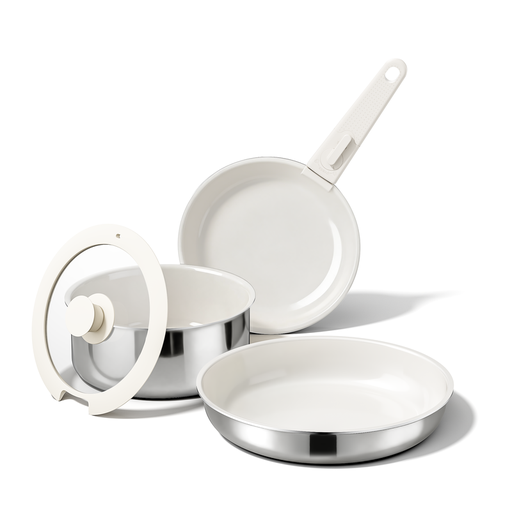
Why This Fits Their Persona: This space saving cookware is ideal for those with limited kitchen storage in city flats, caravans or smaller homes. The stackable design and single removable handle solve the common problem of cluttered cupboards.
It directly counters the issue of bulky, inefficient storage. The diamond-titanium ceramic coating is also designed for enhanced durability, addressing the short-lifespan pitfall.
Saves up to 70% of cabinet space. The set is fully oven-safe (up to 250°C) and compatible with all hobs, including induction, offering true versatility.
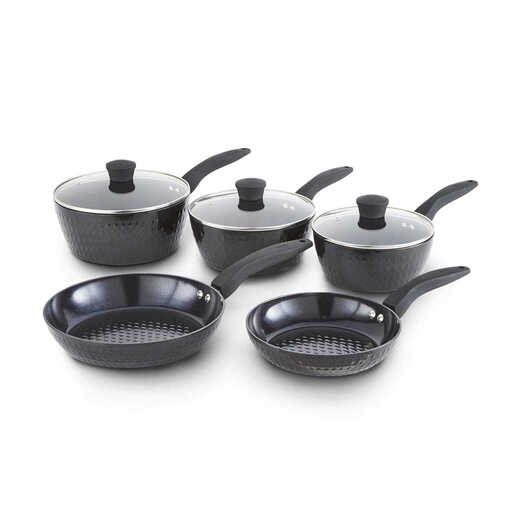
Why This Fits Their Persona: This user prioritises cooking with minimal oil and wants assurance about the materials touching their family's food. This comprehensive set is designed for healthy, low-fat cooking.
It cuts through vague "healthy" marketing by explicitly stating its coating is free from PFAS, PFOA, PTFE, lead and cadmium. According to the brand, its Black Diamond coating is also 7x stronger than standard non-sticks, addressing durability concerns.
A complete 5-piece set (3 saucepans, 2 frying pans) with a bonded steel base for even heat on all hobs. The set is also dishwasher safe for easy cleaning.
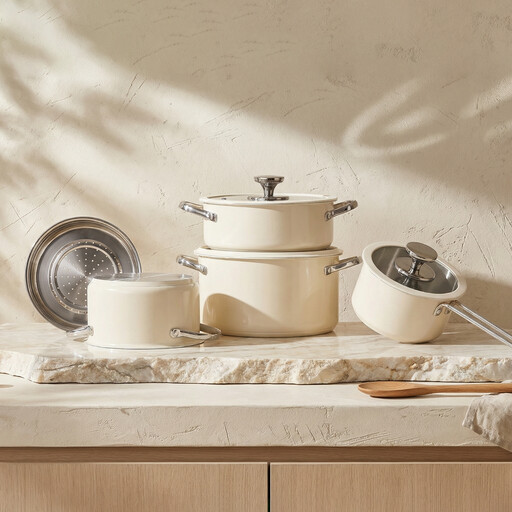
Why This Fits Their Persona: This is an excellent kitchen starter set for someone setting up a new home. It provides a versatile range of pots for boiling, steaming and making soups, covering the essentials beyond just frying.
It avoids the trap of buying single, limited-use pans. The durable 304 stainless steel interior is non-reactive and built to last, while the ceramic exterior ensures easy cleaning, offering a balance of durability and convenience.
A comprehensive set including a milk pot, soup pot with steamer, hot pot and stock pot. It's compatible with all stovetops, including induction.
We have compiled a complete, real-time list of products that fully satisfy these strict selection criteria and UK safety regulations.
1. How long does a good non-stick pan really last? The lifespan of a non-stick pan depends heavily on the coating quality and how it's used. A high-quality ceramic or reinforced pan, used with non-metal utensils over low to medium heat and hand-washed, can maintain its non-stick properties for several years. In contrast, a lower-quality pan used on high heat may only last a few months to a year.
2. Are ceramic non-stick pans safer than traditional ones? Modern ceramic coatings are generally considered a safe option as they are made without PTFE and PFOA. The primary safety concern with older, traditional non-stick pans was the potential release of fumes from PFOA-containing coatings at very high temperatures. As all cookware sold in the UK must now be PFOA-free, the choice often comes down to cooking performance and durability preferences.
3. Can I use my non-stick pans in the oven? It depends entirely on the specific product. To be an oven safe pan set, the pan body, coating and handles must all be made from materials that can withstand oven temperatures. Always check the manufacturer's specifications. Pans with plastic or Bakelite handles often have a low maximum oven temperature (e.g., 150°C) or are not oven-safe at all, while those with stainless steel handles can typically handle higher heat (e.g., 250°C).