A perfectly planned meal can be quickly spoiled by a frying pan that sticks, scratches or heats unevenly. Whether you're flipping delicate pancakes, searing a steak or simply frying an egg, the right pan makes all the difference. With so many materials, coatings and features on the market, choosing a new non-stick frying pan can feel overwhelming.
As the Joybuy Product Recommendation Officer, my role is to help you navigate these choices. This guide cuts through the marketing jargon to offer practical advice, helping you find a pan that suits your cooking style, hob type and household needs. We will explore key features to look for and highlight some standout options available in 2026.
What to Look for in a Frying Pan
Before diving into specific products, let's cover a few key considerations that will help you make an informed decision.
1. Non-Stick Surface and Materials
The coating is the heart of a non-stick pan. Modern options have moved far beyond early designs, with a focus on durability and health.
- Ceramic Non-Stick: A popular choice for those seeking a healthy frying pan. Ceramic non-stick pan surfaces are typically free from chemicals like PFOA and PTFE. Many are now reinforced with materials like diamond or titanium for improved longevity and scratch resistance.
- Hybrid Surfaces: Some pans combine the benefits of a stainless steel frying pan with non-stick properties. These often feature a laser-etched pattern of steel ridges to protect the non-stick coating in the valleys, allowing for excellent searing while maintaining easy food release.
- Traditional Non-Stick: While still common, it's important to look for coatings that are explicitly PFOA-free. Always follow manufacturer guidance regarding heat levels and utensil use to preserve the surface.
2. Construction, Compatibility and Versatility
A pan's performance is heavily influenced by its build quality and compatibility with your kitchen setup.
- Heat Distribution: Look for pans with a multi-layer or clad base, which often sandwiches a layer of highly conductive aluminium between layers of durable stainless steel. This construction prevents hot spots and ensures your food cooks evenly.
- Hob Compatibility: If you have a modern kitchen, ensuring you have an induction frying pan is crucial. Check the product specifications for compatibility with induction, gas, electric and ceramic hobs.
- Oven Safety: An oven safe skillet adds a layer of versatility to your cooking, allowing you to start a dish on the hob and finish it in the oven. Always check the maximum recommended temperature, including for the handle and lid.
- Lids and Shape: A frying pan with lid is excellent for simmering, steaming and preventing splatters. The shape also matters; while a round pan is a versatile all-rounder, a specialised square omelette pan can make certain dishes much easier to prepare.
Recommended Non-Stick Frying Pans
Here are a few recommendations that cater to different cooking needs and preferences, selected for their features and construction.
PURECOOK 304 Triple-Ply Stainless Steel Frying Pan (28cm)
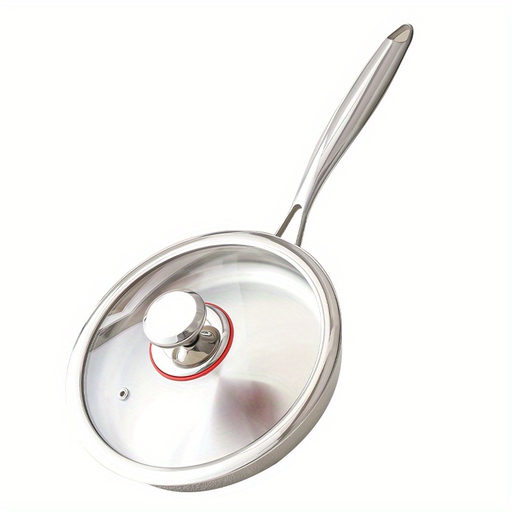
- Why It Stands Out: This pan is built for durability and consistent performance. Its triple-layer clad base (stainless steel-aluminium-stainless steel) provides rapid and remarkably even heat distribution, which is ideal for dishes requiring precise temperature control. The inclusion of a glass lid with a heat-insulating silicone base adds a practical touch for monitoring cooking without losing heat or moisture.
- Pros:
- Excellent heat distribution from the triple-ply construction.
- Highly durable and resistant to corrosion, warping and scratches.
- Includes a transparent glass lid for easy monitoring.
- The surface is robust enough to tolerate metal utensils.
- Who is it for? Home cooks who value longevity and even heating, and who want a versatile pan for everything from searing to simmering sauces.
Naturepan High-Carbon Stainless Steel Frying Pan with Diamond Titanium Coating (28cm)
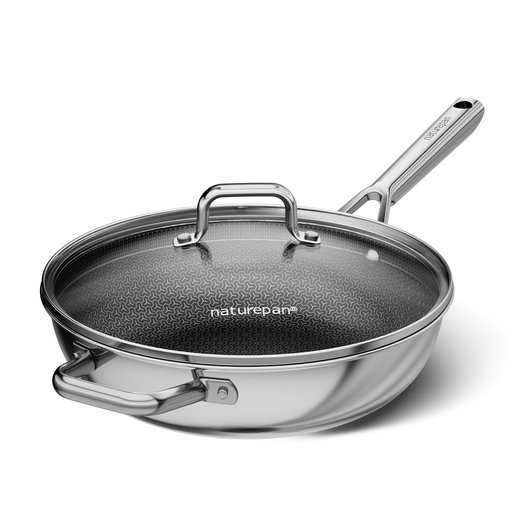
- Why It Stands Out: This Naturepan model features a ceramic coating reinforced with diamond and titanium particles, offering a durable non-stick surface that is free from PTFE, PFAS and PFOA. Its high walls and included lid make it exceptionally versatile, functioning almost like a shallow Dutch oven for stews and braises. It is also an oven safe skillet up to a high temperature of 260°C.
- Pros:
- PTFE/PFOA/PFAS-free ceramic coating for healthier cooking.
- High walls and a lid increase its versatility for a range of dishes.
- Compatible with all heat sources, including induction.
- Oven safe to 260°C for stovetop-to-oven recipes.
- Who is it for? The health-conscious cook looking for a versatile, deep-sided induction frying pan that can handle everything from frying to slow-cooking.
naturepan Hybrid Ceramic Frying Pan (28cm)
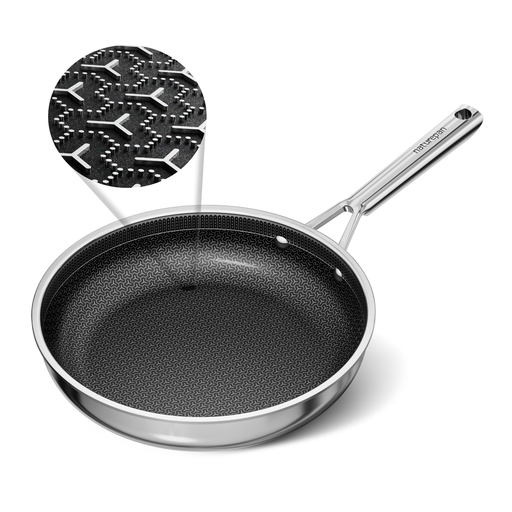
- Why It Stands Out: This pan offers a unique hybrid surface. It combines the searing capability of stainless steel with the ease of non-stick. A laser-etched hexagon pattern creates raised steel ridges that protect the diamond-titanium ceramic coating in the valleys. This allows you to get a great sear on meats while still enjoying effortless food release and simple cleanup.
- Pros:
- 5-layer hybrid construction for even heating and searing performance.
- Highly scratch-resistant surface.
- PFAS, PFOA and PTFE-free non-stick coating.
- Oven safe to 260°C and compatible with all hobs.
- Who is it for? Ambitious home cooks who want the best of both worlds: the high-heat searing of stainless steel and the convenience of a non-stick surface.
Maxcook Nonstick Japanese Square Omelette Pan
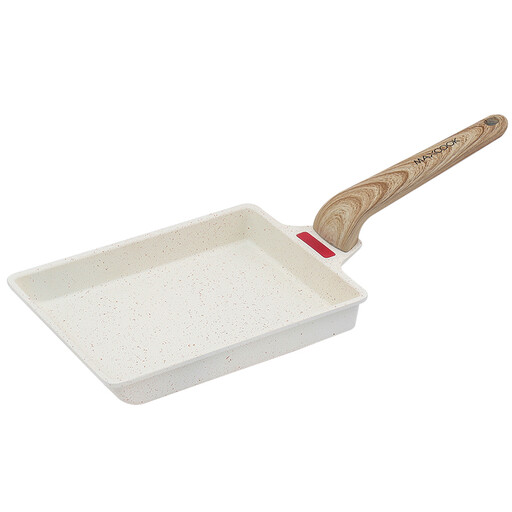
- Why It Stands Out: Sometimes, a specialised tool is the right choice. This compact, square pan is designed specifically for making Tamagoyaki, the classic Japanese rolled omelette. Its shape makes it easy to fold and roll the delicate layers of egg, while the non-stick coating ensures a smooth release every time.
- Pros:
- Specialised square shape is perfect for making rolled omelettes.
- Compact size is easy to store and ideal for breakfast dishes.
- Non-stick coating provides easy food release and quick cleaning.
- Lightweight and easy to handle.
- Who is it for? Anyone who loves making Japanese cuisine or simply wants a dedicated, no-fuss omelette pan for perfect results.
Looking for Something Else?
Now that your kitchen is sorted for delicious home-cooked meals, perhaps you're thinking about your next adventure? Preparing for a trip involves more than just packing; it's about choosing the right gear. If you're planning a getaway and want to travel more consciously, you might be interested in exploring our selection of eco friendly luggage.
Frequently Asked Questions
1. What is the healthiest type of non-stick frying pan? Many people consider a ceramic non-stick pan to be a healthy option because the coatings are generally made without the use of chemicals like PFOA, PFAS and PTFE. Pans like the Naturepan models listed above feature this type of coating, often reinforced with particles like diamond or titanium for added durability.
2. Can you use metal utensils on a non-stick pan? This depends entirely on the pan. For most traditional and ceramic non-stick pans, it is recommended to use silicone, wood or nylon utensils to avoid scratching the surface. However, some modern pans, like the PURECOOK stainless steel model or the naturepan hybrid pan, are designed with more robust surfaces that can withstand the use of metal utensils. Always check the manufacturer's guidance.
3. How do I know if a frying pan is induction-compatible? To work on an induction hob, a pan must have a magnetic base. Most manufacturers will clearly state if a pan is an induction frying pan on the packaging or in the product description. A simple way to check at home is to see if a magnet sticks firmly to the bottom of the pan. If it does, it will work with an induction hob.


