
24/7 Customer Support

Free returns

Same-day & Next-day Delivery

Quality Guaranteed

Unlock Your Welcome Offers: FREE Delivery | Up to 80% OFF | Free 30-day JoyPlus trial
Download the APP
A non-stick roasting tin can make Sunday lunch easier, but the wrong design may leave you with cramped food, uneven cooking or a damaged coating after a few months. UK kitchens also vary considerably in oven size and storage space, so choosing by appearance alone can be an expensive mistake.
This guide from the Joybuy Product Recommendation Officer focuses on practical buying checks, common marketing traps and suitable options for different cooking habits.
A tin described as “large” may include handles, rolled edges or external walls in its measurements. The usable cooking area can be noticeably smaller. Before ordering, check the internal base dimensions, depth and whether the tin will fit comfortably on your oven shelf.
A 29 x 40cm roasting tin, for example, may suit a family roast, while a 24 x 34cm version can be more manageable for smaller households. Measure your oven shelf and storage cupboard before buying.
Non-stick surfaces differ, but most should be protected from scratching, abrasive cleaners and unnecessary high heat. Some product descriptions permit metal utensils, while others specifically warn against them. Always follow the care instructions supplied with the individual tin rather than relying on general assumptions.
A coating that releases food easily is helpful, but it does not make a roasting tin maintenance-free. Hand washing may be recommended for some models even when similar-looking trays are dishwasher-safe.
A roasting pan with rack can lift meat above the base, allowing air to circulate and juices to collect below. However, the rack takes up cupboard space and may reduce the available height for a large joint. Similarly, pouring lips, freezer-safe construction and dishwasher compatibility are useful only if they match your cooking routine.
Think about what you regularly prepare: a simple tray of vegetables, a full Sunday roast, batch cooking or meals that go directly from freezer to oven.
A deep roasting tray is useful for larger joints, root vegetables and cooking juices, but high sides can make it harder to lift food out. A shallower tray may brown vegetables more readily and be easier to handle.
For family meals, prioritise enough space to arrange food in a single layer. Overcrowding can lead to steaming rather than browning. Also check the tray’s height against your oven shelf position, particularly if your oven has a top heating element or fan cover.
Steel and carbon steel are common materials for roasting tins. A carbon steel roasting tin is generally valued for its sturdy construction and heat conductivity, although weight and care requirements vary between products.
Look for clearly stated material information, coating details and oven-use guidance. A sturdy tray should sit flat and resist flexing when loaded. This is especially important when carrying hot food from the oven to the worktop.
If you want a roasting pan with rack, check whether the rack sits securely inside the tin and leaves enough room beneath it for collecting juices. A raised rack can be useful for meat, poultry and certain vegetables, but it is not essential for every recipe.
For easier cleaning, consider whether the tray is dishwasher-safe, hand-wash recommended or unsuitable for abrasive pads. Non-stick roasting trays should normally be cleaned with warm soapy water and a soft sponge unless the manufacturer states otherwise.
A roasting tin is not always the right vessel for casseroles, lasagne or slow-baked pasta. Oven-safe casserole dishes, including tempered glass casserole dishes and borosilicate glass bakeware, allow you to cook, serve and store meals in one container.
A casserole dish set with lids can be practical for batch cooking, leftovers and fridge storage. However, glassware still requires careful handling: follow the supplied thermal-shock instructions and avoid placing hot glass on a cold or wet surface unless the manufacturer specifically permits it.
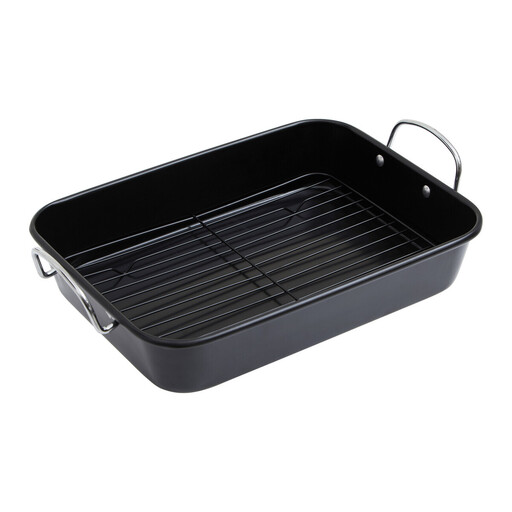
Why This Fits Their Persona: Its compact 24 x 34cm format suits smaller kitchens, couples and beginner cooks who want a straightforward roasting tin for meat and vegetables.
The stated dimensions make it easier to assess oven and cupboard fit, while the included rack avoids buying a separate accessory.
Non-stick coating, durable metal construction and a wire rack for elevated roasting.
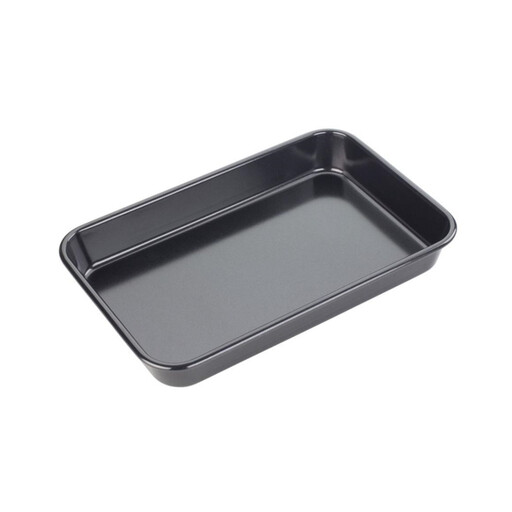
Why This Fits Their Persona: Regular Sunday-roast cooks may value the raised base, pouring lip and robust carbon steel construction for handling meat juices and repeated use.
The product information specifies heavy-weight carbon steel and a 10-year guarantee, rather than relying only on vague durability wording.
Double-layer non-stick coating, pouring lip and stated oven, fridge, freezer and dishwasher compatibility.
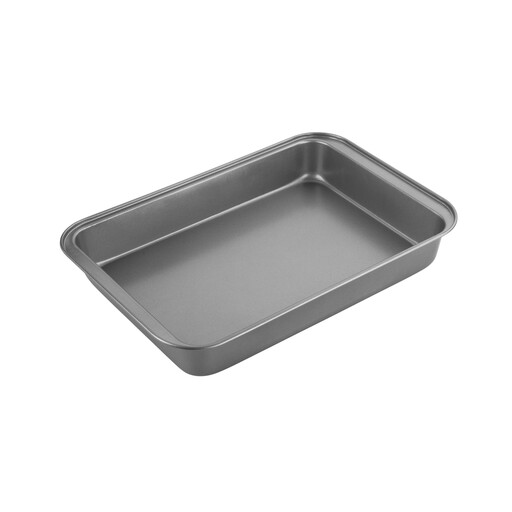
Why This Fits Their Persona: Its deeper sides and larger format are suited to family meals, substantial joints, vegetables and meal preparation where containing juices matters.
The listed depth and rectangular measurements give a clearer indication of capacity than a generic “family size” label.
Deep sides, carbon steel construction and stated fridge-to-freezer-to-oven use.
For covered, moist dishes, a casserole set may offer more flexibility. The Maison by Premier set of three tempered glass casserole dishes includes 1.0L, 1.5L and 2.0L capacities, fitted glass lids and integrated side handles. Its clear design allows food to be viewed during cooking, and the set is described as oven-, microwave-, fridge- and dishwasher-safe.
The Maison by Premier borosilicate glass set is another option for users preparing casseroles, baked pasta, desserts or leftovers. Three lidded dishes can reduce transfers between cooking and storage, although you should still follow the supplied thermal-shock instructions.
A sandwich maker serves a different purpose altogether. For quick breakfasts, the 750W appliance has double-sided heating and a non-stick cooking surface. It should be considered an additional appliance rather than an alternative to a roasting tin.
We have compiled a complete, real-time list of products that fully satisfy these strict selection criteria and UK safety regulations.
It can be a practical choice if you regularly roast meat or vegetables and want easier food release and cleaning. Choose one with suitable dimensions, clear care instructions and enough depth for your usual recipes. A roasting rack is useful for elevated meat but is not essential for traybakes or vegetables.
Lifespan depends on construction, frequency of use, oven temperatures and cleaning habits. Avoid metal utensils where instructed, abrasive scourers and sudden temperature changes. A tray with sturdier steel construction or a stated guarantee may be more suitable for frequent cooking, but no coating should be treated as scratch-proof unless the product information specifically says so.
Only when the product description or manufacturer’s instructions expressly allow it. Metal trays and glass bakeware have different thermal properties. With borosilicate or tempered glass casserole dishes, follow the stated temperature and thermal-shock guidance carefully. Never assume that all oven-safe cookware is automatically freezer-to-oven safe.