
24/7 Customer Support

Free returns

Same-day & Next-day Delivery

Quality Guaranteed
Download the APP
Categories
As home cooks in the UK become more conscious of what goes into their food, the conversation has naturally extended to the tools we cook with. Concerns about chemical coatings on traditional non-stick pans have led many to search for a non toxic frying pan. But navigating the market can be confusing, with various materials and marketing claims to decipher.
This guide is designed to help you understand the key features of healthy cookware. We will explore the different types of materials available and provide clear, practical advice to help you select a pan that suits your cooking style and health priorities.
Choosing the right pan involves more than just its non-stick capability. Here are a few important factors to consider to ensure you're making a sound investment for your kitchen.
The two most common choices for those seeking a Teflon free pan are ceramic and stainless steel.
ceramic non stick pan is excellent for cooking delicate foods like eggs and fish. The primary consideration is durability; the coating can wear down over time, so careful use and hand washing are often recommended.stainless steel frying pan is exceptionally durable and long-lasting. It contains no chemical coatings and can handle very high heat, making it perfect for searing meats and achieving a good crust. While it doesn't have a built-in non-stick coating, proper heating techniques and the use of cooking fats can prevent most food from sticking.You will often see the term PFAS free pan when shopping for healthy cookware. PFAS (per- and polyfluoroalkyl substances) are a large group of man-made chemicals used in many consumer products, including some older types of non-stick coatings. Choosing cookware explicitly labelled as PFAS-free ensures that these specific chemicals were not used in its manufacturing process.
Consider how you cook. Do you need a versatile wok pan with lid for stir-frying and steaming, or a deep sauté pan for braising and making sauces? Also, check for hob compatibility. If you have a modern kitchen, ensuring your new pan is suitable for induction cookware is essential.
As a Joybuy Product Recommendation Officer, my role is to filter market information to find practical and reliable options. Here are our recommendations based on material, performance and user-centric features.
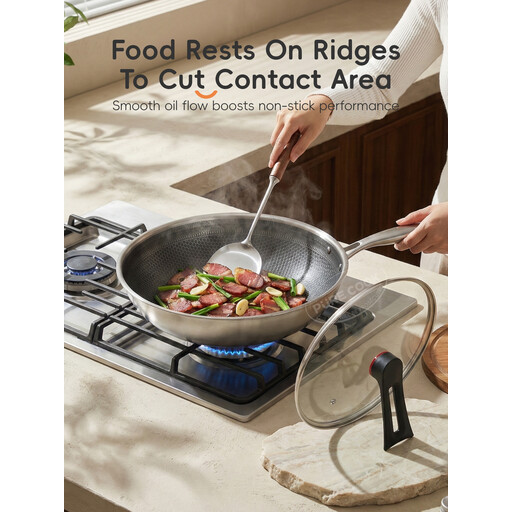
Why It Stands Out: This wok offers a clever alternative to chemical non-stick coatings. It is constructed from food-grade 304 stainless steel and features an interior single-screen honeycomb texture. This engraved pattern creates a physical barrier, elevating food from the main surface to reduce sticking without any coatings. Its three-layer composite structure ensures heat is distributed quickly and evenly.
Pros:
Who is it for: Home cooks who enjoy stir-frying, braising and stewing. Its large 32 cm size and versatile design make it ideal for preparing family-sized meals.
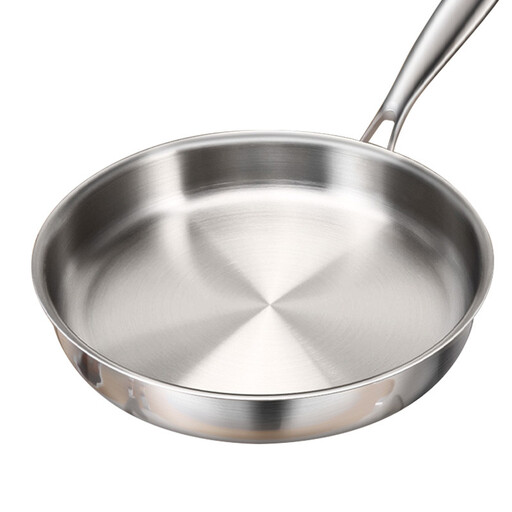
Why It Stands Out: This pan is built for performance and longevity. Its triple-ply construction, which sandwiches an aluminium core between two layers of stainless steel, provides exceptional heat conductivity and prevents hot spots. This structure also makes the pan highly resistant to warping, ensuring the base remains flat for consistent contact with the hob.
Pros:
Who is it for: Cooks who value durability and performance. It is an excellent all-rounder for searing steaks, sautéing vegetables and creating flavourful pan sauces.
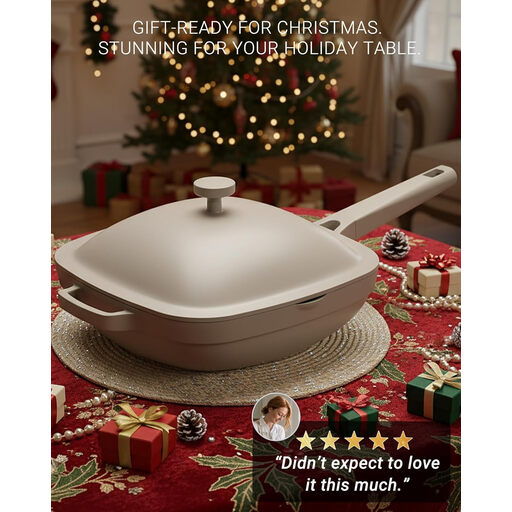
Why It Stands Out: This pan combines the convenience of non-stick with the assurance of non-toxic materials. It features a Ti-Ceramic non-stick coating on a cast aluminium body, certified as PFAS-free. Its unique square-like shape provides more cooking surface than a traditional round pan of a similar size. The lightweight design and included accessories add to its overall value.
Pros:
Who is it for: Anyone looking for an easy-to-use, non-toxic, non-stick pan for daily tasks like frying eggs, making pancakes or cooking delicate fillets of fish.
A great pan is an essential starting point, but having the right accessories can make your cooking experience even better. If your current cookware is missing a top, or you're looking for a replacement that fits just right, a well-fitting lid can help lock in moisture and flavour.
Explore our selection of universal and pan-specific lids to complete your kitchen setup.
Q: Is a ceramic non stick pan truly safe? A: Generally, ceramic non-stick coatings are considered a safe option for healthy cookware. They are made from a sand-derived sol-gel process and do not contain PTFE or PFOA. As with any cookware, it's important to follow the manufacturer's instructions for use and care to maintain the integrity of the surface.
Q: How do I cook with a stainless steel frying pan to prevent food from sticking? A: The key to using a stainless steel pan is proper heat management. First, preheat the dry pan over medium heat for a minute or two. Add your cooking oil and let it heat up until it shimmers. At this point, the pan is ready, and you can add your food. This process, known as creating a "hot pan, cold oil" barrier, helps prevent sticking.
Q: What does PFAS-free mean for cookware? A: PFAS stands for per- and polyfluoroalkyl substances, a class of chemicals sometimes referred to as 'forever chemicals'. When a pan is labelled 'PFAS-free', it means that these specific substances were not intentionally used in the manufacturing of its materials, particularly any non-stick coatings. This is a key indicator for consumers seeking healthy cookware.