
24/7 Customer Support

Free returns

Same-day & Next-day Delivery

Quality Guaranteed

Unlock Your Welcome Offers: FREE Delivery | Up to 80% OFF | Free 30-day JoyPlus trial
Download the APP
By Joybuy Product Recommendation Officer
A nose hair trimmer can be a useful personal grooming tool for tidying nose, ear, eyebrow and facial hair at home or while travelling. However, product listings often focus on motor speed, waterproof ratings and accessory counts while leaving out details that affect everyday usability.
The most practical buying decision comes down to safe trimming, easy cleaning, dependable power and attachments that match your routine. Below, we explain the common purchasing traps and highlight suitable options for different grooming needs.
Specifications such as 6,500, 7,800 or 8,500 RPM may sound impressive, but speed alone does not determine comfort or control. A fast motor can be useful for efficient cutting, yet the blade guard, head shape and handling also matter.
For nose and ear grooming, look for a rounded or dome-shaped cutting head designed to reduce direct contact between the cutting edges and sensitive skin. Use the trimmer gently and never push it deeply into the nose or ear canal.
A waterproof nose hair trimmer is easier to rinse, but its charging instructions still need checking. Battery-powered models usually avoid charging-port concerns. USB-C rechargeable nose hair trimmers should be completely dry before connecting the cable.
An IPX7 rating, where stated, indicates protection against temporary immersion under defined test conditions. It does not mean the product should be left submerged or used carelessly in the bath. Detachable, washable heads can be more important in practice because they allow hair and residue to be rinsed away directly.
A 3-in-1 grooming trimmer may provide useful flexibility for eyebrows, sideburns and facial hair. However, extra heads can be unnecessary if you only want occasional nose trimming. Check whether the attachments are easy to identify, clean and store.
For eyebrow shaping, a dedicated eyebrow trimmer may offer more control than a wider nose-and-ear head. You can browse the wider eyebrow trimmer range if brow maintenance is your main requirement.
A stainless steel blade trimmer is practical because stainless steel is resistant to corrosion when maintained correctly. A rounded R-shaped or dome-shaped blade design can help guide hair towards the cutter while limiting sharp-edge contact with the skin.
Do not rely on claims such as “painless” as a guarantee. Comfort depends on technique, hair thickness and skin sensitivity. Stop using the device if you experience discomfort, redness or irritation.
Choose between:
When comparing running costs, consider the battery type, stated runtime and how often you groom. A model used for one minute weekly will consume power differently from one used for several facial grooming sessions each week.
A washable nose trimmer should have clear cleaning instructions. Detachable heads are useful for rinsing, while a cleaning brush can remove hair from areas that water may not reach. A protective cap or storage stand helps keep the head cleaner between uses.
Look for product information covering:
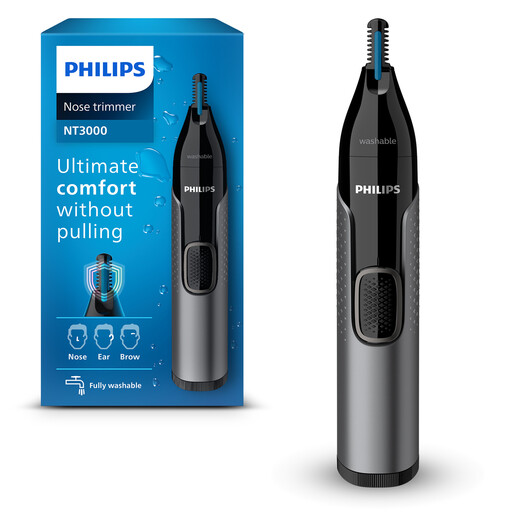
Why This Fits Their Persona: A straightforward choice for UK shoppers wanting a compact everyday trimmer with no charging cable to carry.
It uses a protective guard system, stainless steel blades and a fully washable design rather than relying only on motor-speed claims.
AA battery included, dual-sided cutting system, eyebrow comb attachments and washable construction.
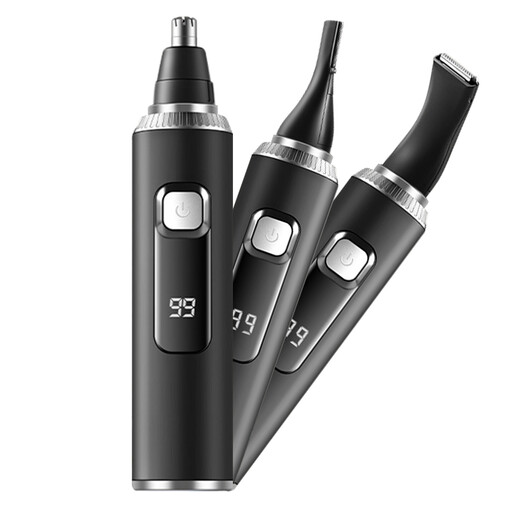
Why This Fits Their Persona: Suitable for regular users who prefer rechargeable operation, a battery display and several facial grooming functions in one device.
The product specifies a rounded blade head, detachable washable head and Type-C charging, making the key maintenance details visible.
8500 RPM motor, 600mAh battery, approximately two-hour charging time, IPX7 rating and LED battery indicator.
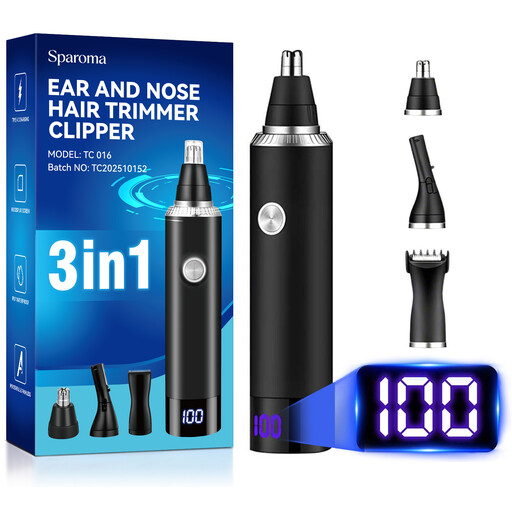
Why This Fits Their Persona: A practical match for users who trim nose, ear, eyebrows, sideburns and other small facial areas frequently.
Its three detachable heads offer defined uses, while the stated IPX7 rating and washable design address cleaning concerns.
7800 RPM motor, 120-minute stated working time, USB-C charging and LED power display.
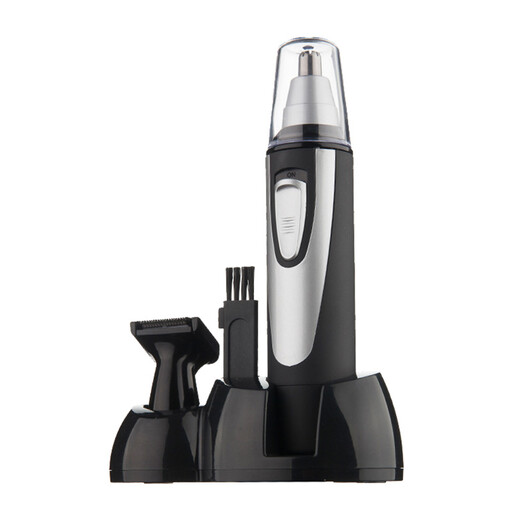
Why This Fits Their Persona: Its compact battery-powered format suits weekends away, business trips and grooming without access to a USB socket.
The dual-head design is more focused than an oversized kit, and the protective cap helps keep the cutting head covered in a washbag.
IPX7 rating, stainless steel blades, one AA battery and a stated runtime of up to 30 days with daily use.
We have compiled a complete, real-time list of products that fully satisfy these strict selection criteria and UK safety regulations.
Many users only need occasional touch-ups, often every one to three weeks. Hair growth varies, so trim only visible or unwanted hair rather than removing all nasal hair.
They can reduce the need for regular disposable batteries, particularly with frequent use. However, compare charging time, stated working time and battery capacity before buying. A battery-powered model may be more convenient for infrequent use or travel.
Only if the product includes a suitable eyebrow or detail attachment. A dedicated eyebrow trimmer may provide finer control for shaping. Always follow the product’s intended-use guidance and avoid using a nose head on areas where a wider or flatter attachment is specified.