
24/7 Customer Support

Free returns

Same-day & Next-day Delivery

Quality Guaranteed

Unlock Your Welcome Offers: FREE Delivery | Up to 80% OFF | Free 30-day JoyPlus trial
Download the APP
Buying notebooks can look straightforward until the pages bleed, the binding becomes awkward or the format does not suit your daily routine. Whether you need A5 notebooks for commuting, project books for coursework or themed stationery for gifting, a few specifications make a noticeable difference.
This guide explains the common buying traps, the measurements worth checking and our top recommendations for 2026 based on practical use cases.
A high page count does not always mean better value. Some notebooks have narrow margins, large ruling or decorative pages that reduce usable space. Check the page layout, line spacing and whether pages are perforated before comparing products.
For example, lined notebooks with 8 mm ruling suit structured notes, while blank notebooks offer more flexibility for sketches, diagrams and free-form journalling.
Paper thickness is usually shown in gsm, meaning grams per square metre. A higher gsm generally indicates a heavier sheet, but writing performance also depends on the paper finish and the ink being used.
Standard 80 gsm paper is practical for pencils, ballpoint pens and everyday note-taking. 100 gsm paper may feel smoother and can help reduce show-through when using fountain pens, markers or wetter inks. However, no paper should be assumed to prevent bleed-through with every pen without checking the manufacturer’s information.
A notebook may look attractive but become inconvenient if it will not stay open or fit comfortably in a bag. Wiro notebooks and spiral-bound notebooks can usually fold back on themselves, making them useful on small desks or during lectures. However, the wire can catch on other items if the notebook is stored loosely.
Card covers are light and portable, while polypropylene or silicone covers offer a wipe-clean or tactile finish. Whichever style you choose, keep notebooks away from moisture, as dampness can warp paper and affect printed artwork.
Consider the space available on your desk and whether you will carry the notebook on public transport or between classrooms.
Choose ruled notebooks for handwriting, minutes and revision notes. Look for margins if you need a clear structure. Blank pages are more suitable for drawing, brainstorming, mind maps and creative writing.
For multiple subjects or ongoing work, project books with dividers and storage pockets can prevent loose papers from becoming separated from your notes. Repositionable dividers are particularly useful when your topics change during a term.
A 360-degree opening is useful when writing with limited desk space. Perforated pages make it easier to remove assignments or share notes, while pre-punched holes may allow pages to be filed in a compatible ring binder.
For frequent use, check the cover material, page count and whether the product is sold individually or as a notebook set. Packs can be convenient for school and office supplies, but a single decorative notebook may be more suitable as a gift or personal journal.
The following selections match different shopping priorities rather than assuming one notebook suits everyone.
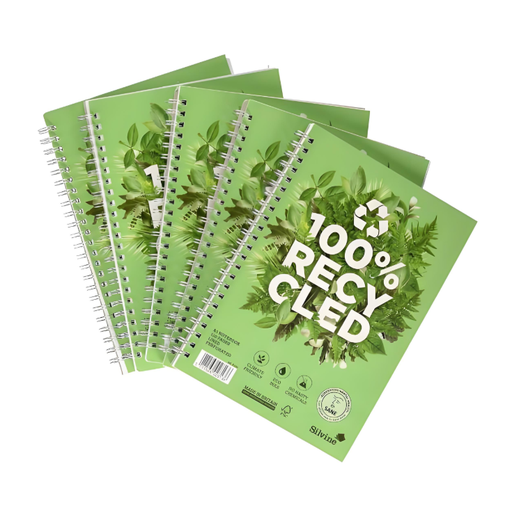
Why This Fits Their Persona: A five-pack gives students, households and offices several A5 notebooks for separate subjects or tasks without buying each one individually.
The listing specifies 120 lined pages per notebook, recycled 80gsm paper, four pre-punched holes and perforated sheets, making the practical features clear.
Five A5 wirebound notebooks, 360-degree opening and UK-manufactured recycled paper.
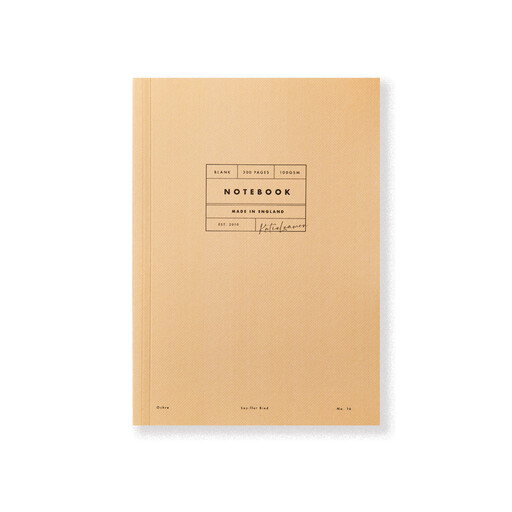
Why This Fits Their Persona: Writers, artists and stationery enthusiasts may prefer a substantial blank notebook for journalling, sketching, planning and fountain-pen writing.
Its specification states 300 blank pages and 100gsm paper, so buyers can see that the format is designed for flexible use rather than ruled notes only.
A5 portability, 300 blank pages and 100gsm paper described as suitable for fountain pens.
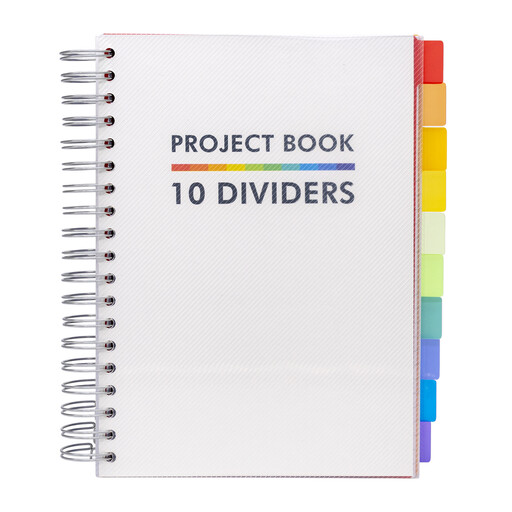
Why This Fits Their Persona: Students, teachers and office users managing several modules, clients or projects can use the B5 format and dividers to keep information together.
The product provides ten repositionable dividers, storage organisation, perforated pages and a wipe-clean translucent cover rather than relying on appearance alone.
400 pages of 80gsm FSC-certified paper and ten dividers in a portable B5 size.
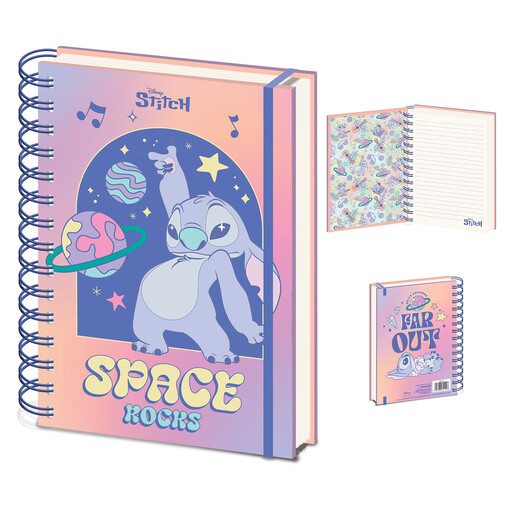
Why This Fits Their Persona: Fans of Disney, character notebooks and colourful stationery can use this compact design for school, everyday notes or gifting.
The listing specifies the A5 format, lined layout and metal wiro binding, helping shoppers assess portability and writing practicality alongside the themed artwork.
A5 portability, lined pages and a wiro binding designed to lie flat or open 360 degrees.
We have compiled a complete, real-time list of products that fully satisfy these strict selection criteria and UK safety regulations.
Yes. A5 notebooks are portable enough for backpacks, handbags and desk drawers while providing room for regular notes. Choose lined pages for lessons and meetings, or a project book with dividers if you need to separate subjects.
80gsm paper is commonly suitable for pencils, ballpoint pens and many standard writing instruments. If you use fountain pens, markers or liquid ink, look for a notebook with a stated 100gsm specification and check the product information for ink-performance guidance.
Lifespan depends on frequency of use, storage and binding quality. A notebook used daily may fill quickly even if the cover remains intact. Keep it dry, avoid bending the spine and do not place heavy objects on top of spiral-bound notebooks. For long-term organisation, perforated pages and filing holes can make notes easier to store after the notebook is full.