
24/7 Customer Support

Free returns

Same-day & Next-day Delivery

Quality Guaranteed

Unlock Your Welcome Offers: FREE Delivery | Up to 80% OFF | Free 30-day JoyPlus trial
Download the APP
Buying notebooks and diaries can look straightforward until you compare paper weight, page layouts, bindings and sizes. A low-priced notebook may become frustrating if its pages tear easily, while a diary with an attractive cover may not provide enough room for real appointments and notes.
Whether you are organising university work, managing office deadlines, planning family life or looking for stationery gift ideas, the right choice depends on how you will use it. The following guide filters the practical details from the decorative marketing language.
A compact notebook may fit neatly into a handbag or backpack, but it can become cramped for lecture notes or project planning. Conversely, a large desk diary may be useful at home but inconvenient to carry between meetings.
A5 notebooks and A5 diaries offer a practical middle ground for many UK users. They are generally portable while still providing enough writing space for everyday notes. Larger desk formats are more suitable for a fixed workspace, shared family planning or detailed financial records.
Hardcover notebooks usually provide a firmer writing surface and more protection in a busy bag. However, they can add weight. Softcover notebooks are lighter and often more comfortable for carrying several at once, but their covers may bend if they are not stored carefully.
The binding also matters. A glued spine may restrict access near the centre of the page, whereas spiral notebooks and wirebound notebooks can open more widely. Check whether the binding allows a flat opening before prioritising appearance.
“Premium paper” is not a sufficiently precise specification. Look for the paper weight, usually stated in gsm. For example, 80gsm paper is suitable for everyday pencils, ballpoint pens and many gel pens. Heavier 100gsm or 120gsm paper can provide a firmer writing feel and may reduce show-through, although results vary by ink type.
Also check whether a listing specifies sheets or pages. One sheet has two sides, so a notebook with 96 sheets generally offers 192 writing sides. This distinction is particularly important when comparing value across packs and individual journals.
For 2026 diaries, check whether the layout is day-to-page, week-to-view or month-to-view. A day-per-page diary gives more room for appointments, lists and reflections, while a week-to-view format is easier for seeing several commitments at once.
A lay-flat binding is useful when writing on a desk, particularly for left-handed users or anyone who needs both hands free. Twin-wire spirals can offer a 360-degree opening, while stitched notebooks may open flat without adding a large metal coil.
Perforated pages are practical when notes need to be removed, but they may not suit users who want a permanent record. Pre-punched holes can also help students and office users file pages in a ring binder.
Choose a hardcover notebook if you often write without a desk or carry it alongside other items. A softcover may be more appropriate for lightweight daily notes or for dividing subjects across a multi-pack.
If you use fountain pens, brush pens or markers, prioritise a higher paper weight and consider testing the first page before filling the notebook. No paper specification can guarantee identical performance with every ink. For creative layouts, numbered pages and a 180-degree opening can be more useful than ruled lines.
The following options are matched to different shopping needs rather than ranked universally.
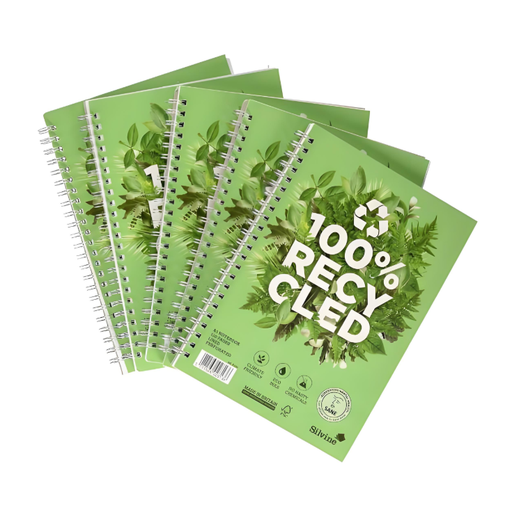
Why This Fits Their Persona: A five-pack gives students, home organisers and new stationery users separate books for subjects, projects or household notes without buying individual notebooks repeatedly.
The listing states five A5 notebooks, 120 lined pages per notebook and 80gsm recycled paper, making quantity and paper details clear.
Wirebound construction opens 360 degrees; pages are perforated and pre-punched with four filing holes.
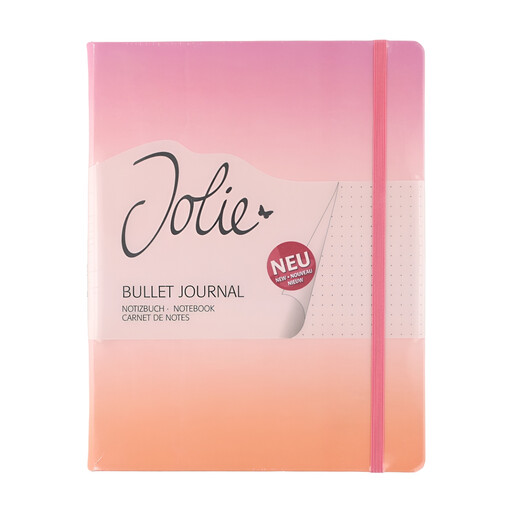
Why This Fits Their Persona: The A5+ journal suits creative stationery lovers, diary writers and users who want one book for planning, lettering and personal reflection.
The specification identifies 200 numbered pages, a 180-degree lay-flat design and 120gsm paper rather than relying only on appearance-based descriptions.
Numbered pages support indexing; the hardcover provides a firm surface for writing and drawing.
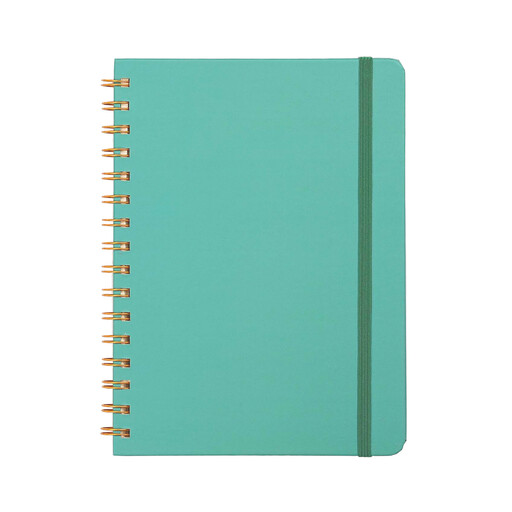
Why This Fits Their Persona: Its durable format is suitable for office documentation, university notes, journalling and regular use on different surfaces.
The product details specify 96 sheets, 100g cream ruled paper, twin-wire binding and an elastic closure, allowing a clearer comparison with lighter notebooks.
Hardcover construction and twin-wire binding; elastic band helps keep the notebook closed during transport.
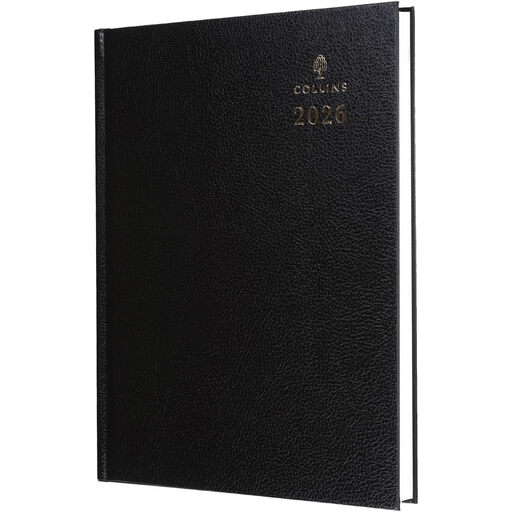
Why This Fits Their Persona: A desk-based planner works well for households, professionals and home organisers who need visible scheduling and budgeting sections in one place.
Rather than offering dates alone, the diary includes a three-year calendar, forward planning pages, an expenses tracker and a bills organiser.
Lay-flat binding supports desk use; dedicated finance sections help separate appointments from household administration.
We have compiled a complete, real-time list of products that fully satisfy these strict selection criteria and UK safety regulations.
Usually, yes. A5 notebooks are portable and work well for meeting notes, revision, to-do lists and daily journalling. For long reports, diagrams or shared desk planning, an A4 format may provide more usable space.
A dated diary is designed for one calendar year, but its physical lifespan depends on storage and handling. Keep it away from moisture, avoid overloading the binding and choose a cover that suits how often it will travel. A hardcover or wirebound option may be more suitable for frequent daily use.
They can be useful if you need dated pages for the remaining months, future planning sections or a structured record of appointments. Before purchasing, check the calendar coverage and whether the diary includes notes, expenses or forward-planning pages that match your needs.