
24/7 Customer Support

Free returns

Same-day & Next-day Delivery

Quality Guaranteed

Unlock Your Welcome Offers: FREE Delivery | Up to 80% OFF | Free 30-day JoyPlus trial
Download the APP
Buying notebooks and diaries can seem straightforward until the first few pages tear out, ink shows through or the format does not suit your daily routine. A low price or attractive cover may be appealing, but practical details such as page layout, binding and portability usually determine whether stationery remains useful beyond the first few weeks.
This guide highlights common buying traps, explains the specifications worth checking and matches several options to different UK lifestyles.
Plush, padded and character-style covers can make appealing stationery gift ideas, but they may take up more room in a work bag or school backpack. Check the stated dimensions and cover material before buying. A soft cover can be enjoyable to hold, while a wipe-clean polypropylene cover may be more suitable for busy classrooms, shared offices or home-working desks.
Paper weight is measured in gsm, or grams per square metre. In general, higher gsm paper feels more substantial, although the result also depends on the ink and pen being used. 80 gsm is common for everyday school stationery and office stationery. 100 gsm offers a smoother, more substantial writing surface, while 120 gsm may be more suitable for hand lettering and creative penmanship.
No notebook guarantees that every marker or fountain pen will avoid show-through. If you regularly use wet ink, check the paper specification and try writing tools that are less likely to bleed through.
A notebook that does not open comfortably can be frustrating during lectures, meetings or drawing sessions. Wirebound and spiral formats generally make page turning simple, while lay-flat binding is useful for writing across the centre fold. If pages need to be filed, look for perforations or punched margins rather than assuming they are included.
A4 notebooks measure approximately 210 × 297 mm and provide more room for project notes, diagrams, meeting minutes and handouts. They are practical for desks, classrooms and document filing, but less convenient to carry every day.
A5 notebooks measure approximately 148 × 210 mm. They fit more easily into handbags, backpacks and briefcases, making them suitable for daily notes, journalling and general planning. An A5+ format can provide additional writing space while remaining relatively portable.
Think about how you normally take notes. A creative user may find ruled paper restrictive, while a student may prefer lines and labelled sections for faster revision.
Look for the details that affect long-term use: page count, gsm, cover material, dividers, pockets and whether pages are perforated. For example, FSC-certified paper indicates that the paper is sourced under the relevant certification scheme stated by the product. It does not automatically indicate a particular writing performance.
Storage pockets can hold receipts, handouts or loose reference sheets. A sturdy cover helps protect pages in transit, while a wipe-clean finish can be useful where stationery is handled frequently.
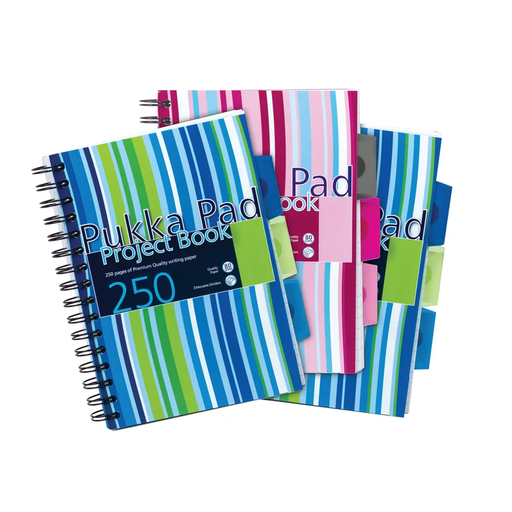
Why This Fits Their Persona: A pack of three gives students, new home workers or families separate books for different subjects and tasks, while the A5 format is easy to carry around the UK.
The product specification clearly states the page count, 8 mm ruling and three repositionable dividers, rather than relying only on cover design.
250 pages per book, 80 gsm FSC-certified paper, storage pockets and repositionable dividers.
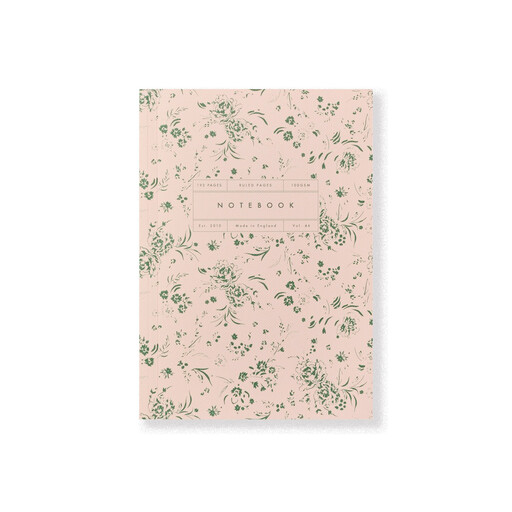
Why This Fits Their Persona: Its portable size and decorative floral cover suit office professionals, journal enthusiasts and shoppers seeking stationery gift ideas with practical specifications.
The listing identifies 196 ruled pages, margins and 100 gsm paper, helping buyers assess function rather than choosing on appearance alone.
100 gsm ivory paper, 196 pages with margins and a textured 300 gsm cover.
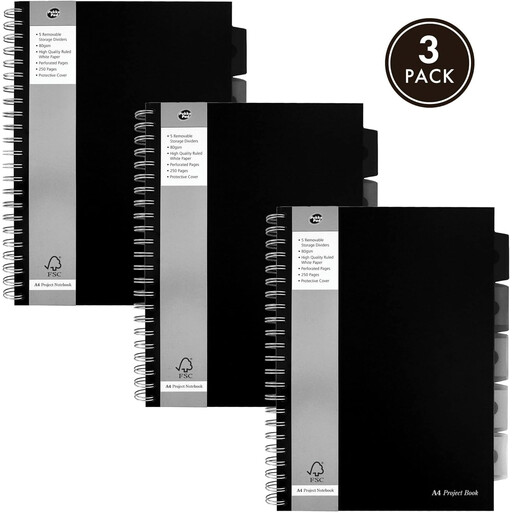
Why This Fits Their Persona: This format is suited to teachers, project-led office teams, researchers and home workers who need generous space and clear separation between workstreams.
The cover is specified as wipe-clean polypropylene, and the book includes perforated pages, dividers and storage pockets for practical document handling.
A4 format, 250 pages per book, five repositionable colour-coded dividers and clean-tear perforations.
Choose A4 when you need space for diagrams, project documents or filing. Choose A5 when portability matters more, such as commuting, attending lessons or carrying a journal every day.
Lifespan depends on page count, binding, handling and storage. A notebook with 160 to 250 pages may last several months or longer, depending on how often it is used. Keep paper away from moisture, avoid bending the spine and use suitable pens to reduce damage.
A dated diary is useful when appointments, deadlines and recurring plans need a fixed structure. If your schedule changes frequently or you prefer flexible notes, a bullet journal, project book or to-do pad may provide more adaptable organisation.