
24/7 全天候客户支持

免费退货

当日/次日达

品质保障

开启新人专享福利: 全场免邮 | 低至 2 折 | 免费试用 30 天 JoyPlus 会员
下载 Joybuy
Whether you are heading back to school, organising a complex work project or starting a new journal, the right notebook is more than just paper – it is an essential tool for clarity and productivity. Yet, the market for notebooks and pads is filled with options that look great on the shelf but fail in practice. Many of us have been disappointed by paper that cannot handle a simple pen, or a binding that falls apart in a rucksack after a few weeks.
As the Joybuy Product Recommendation Officer, my role is to help you see past the marketing and focus on what truly matters. Before you spend your money, let’s look at the common pitfalls that lead to buyer's remorse.
To ensure you get a notebook that works for you, focus on these core parameters. They are the true indicators of quality and usability.
Paper weight is measured in Grams per Square Metre (GSM). This single number tells you more about quality than any marketing slogan.
The binding determines a notebook's durability and how it behaves in use.
Choosing the right size is crucial for usability.
Based on these practical criteria, here are a few recommendations tailored to different needs, helping you find a reliable product without the guesswork.
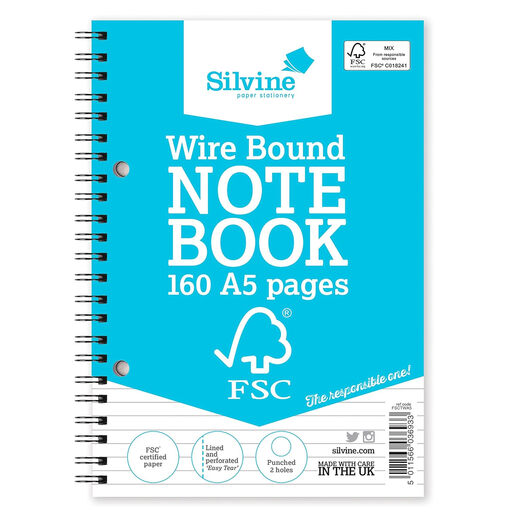
Why This Fits Their Persona: This multipack offers excellent value, providing enough notebooks for multiple subjects. The A5 size is perfect for carrying between lectures, and the wire binding is practical for quick note-taking on small university desks. It is a no-fuss, reliable choice for daily academic use.
It sidesteps the "aesthetics over function" trap by focusing on practicality. The wire binding is functional, and the use of FSC certified and recycled paper provides a baseline of quality and sustainability, avoiding the flimsy paper pitfall.
An economical choice with strong eco-friendly notebooks credentials. The pack of five ensures you are set for the term without breaking the bank.
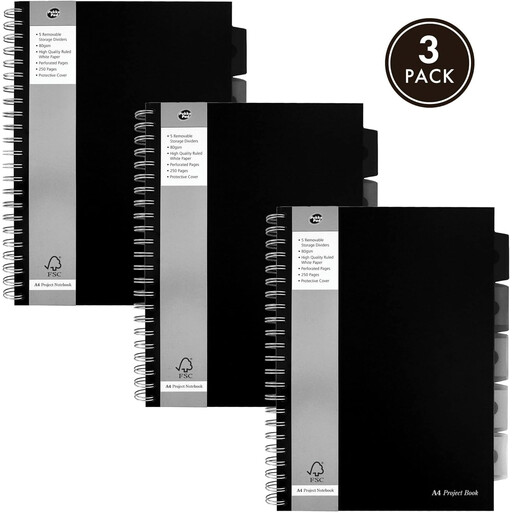
Why This Fits Their Persona: For professionals juggling multiple clients or projects, organisation is paramount. This A4 project book features five repositionable, colour-coded dividers with storage pockets, making it easy to segment work. The durable, wipe-clean cover maintains a professional look in any office environment.
This product is the antidote to the "aesthetics over function" trap. Its core value lies in its organisational features—the very thing stylish but impractical notebooks lack. The 80 GSM paper is a reliable standard for professional use.
Superior organisation thanks to its five notebooks with dividers and storage pockets. The perforated pages allow for clean removal and filing.
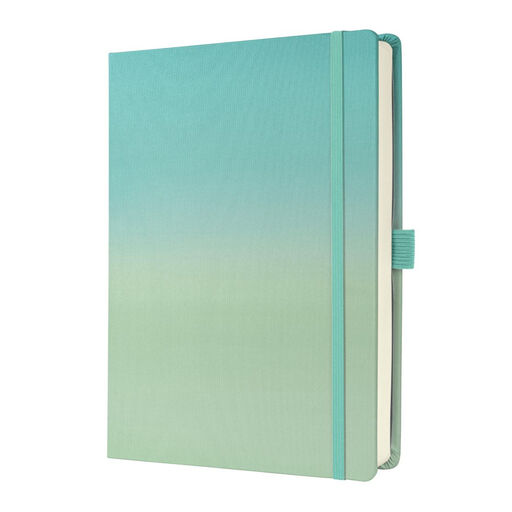
Why This Fits Their Persona: For those who use their journal for creative expression, paper quality is non-negotiable. This journal's thick 120 g/m? paper is perfect for hand lettering, drawing and using a variety of pens without fear of bleed-through. The lay-flat design is essential for a comfortable and unrestricted creative process.
It directly counters the "premium paper" myth by providing a verifiable, high-GSM paper that delivers on its promise. The innovative 180° lay-flat binding also solves the frustrating problem of journals that refuse to stay open.
Exceptional paper quality (120 GSM) and a true lay-flat design make this an excellent canvas for any bullet journal or creative writing project.
We have compiled a complete, real-time list of products that fully satisfy these strict selection criteria and UK safety regulations.
A4 (210 x 297mm) is the largest, equivalent to standard printer paper and is ideal for in-depth work. A5 (148 x 210mm) is half the size of A4, making it the most popular choice for portability and general note-taking. B5 (176 x 250mm) is a mid-size option, offering more writing space than A5 without the bulk of A4 and is often favoured by students.
The key is to choose a notebook with a higher paper weight, measured in GSM. For fountain pens, markers or heavy gel pens, look for paper that is at least 90 GSM, with 120 GSM being even better. For everyday ballpoint pen use, 80 GSM is generally sufficient to prevent significant bleed-through.
This depends on the student's needs. A spiral notebook is highly practical for lectures as it can be folded back on itself to save desk space. Its pages are also often perforated for easy removal. A hardcover journal offers better durability for notes that need to be preserved for the entire academic year and beyond and it often has a more professional appearance. Many students use a combination: spiral notebooks for daily classes and a hardcover for dissertation notes or long-term projects.