
24/7 Customer Support

Free returns

Same-day & Next-day Delivery

Quality Guaranteed

Unlock Your Welcome Offers: FREE Delivery | Up to 80% OFF | Free 30-day JoyPlus trial
Download the APP
Whether you're heading back to university or managing a demanding workload in the office, staying organised is key to success. Juggling lecture notes, project deadlines and daily tasks can feel overwhelming, and a cluttered desk often leads to a cluttered mind. The right stationery isn't just about aesthetics; it's a practical tool that can bring clarity and structure to your day.
As the Joybuy Product Recommendation Officer, my role is to help you find the most suitable tools for your needs. This guide cuts through the clutter, focusing on the features that matter. We will explore some practical options in notebooks and pads to help you find the perfect companion for your academic or professional journey.
Before diving into specific products, let's cover a few key considerations. Thinking about these points will help you select a notebook that truly fits your workflow.
The ideal size of your notebook depends entirely on how you plan to use it.
The way a notebook is bound and organised can significantly impact its usability.
GSM stands for 'Grams per Square Metre' and indicates the weight and thickness of the paper. For office notebooks and journals, a paper weight of 80 GSM is a reliable standard that minimises ink bleeding through the page with most standard pens. For those who prefer fountain pens or heavier inks, paper of 100 GSM or more offers a smoother experience with even less bleed-through.
Here are a few carefully selected notebooks and pads that offer practical features for students and professionals in the UK.
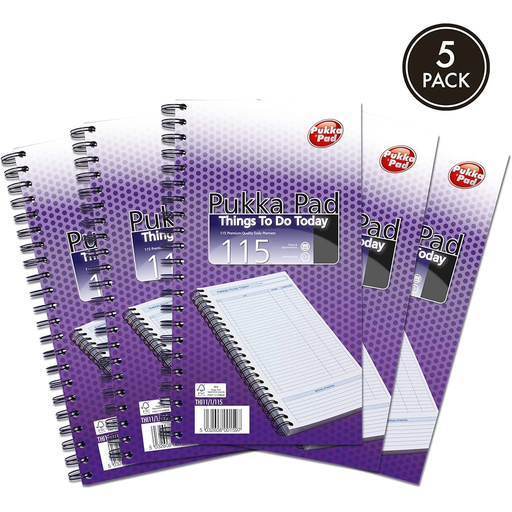
Why It Stands Out: This isn't just a blank pad; it's a structured system for organising your day. With dedicated sections for to-do lists, appointments, high-priority items and general notes, it provides a clear framework for time management.
Pros:
Who is it for? Working professionals who need to track daily tasks, students wanting a dedicated daily planner pad for their desk and anyone who finds satisfaction in ticking off a well-organised to-do list.
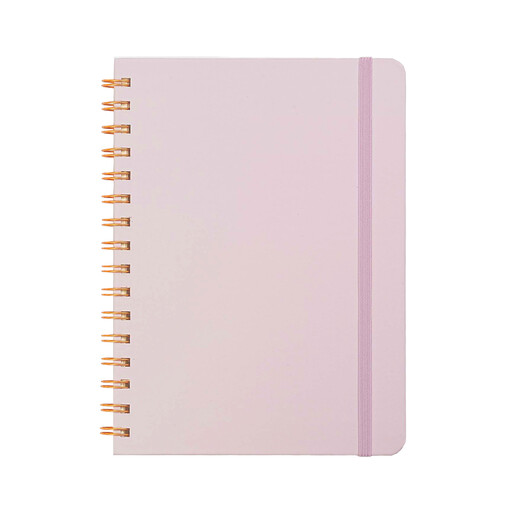
Why It Stands Out: This notebook combines a durable, stylish design with superior paper quality. The 100g cream paper is noticeably smoother and thicker than standard notebook paper, making for a pleasant writing experience with minimal ink bleed.
Pros:
Who is it for? Students seeking a high-quality A5 spiral notebook that stands out, professionals who need a smart-looking journal for meetings and anyone who appreciates a premium feel in their everyday stationery.
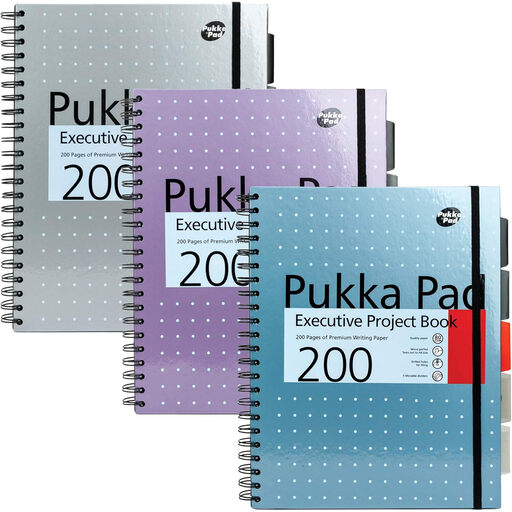
Why It Stands Out: This is the ultimate organisational tool for managing multiple subjects or complex projects. The key feature is its five colour-coded and repositionable dividers, each with a handy storage pocket for loose papers.
Pros:
Who is it for? University students managing several modules, professionals coordinating different projects or anyone who needs a robust, all-in-one A4 project book to keep their work neatly separated and secure. The Pukka Pad brand is well-regarded for this type of organisational notebook.
If the elegant lavender of the Jubiluu notebook caught your eye, you might enjoy creating a coordinated desk setup. A matching colour scheme can bring a sense of calm and order to your workspace. Explore our curated collection for more complementary items.
Discover more in our purple stationery collection
1. What is the best paper weight for a notebook? There is no single "best" weight, as it depends on your writing tools. 80 GSM is a versatile standard for everyday use with ballpoint or gel pens, offering good opacity. If you use fountain pens or markers, opting for 100 GSM or higher will provide a better experience with less risk of ink bleeding through to the other side.
2. Is an A4 or A5 notebook better for university? Many students find a combination of both is ideal. An A4 project book is great for taking comprehensive notes during lectures and keeping all course material in one place. A smaller A5 spiral notebook is useful for revision sessions in the library, group work or jotting down quick notes between classes due to its portability.
3. How can I use a project book effectively? To get the most out of a notebook with dividers, assign each coloured section to a different subject, client or project module. Use the pockets within the dividers to store relevant handouts, articles or receipts. This keeps all related materials together, saving you from searching through loose papers when you need them.