
24/7 Customer Support

Free returns

Same-day & Next-day Delivery

Quality Guaranteed

Unlock Your Welcome Offers: FREE Delivery | Up to 80% OFF | Free 30-day JoyPlus trial
Download the APP
Choosing between notebooks and project books can seem straightforward until the first few weeks of use reveal the drawbacks. Pages may be too thin for your preferred pen, a supposedly portable book may not fit your everyday bag, or a project notebook may lack enough organisation for separate subjects and tasks.
The same applies when comparing paper notebooks with a digital notebook or AI note-taking tablet. A higher price does not automatically mean a better fit. The right choice depends on how you write, what you need to carry and whether you want a paper-based or electronic workflow.
An A5 notebook measures approximately 148 × 210 mm, making it convenient for most backpacks, briefcases and handbags. However, page capacity, cover thickness and binding can affect how easily it fits into a crowded bag.
An A4 project book provides a larger writing area for meeting notes, coursework and printed handouts, but it takes up more desk and storage space. Check the actual dimensions rather than relying only on the size label.
Paper weight is measured in grams per square metre, or gsm. A 100gsm notebook generally offers a more substantial writing surface than an 80gsm ruled notebook, but paper finish and the type of pen used also influence show-through and smudging.
Fountain pens, markers and wet rollerballs are more demanding than ballpoint pens or pencils. If you need clean pages for journalling, lettering or creative work, look for details such as 100gsm or 120gsm paper, a smooth finish and user guidance about suitable writing tools.
A project book with dividers and pockets can help separate modules, client work or household paperwork. It may be unnecessary if you only need a simple daily notebook. Likewise, a digital notebook with transcription and cloud features may involve more setup than a user seeking a quick paper-based task list requires.
Before buying, identify whether you need:
An A5 notebook is suitable for commuting, lectures, personal planning and short meeting notes. A larger A4 project book gives more room for diagrams, tables, lesson plans and documents.
Ruled or feint-ruled pages suit conventional note-taking, while numbered pages and a lay-flat binding are useful for bullet journalling, indexing and creative layouts. Dividers should be checked for adjustability and pocket capacity rather than assumed to be useful from the product name alone.
For frequent use, assess both the inner paper and the outer cover. A wipe-clean polypropylene cover can be practical in classrooms, shared offices and home-working spaces. A textured card cover may offer a more refined appearance but requires more care around liquids and bending.
Also check whether paper is described as FSC certified if responsible sourcing is important to you. This indicates certification information supplied for the paper, but it does not mean every component of the product has the same certification.
Project books with repositionable dividers allow notes to be reorganised as a course, project or client file develops. Storage pockets are useful for receipts, handouts and loose pages, while perforated sheets can simplify filing or sharing.
For an electronic notebook, compare screen technology, storage, operating system, file compatibility, battery information and whether internet access is required for transcription or AI functions. A digital notebook may reduce paper use, but it also needs charging and may require an app or account for cross-device access.
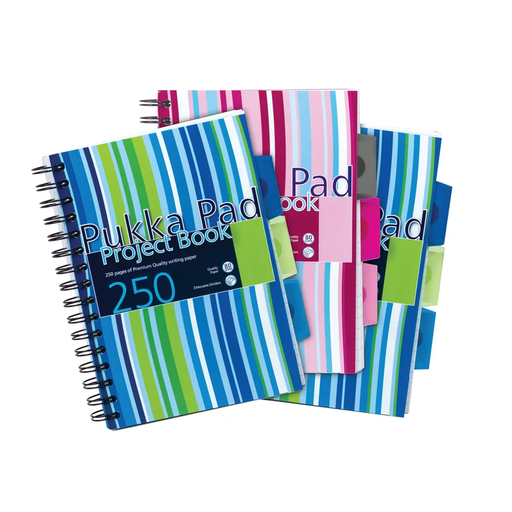
Why This Fits Their Persona: The A5 format is easy to carry between lectures, home and work, while the three-book pack can cover separate subjects, tasks or personal projects.
It offers three repositionable dividers and storage pockets, so users have more organisation than a basic lined notebook without moving to a digital system.
Each book has 250 pages of 80gsm FSC certified, 8mm-lined paper and a portable 148 × 210mm format.
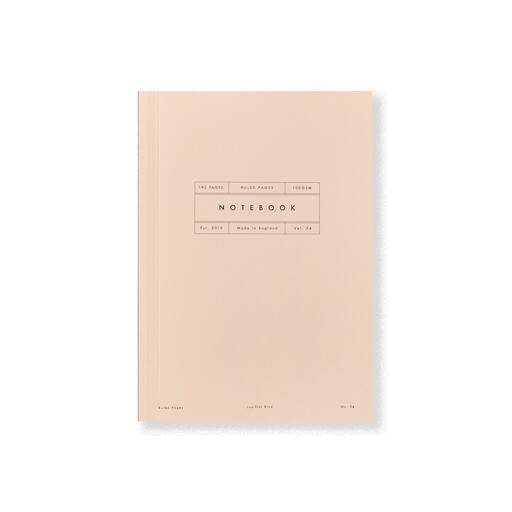
Why This Fits Their Persona: It suits professionals, creatives and stationery lovers who want a portable notebook with a considered cover and a smoother writing surface.
The specification identifies 100gsm ivory paper and a 300gsm textured cover, giving buyers clearer material information than vague quality wording.
It includes 196 ruled pages with margins and a compact A5 size for meetings, journalling and everyday writing.
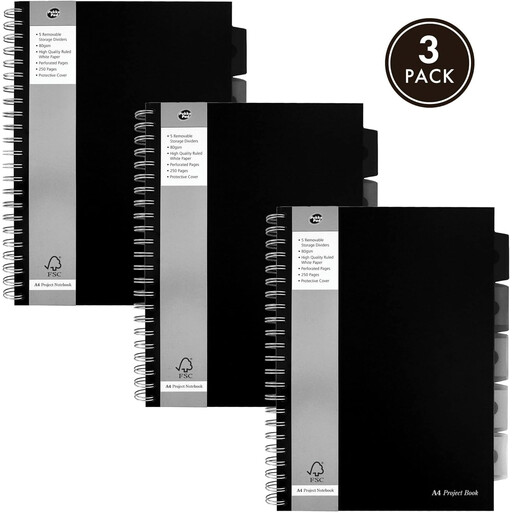
Why This Fits Their Persona: A4 space is suited to teachers, office teams, home workers and students managing detailed project notes, handouts or meeting minutes.
Five repositionable dividers, storage pockets and perforated pages provide practical organisation and easier filing as projects grow.
Each book contains 250 pages of 80gsm feint-ruled paper, with a wipe-clean polypropylene cover.
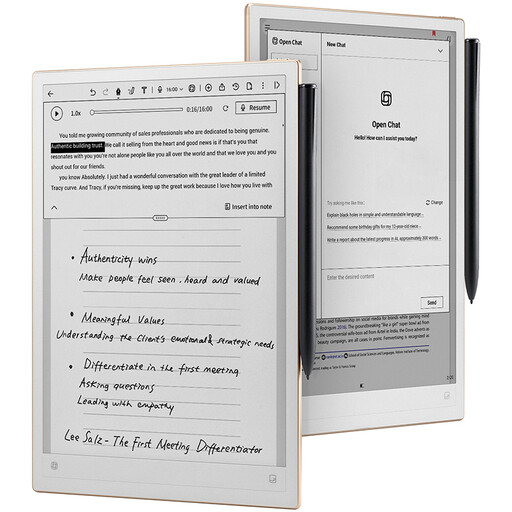
Why This Fits Their Persona: This digital notebook is aimed at users who want handwritten notes, document reading, transcription and cross-device access for work or study.
Its specifications state the 10.65-inch E Ink display, 64GB storage and supported file formats. Internet access is required for transcription, so the setup expectation is clear.
It weighs approximately 295g, includes a stylus and supports handwriting-to-text, 16-language transcription and Wi-Fi 6.
We have compiled a complete, real-time list of products that fully satisfy these strict selection criteria and UK safety regulations.
Yes. An A5 notebook is convenient for lectures, commuting and short meetings. Choose a project format with dividers if you need separate sections for modules, clients or tasks. For diagrams, printed material and extensive notes, A4 may be more practical.
Lifespan depends on binding, cover material, storage and handling. A wipe-clean cover can help with everyday marks, while keeping any notebook dry reduces page warping. Avoid overfilling pockets or bending the spine, and use pens suited to the paper weight.
A digital notebook usually has no replacement paper cost, but it requires charging and may depend on apps, accounts or internet access for selected functions. Consider the purchase price, accessories, connectivity requirements and storage before comparing it with a pack of paper notebooks.