
24/7 Customer Support

Free returns

Same-day & Next-day Delivery

Quality Guaranteed

Unlock Your Welcome Offers: FREE Delivery | Up to 80% OFF | Free 30-day JoyPlus trial
Download the APP
Choosing between notebooks and diaries can seem straightforward until the cover looks better than the contents, the binding gets in the way, or the format does not suit your daily routine. Whether you need school stationery, office stationery, a journal for personal writing or stationery gifts, a few practical checks can prevent an unsuitable purchase.
A colourful cover or character design may attract attention, but it does not tell you whether the notebook has enough pages, a useful layout or a binding that suits your writing habits. Plush notebooks can be enjoyable to hold, while a wipe-clean cover may be more practical for commuting or busy desks.
Before buying, check the page layout, page count and cover material, rather than relying on the front design alone.
Wiro notebooks are often selected for their flexibility, but the wire size, cover construction and page format affect how comfortable they are to use. A notebook that opens flat or folds back on itself can be useful for writing on a train, in a lecture or at a crowded desk. However, a wire edge may take up more room in a tightly packed bag.
If you regularly write with the notebook partly folded back, look for a wiro or spiral-bound design that is described as flexible or capable of opening flat.
A lined notebook is suitable for open-ended notes, lists and journalling. A diary provides dated sections for appointments, deadlines and reminders. Buying a notebook when you need structured planning can lead to missed entries; buying a day-per-page diary for occasional notes can leave unused space.
Match the format to the job before comparing colours or character themes.
A5 notebooks usually measure approximately 14.8 x 21 cm. They fit into many backpacks, handbags and work bags, making them suitable for everyday notes, personal journalling and school stationery.
A4 project books offer more writing area and are easier to use for meeting minutes, detailed coursework, diagrams and project planning. They take up more space, so check whether your bag, desk drawer or filing system can accommodate them.
For planning at home or in an office, desk diaries can provide a larger view of appointments and tasks. For travel or quick note-taking, A5 is generally easier to carry.
Lined notebooks are useful for conventional writing, while numbered or undated pages can support bullet journals and customised planning. Check the spacing: 8 mm ruling is common in project books and gives enough room for everyday handwriting.
Paper weight is another useful indicator. For example, 80 gsm paper is practical for standard pens and pencils, while 100 gsm or 120 gsm paper offers a heavier writing surface for longer entries, hand lettering and creative work. No paper guarantees that every ink will avoid show-through, so test strong markers separately where possible.
A lay-flat binding can make writing across a spread more comfortable. Wiro binding allows pages to turn easily and may let the notebook fold back, while a hard cover offers a firmer surface when you are away from a desk.
For everyday handling, textured card, polypropylene or other durable covers can protect the pages. Plush covers add tactile appeal but should be kept dry and handled with care. Character stationery with small detachable parts may not be suitable for children under three; always read the product warnings before gifting.
The following selection matches different routines rather than presenting one universal choice.
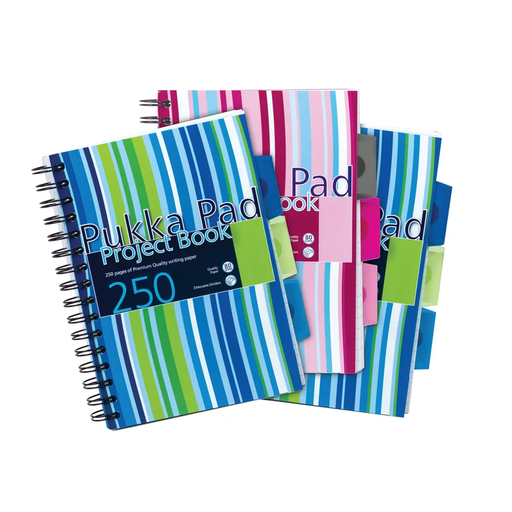
Why This Fits Their Persona: A practical multi-pack for students, home workers or anyone who separates notes between several subjects or tasks. The portable A5 format works well for bags and shared desks.
The three repositionable dividers and storage pockets add structure instead of relying only on the cover design.
Pack of three; 250 pages per book; 8 mm lined, 80 gsm FSC Certified paper; repositionable dividers with pockets.
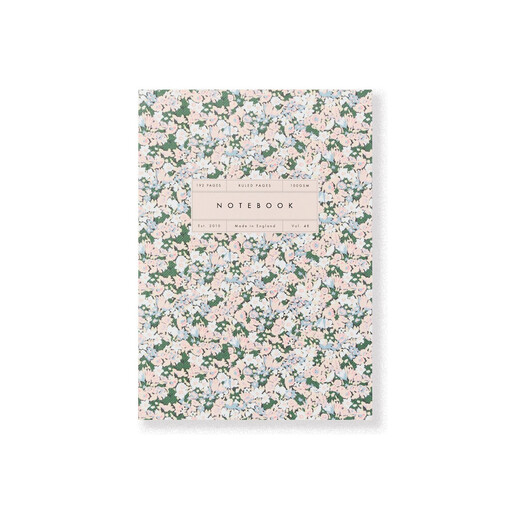
Why This Fits Their Persona: Suits professionals, journal writers and stationery enthusiasts who want a portable notebook with a more considered finish for desks, meetings or gifting.
Its specifications show what you are paying for: 196 ruled pages, 100gsm paper and a textured cover, rather than decoration alone.
A5 format; 196 ruled pages; 100gsm inner paper; durable textured covers with floral prints.
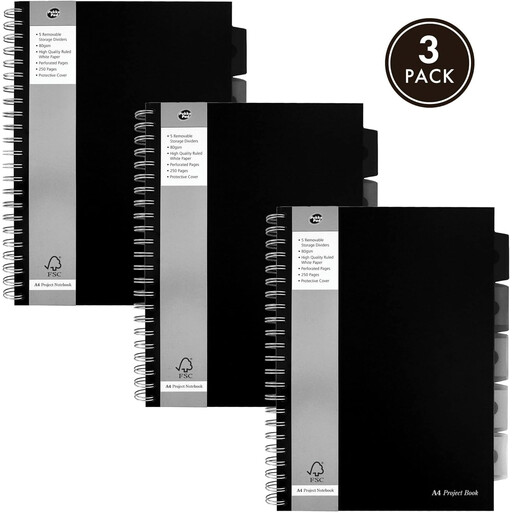
Why This Fits Their Persona: Designed for coursework, meeting notes, project management and office stationery where a larger writing area and clear filing structure are useful.
The A4 size, five colour-coded dividers, pockets and perforated pages provide practical features for substantial work.
Pack of three; 250 pages per book; wipe-clean polypropylene cover; 80 gsm paper; perforated sheets.
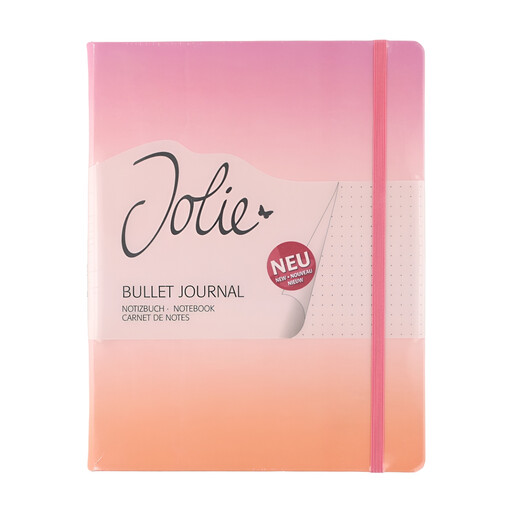
Why This Fits Their Persona: A suitable option for bullet journals, hand lettering, creative planning and diary-style writing where numbered pages and a flat opening are helpful.
The 180° lay-flat design and numbered pages offer functional value beyond the gradient hardcover.
A5+ format measuring 17 x 22 cm; 200 numbered pages; 120 g/m² paper; sturdy hardcover; 180° opening.
For dated organisation, the Lilo & Stitch 2026 A5 Day to Page Diary provides a full page for each day, with space for appointments, tasks and reflections. Its character artwork may also suit Disney notebooks and Lilo & Stitch stationery fans.
If you prefer a compact wiro notebook with character appeal, the Lilo & Stitch Planetary A5 Wiro Notebook combines lined pages, an A5 format and a cover designed to open flat. For a tactile gift, the Lilo & Stitch You're My Fave Novelty Plush A5 Notebook has a plush cover and portable size.
We have compiled a complete, real-time list of products that fully satisfy these strict selection criteria and UK safety regulations.
Usually, yes. Their compact dimensions make them easier to carry than A4 project books. Check the product’s cover thickness and binding if you plan to keep it in a crowded backpack, and use a protective sleeve if it will be exposed to rain.
Lifespan depends on page usage, handling and storage. A durable cover, secure binding and dry storage can help preserve it. A diary with a full-page daily layout may last for its intended planning period, while a notebook’s lifespan depends on how frequently you write in it.
Consider the recipient’s interests and routine. Character notebooks may suit fans, while premium notebooks with heavier paper can appeal to journal writers or professionals. For students, page count, ruled layout and portability are often more useful than decorative features.