
24/7 Customer Support

Free returns

Same-day & Next-day Delivery

Quality Guaranteed

Unlock Your Welcome Offers: FREE Delivery | Up to 80% OFF | Free 30-day JoyPlus trial
Download the APP
Selecting stationery often feels deceptively simple until you are halfway through a project with smudged ink, ripped margins, or disorganized notes scattered across multiple pads. Whether you are stocking up for a busy university term, outfitting a home office desk, or looking to keep track of daily household errands, the layout and mechanical construction of a notepad make an enormous difference to your daily efficiency. Understanding the exact specifications behind paper density, page binding, and compartmentalisation ensures your writing tools work with you rather than against you.
A dependable notebook must handle the demands of everyday ballpoints, rollerballs, and highlighters without bleed-through or curling edges. By focusing on verified paper weight, durable covers, and functional formats such as sectioned dividers or pre-punched filing margins, you can quickly choose pads that offer practical utility and lasting value. This buying guide outlines the critical criteria to inspect before purchasing and presents our top recommendations for multi-subject study, structured task logging, and straightforward lecture or meeting notes.
Many generic pads rely on lightweight paper under 70gsm, which easily absorbs standard fountain pen or gel pen ink, producing distracting ghosting and bleeding through to the reverse side. This effectively cuts your usable page count in half and leaves written notes looking untidy. Always verify that paper density sits at an everyday standard of 80gsm or above, which offers a resilient barrier against heavy ink flow and firm pencil pressure.
Inexpensive glues and weak spines frequently split when laid flat across a study desk or folded back during a train commute. Spiral and wire bindings provide superior flexibility by allowing notebooks to lie completely flat or fold 360 degrees without popping pages loose. Check that twin-wire loops are sturdy enough to resist crushing inside a rucksack or work satchel.
Standard stitched or staple-bound exercise books lock every page into a fixed sequence, making it awkward to reorganise research topics or insert unexpected meeting summaries. When managing multiple modules or ongoing professional responsibilities, buying books with repositionable dividers or micro-perforated tear-out margins prevents the frustration of messy page-crossing and torn edges.
Page thickness directly governs durability, smooth ink glide, and double-sided usability across home and office tasks.
Page layout establishes how cleanly you can structure handwriting, while clean tearing preserves proper dimensions.
Internal compartmentalisation determines how swiftly you can locate specific subjects or transfer summaries into archive binders.
These dependable stationery options cover structured multi-subject projects, dedicated daily task planning, and high-volume lecture notes.
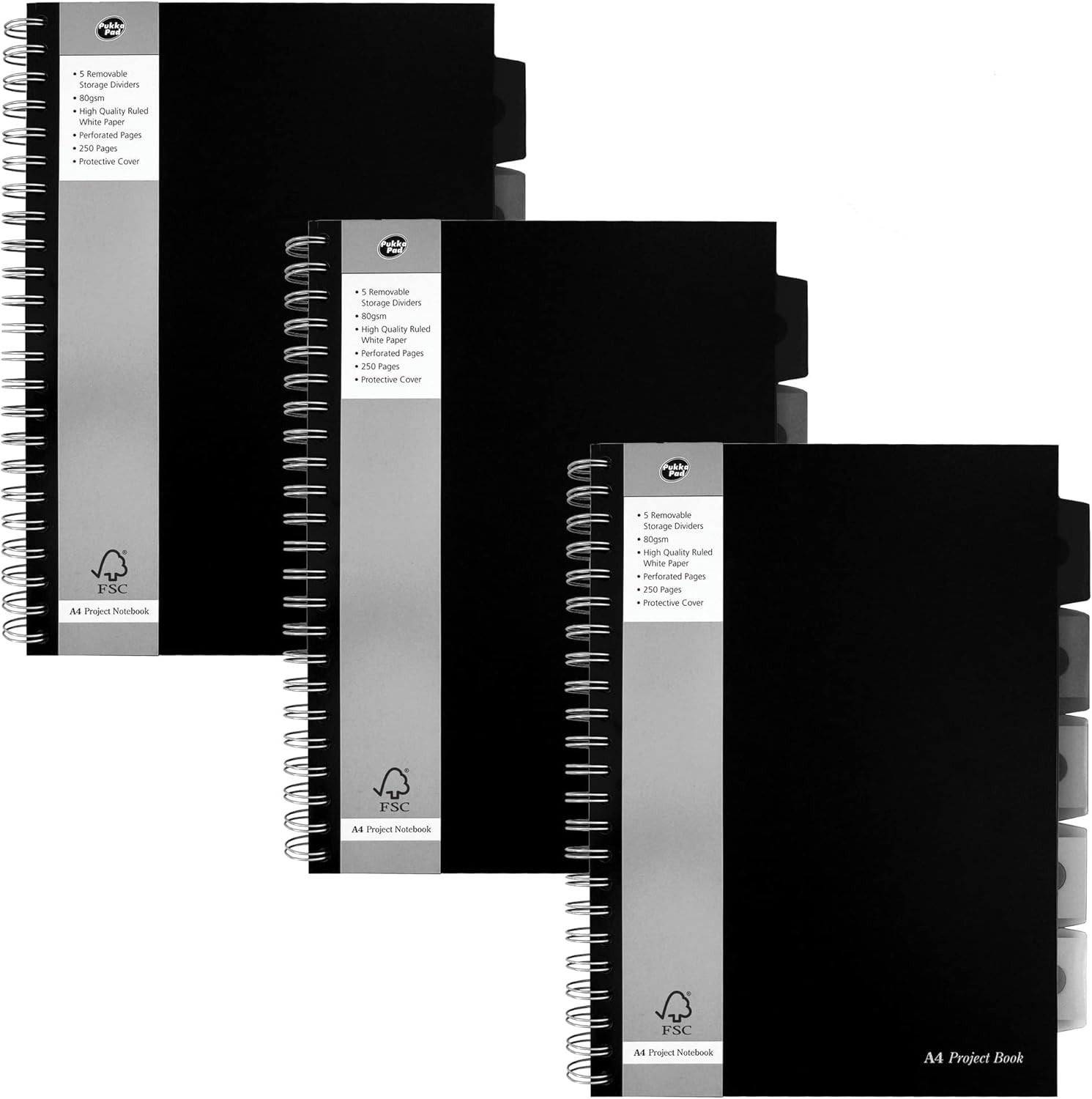
Why This Fits Their Persona: This pack of three project books provides substantial multi-topic capacity for university terms and varied work assignments. Each book contains feint-ruled FSC-certified 80gsm paper, ensuring smooth ink handling and responsible material standards across all your coursework. Five repositionable dividers with built-in pockets make it simple to store loose hand-outs, receipts, or prompt cards alongside your handwritten notes.
Eliminates the disorganisation of carrying several thin notebooks by keeping five independent subjects cleanly partitioned under one durable spine.
A wipe-clean front cover shields notes from accidental desk spills and transport scuffs, while the moveable tabbed storage pockets adapt instantly to uneven subject volumes.
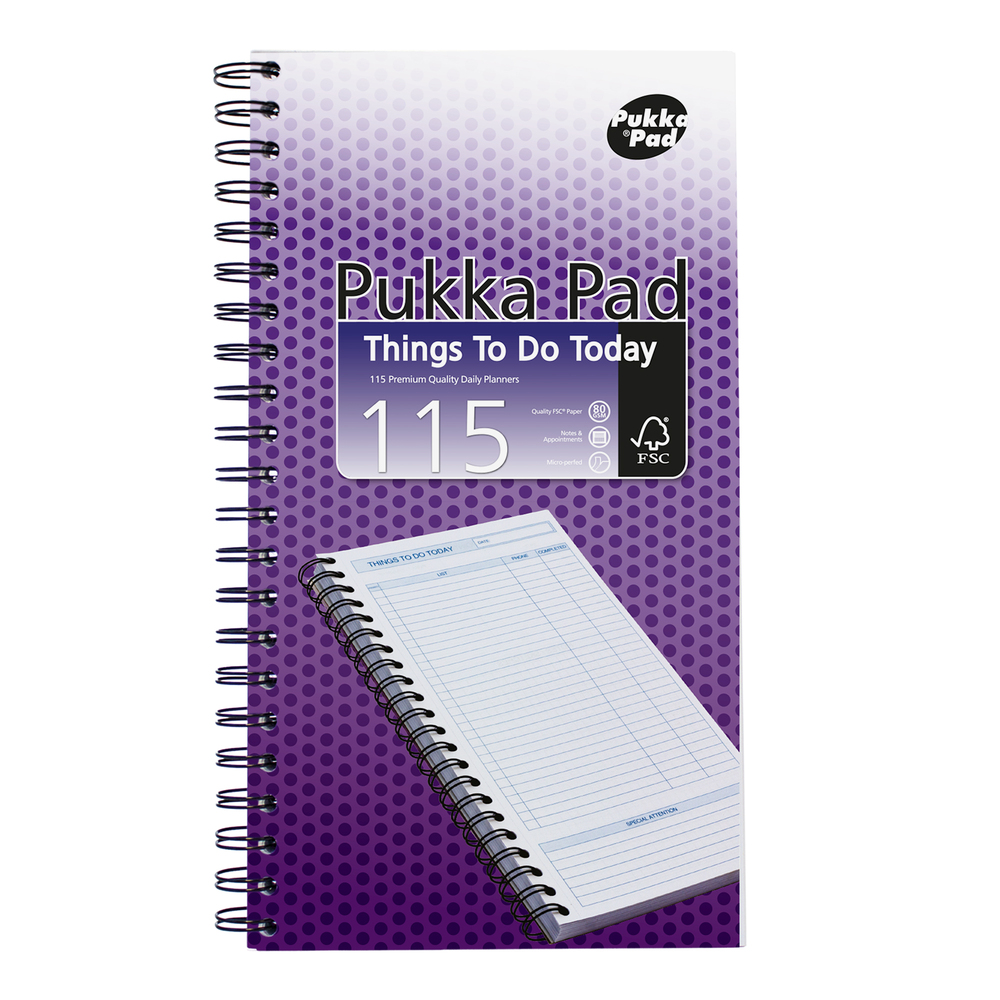
Why This Fits Their Persona: Engineered specifically for daily coordination, this five-pack keeps workstations uncluttered with a practical 152mm x 280mm desk footprint. Each pad features 115 sheets of 80gsm paper bound with secure wire loops, allowing you to flip completed lists cleanly over without tearing. Dedicated sections for tasks, appointments, and general notes keep your urgent priorities clearly separated throughout long shifts.
Prevents critical errands from becoming buried inside lengthy paragraph notes by categorising appointments and action items into specialised pre-printed sections.
The compact 152mm x 280mm profile sits comfortably alongside a computer keyboard or desk mat, providing quick access to schedule checkpoints throughout the day.
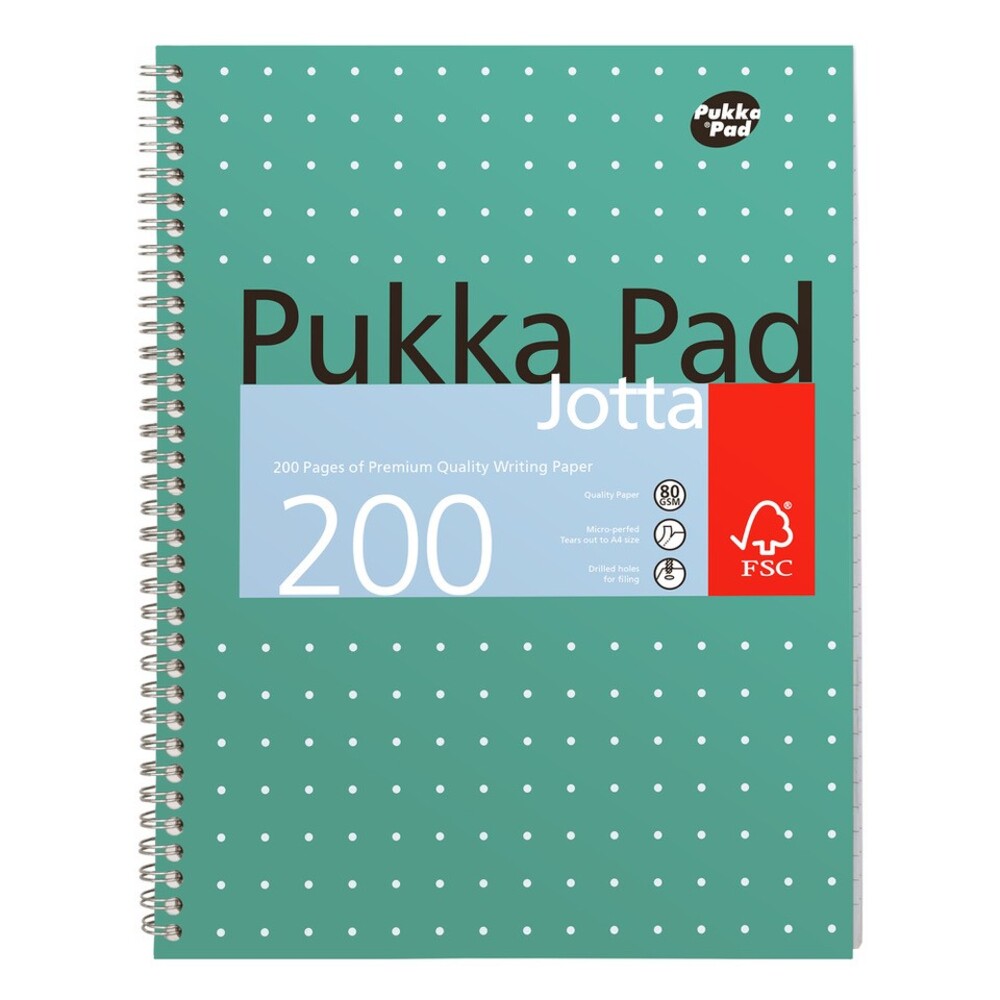
Why This Fits Their Persona: Delivering exceptional capacity for extensive drafting and revision, this pack of three wirebound Jotta notebooks provides 200 pages of 80gsm paper in every book. The 8mm lined ruling keeps rapid shorthand and extensive prose neatly aligned during fast-moving meetings or academic lectures. Twin-wire spiral binding permits the pad to fold fully back on itself, saving desk space in tight lecture theatres or on small cafe tables.
Solves the problem of ragged, undersized torn pages by incorporating perforated edges calibrated alongside four pre-punched filing holes.
Sheets tear out cleanly at true A4 size, allowing direct insertion into lever arch files and ring binders without requiring trimming or separate hole punching.
Grams per square metre measures paper density. Standard 70gsm paper is relatively thin, often resulting in noticeable ink shadowing and bleed-through when using liquid ink, gel pens, or highlighters. An 80gsm rating provides a denser fibre weave that resists show-through, allowing both sides of every sheet to be used legibly with standard writing instruments.
Traditional spiral notebooks lose width when sheets are torn along standard margins, producing an undersized page with shredded spiral frills. Purpose-built perforated notebooks place the perforation line slightly inward from the wire binding, ensuring the detached sheet measures exactly 210mm by 297mm to fit standard filing folders cleanly.
Yes, provided they are supported properly. While hardback book spines stand upright independently, wirebound notebooks benefit from being placed inside upright magazine files, shelf dividers, or laid flat in stacks to prevent the spiral loops from catching against adjacent books or bending under uneven lateral pressure.