
24/7 Customer Support

Free returns

Same-day & Next-day Delivery

Quality Guaranteed

Unlock Your Welcome Offers: FREE Delivery | Up to 80% OFF | Free 30-day JoyPlus trial
Download the APP
Whether you are preparing for a new term, organising office work, starting a journal or looking for a practical gift, choosing the right notebooks and stationery involves more than selecting an attractive cover. Size, paper quality, binding and storage features all affect how useful a notebook remains after the first few weeks.
The market also contains several common buying traps. A notebook may look substantial but contain fewer usable pages than expected, while a decorative cover may offer little protection in a busy school bag or work bag. Use the following guide to compare products more carefully and select stationery that suits your routine.
Colourful covers and licensed character designs can make stationery appealing, but they do not automatically mean the notebook is suitable for regular writing. Check the page count, paper weight, ruling and binding before buying. A decorative notebook may work well for occasional notes or gifting, while a project book may be more suitable for lectures, meetings or ongoing coursework.
A5 notebooks are portable and generally fit easily into handbags, backpacks and desk drawers. However, they provide less room for diagrams, lengthy meeting notes or large project plans. A4 notebooks offer a wider writing area and are more suitable for filing, printed handouts and structured work, but they take up more space.
Always check whether the listed size refers to the finished page or the cover. Perforated or punched margins can also affect the usable writing area.
A spiral or wiro binding allows a notebook to open flat, which is useful for note-taking. However, the wire can bend if the book is compressed under heavy items. Hardcover journals offer additional structure and protection, but they may be heavier than softcover alternatives.
For frequent use, look for practical details such as an elastic closure, wipe-clean cover, repositionable dividers or perforated pages. These features can be more valuable than decorative finishes.
Paper weight is commonly shown in gsm, meaning grams per square metre. A notebook with 80 gsm paper is suitable for many everyday pens and pencils, while 100 gsm paper may provide a more substantial writing surface and help reduce visible show-through. Pen type still matters, so users of wet ink or markers should check the product information and avoid assuming that any paper is suitable for every medium.
Lined notebooks are a practical choice for lectures, lists and office notes. An 8 mm ruling provides a familiar writing format, while plain or mixed-media paper is more appropriate for sketching, painting and visual planning.
If you regularly move between home, school and work, consider whether the notebook will fit your existing bag and storage system.
Project books with dividers and pockets can separate subjects, clients or tasks without requiring several individual books. Repositionable dividers are useful when priorities change, while pockets can hold loose worksheets, receipts or reference pages.
For office stationery, features such as four-hole punched margins, tear-out pages and wipe-clean polypropylene covers can make filing and maintenance easier. If sustainability is important, check whether the listing specifies FSC-certified paper rather than relying on vague environmental wording.
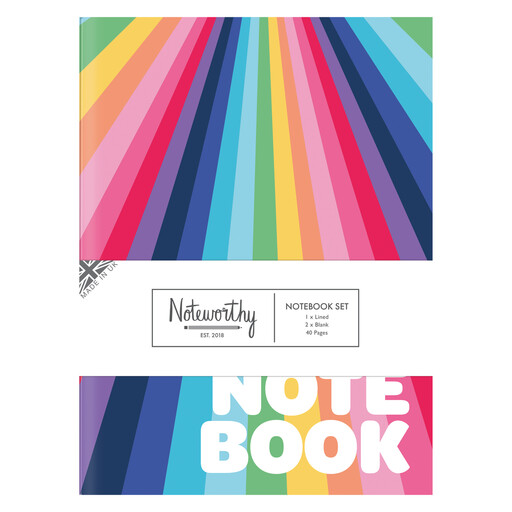
Why This Fits Their Persona: A three-book set gives students, home organisers or new journal writers separate notebooks for different tasks without committing to one large volume.
The pack format makes the quantity clear, helping avoid paying for a single decorative notebook when several are needed.
Three A5 notebooks; contemporary rainbow styling; suitable for general writing and personal organisation.
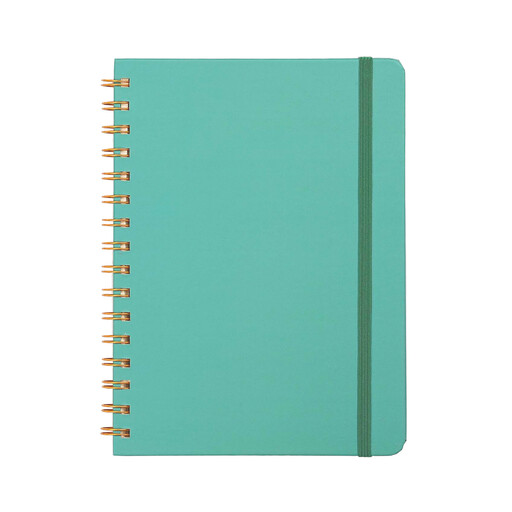
Why This Fits Their Persona: Its A5 hardcover format suits professionals, journal writers and gift buyers who want a more structured writing journal for regular use.
The listing identifies the binding, sheet quantity and paper weight, making the construction easier to compare with cheaper alternatives.
100g cream ruled paper; hardcover with textured lamination; twin-wire spiral binding; elastic closure band.
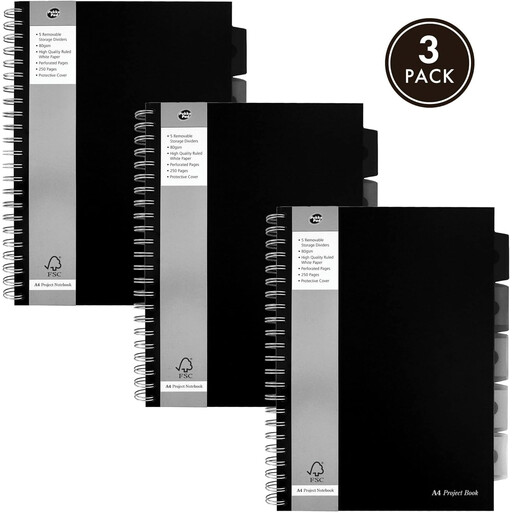
Why This Fits Their Persona: This format is suited to teachers, office workers and students managing several subjects, clients or long-running projects.
It combines a stated page count with five repositionable dividers, storage pockets and perforated pages, rather than relying on cover design alone.
250 pages per book; 80 gsm FSC-certified paper; wipe-clean polypropylene cover; five colour-coded dividers.
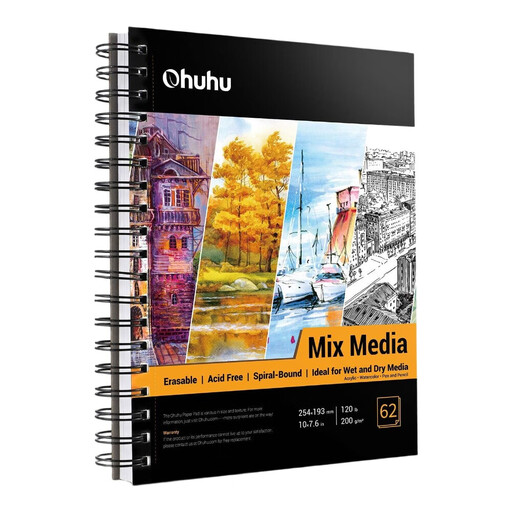
Why This Fits Their Persona: Artists and hobbyists working with pencils, pastels, acrylics or watercolour need a sketchbook specified for more than standard note-taking.
The stated 200 gsm acid-free paper and mixed-media positioning are more informative for art use than a generic “premium paper” description.
200 gsm paper; 124 pages; spiral binding; designed for wet and dry media including watercolour, acrylics, pencils and pastels.
For daily planning, dated diaries with a day-per-page layout provide room for appointments, tasks and reflections. The Lilo & Stitch 2026 A5 Day to Page Diary combines an A5 format with dated pages and character illustrations, making it suitable for fans, gift buyers and users who prefer themed planning.
For school stationery, compare page quantity and dividers before buying several thin books. For office stationery, A4 project books and wirebound notebooks may be easier to file and share. Creative users should choose sketchbooks according to media compatibility, paper weight and binding rather than cover appearance.
Character-themed choices such as Disney notebooks can be enjoyable, but check small-part warnings where charms or detachable accessories are included. Keep all paper products dry and follow the care instructions supplied with the individual item.
They can be suitable for portable note-taking, quick meetings and personal planning. Choose A4 project books instead when you need space for diagrams, printed material, extensive minutes or pages that will be filed.
Lifespan depends on page count, binding, storage and frequency of use. A hardcover or polypropylene cover can help protect pages, while spiral bindings should be kept away from heavy pressure. Store notebooks in a dry place and avoid bending the wire or spine.
An FSC label indicates that the paper is associated with the Forest Stewardship Council’s certification system. It is a useful specification for shoppers considering sourcing, but it does not by itself determine paper thickness, writing performance or binding durability. Compare all three before purchasing.