
24/7 Customer Support

Free returns

Same-day & Next-day Delivery

Quality Guaranteed

Unlock Your Welcome Offers: FREE Delivery | Up to 80% OFF | Free 30-day JoyPlus trial
Download the APP
Buying notebooks and stationery can seem straightforward until the pages tear, ink shows through, or the format does not suit your daily routine. A low-priced notebook may be unsuitable for school projects, while a decorative journal may not provide enough structure for work planning.
This guide explains the practical specifications worth checking before buying, followed by product recommendations matched to different UK users and note-taking habits.
Floral covers, bright colours and themed stationery can make a product attractive, but design does not tell you whether it has suitable paper, binding or page organisation. A notebook intended for occasional notes may not cope well with frequent transport in a school bag or work bag.
Check the page count, paper weight, cover material and binding before making a decision. These details are more useful indicators of everyday suitability than cover styling alone.
The term “lined” only describes the page layout. It does not confirm the spacing, paper thickness or whether pages are perforated. For structured writing, check the line spacing and whether the pages include margins. For creative stationery, unlined or numbered pages may be more useful.
An 8 mm ruling is a practical choice for standard notes, while numbered pages can make a journal easier to reference. A4 project books are more suitable when you need room for diagrams, handouts or formal meeting notes.
A4 offers a larger writing area but takes up more space in a bag. A5 notebooks are easier to carry between lectures, meetings, cafés and home-office spaces, although they provide less room for long-form notes.
Also check whether the notebook opens flat. A stiff binding that continually closes can make writing near the spine awkward, particularly for bullet journals, diaries and drawing.
Paper weight is measured in gsm, meaning grams per square metre. In general, higher gsm paper feels more substantial and may be more comfortable for fountain pens, markers or heavier ink use. However, paper performance also depends on the paper finish and the writing instrument.
For everyday school stationery or office stationery, 80 gsm can be a practical balance between flexibility, page count and portability. For journalling, hand lettering and creative stationery, 100–120 gsm provides a more substantial writing surface.
If responsible sourcing matters to you, look for FSC-certified paper or another clearly stated certification. Certification relates to how the material is sourced; it does not automatically guarantee that a notebook will be suitable for every type of pen.
Spiral or lay-flat bindings can improve writing comfort. Repositionable dividers are useful when one book needs to cover several subjects, while pockets can hold loose worksheets, receipts or appointment notes.
Perforated pages are worth considering if you regularly need to remove or file notes. Covers also matter: a wipe-clean polypropylene cover may suit busy classrooms and offices, while a textured card cover may appeal more to users seeking gift stationery or a desk-friendly journal.
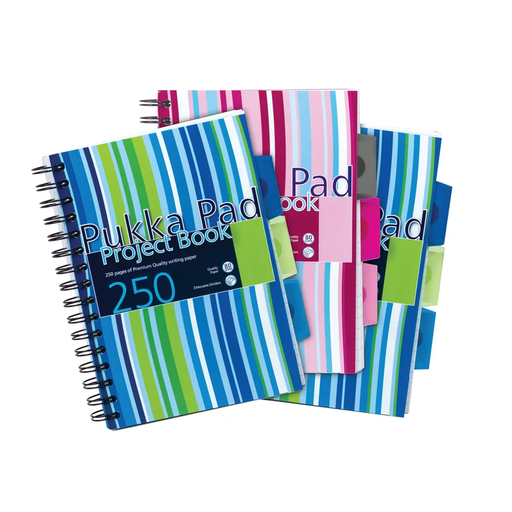
Why This Fits Their Persona: The pack of three gives students, teachers and home-office users separate books for different subjects or tasks, while the A5 format is easy to carry in a typical UK bag.
Three repositionable dividers and storage pockets provide organisation that a basic lined notebook may lack.
Each book has 250 pages of 8 mm lined, 80 gsm FSC-certified paper; the A5 dimensions are 148 mm x 210 mm.
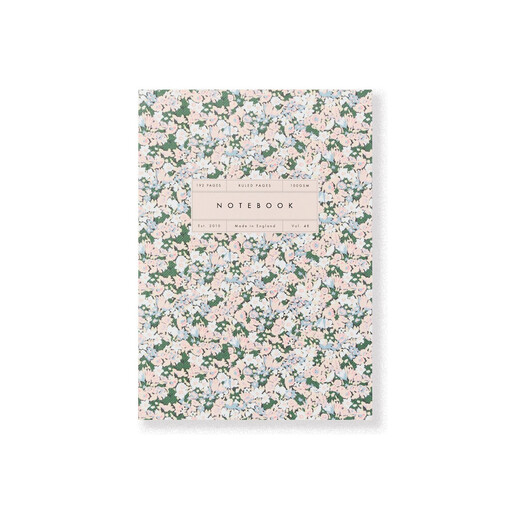
Why This Fits Their Persona: This A5 notebook suits professionals, journal writers and gift shoppers who want a portable format with a more substantial paper specification and decorative cover.
The product information specifies 100 gsm ruled pages rather than relying only on appearance to indicate paper quality.
It contains 196 ruled pages and has a textured cover with floral styling for everyday writing, planning or gifting.
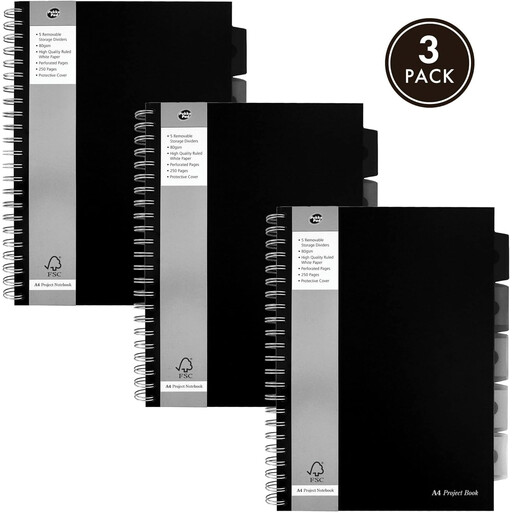
Why This Fits Their Persona: A4 project books are suited to coursework, office stationery, meeting records and multi-stage projects where notes, documents and handouts need to stay together.
Five colour-coded dividers, storage pockets and perforated pages address the organisational limits of a standard notebook.
Each A4 book contains 250 pages of 80 gsm, 8 mm feint-ruled FSC-certified paper and a wipe-clean polypropylene cover.
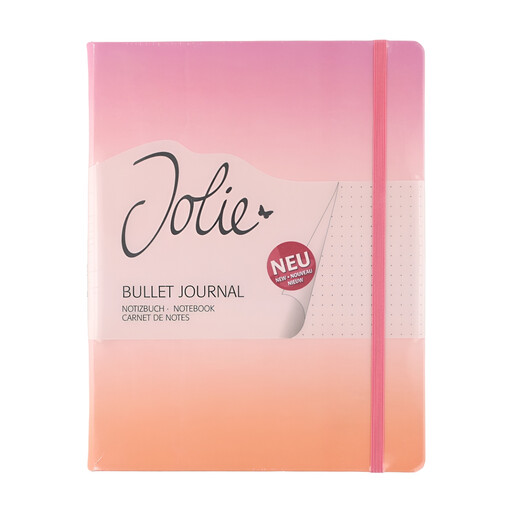
Why This Fits Their Persona: Bullet journal users, artists and planners can write or draw across a larger A5+ surface without continually holding the pages open.
The 180° lay-flat design and numbered pages provide practical functionality beyond a decorative journal cover.
It has 200 numbered pages, 120 g/m² paper and a sturdy hardcover in a 17 x 22 cm A5+ format.
We have compiled a complete, real-time list of products that fully satisfy these strict selection criteria and UK safety regulations.
For lectures, commuting and everyday lists, an A5 notebook is usually easier to carry. For coursework or collaborative projects, choose an A4 project book with dividers and pockets. If your routine involves drawing, lettering or habit tracking, look for 120 gsm paper, numbered pages and lay-flat binding.
Diaries are more suitable when you need dates, appointments and planning sections, while journals offer greater freedom for longer entries. Post-it notes can complement either format by keeping reminders visible on desks, monitors or study walls. For children and teenagers, creative designs and soft-touch covers may encourage regular use, but check any age warnings and keep small components away from young children.
A5 is a practical middle ground for many UK users because it fits into most backpacks, handbags and work bags. A4 is preferable when you need room for diagrams, printed information or detailed project notes.
Not necessarily. Higher gsm paper is generally thicker, but it can add weight and reduce the number of pages available at a given size. Choose 80 gsm for routine notes and 100–120 gsm when paper feel, creative writing or heavier pens are more important.