
24/7 Customer Support

Free returns

Same-day & Next-day Delivery

Quality Guaranteed

Unlock Your Welcome Offers: FREE Delivery | Up to 80% OFF | Free 30-day JoyPlus trial
Download the APP
Whether you are buying stationery for university, work, creative projects or a thoughtful present, the large choice of notebooks and journals can make comparison difficult. A low price may hide thin paper or weak binding, while an attractive cover may offer little practical value for daily use.
The following guide focuses on the details that affect usability, durability and value, with options for different UK lifestyles and writing habits.
A textured, hardbound or plush cover can make a notebook feel appealing, but it does not tell you how well the pages will perform. Always check the paper weight, page count and binding. A decorative notebook may be suitable for occasional notes but less practical for heavy study or work use.
A product may advertise a high number of pages, but page layout matters. Narrow ruling, large margins or pre-printed designs reduce the space available for notes. For project work, look for dividers, storage pockets and perforated sheets rather than relying on page count alone.
A4 notebooks provide more room for meeting notes, diagrams and documents, but they can be cumbersome in a small backpack. A5 notebooks are easier to carry, while A5+ journals provide extra space without the bulk of a full A4 book. Consider where the notebook will be stored and used before ordering.
Paper weight is measured in gsm, meaning grams per square metre. In practical terms:
Check whether the pages are lined, plain, dotted or gridded. Lined notebooks support lectures and meeting notes, while dotted pages are useful for bullet journals. Artists may prefer plain paper in sketchbooks, but should also check whether the paper is intended for pencil, ink or markers.
The main formats have different strengths:
For professional notes, also consider whether the book has a firm cover, lay-flat binding or perforated pages. These features can make repeated daily use more comfortable.
A hard cover protects pages in a bag, while polypropylene and silicone covers can be easier to wipe or handle. Wiro binding allows pages to turn freely, whereas sewn or lay-flat bindings are often more comfortable when writing across a spread.
For project books, repositionable dividers and storage pockets help separate modules, clients or subjects. A notebook without these features may require separate folders, increasing the chance of loose papers being misplaced.
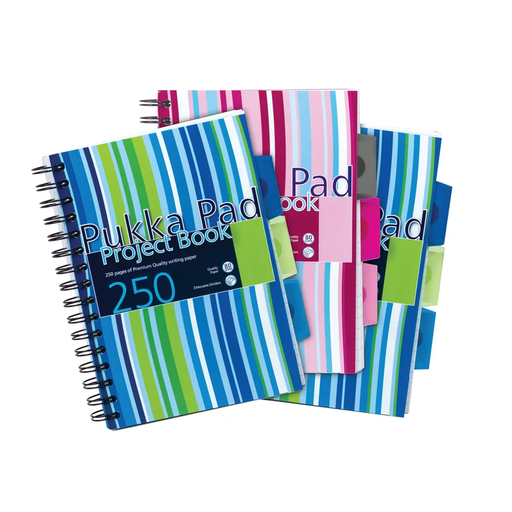
Why This Fits Their Persona: The three-book pack gives students, teachers and first-time stationery buyers separate books for lectures, personal notes or work tasks. Its A5 format is easy to carry between home, campus and the office.
It combines a defined page layout with three repositionable dividers and storage pockets, so the compact format does not mean sacrificing organisation.
Pack of three; 250 pages per book; 80 gsm FSC certified lined paper; A5 dimensions of 148 × 210 mm.
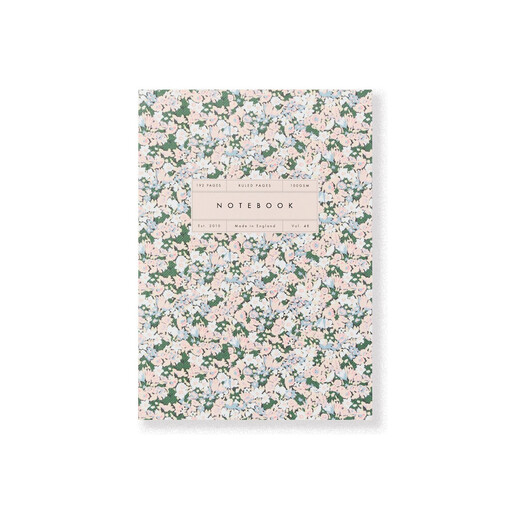
Why This Fits Their Persona: This A5 notebook suits professionals, journal writers and stationery enthusiasts who want a practical writing book with a more considered cover design for a desk or handbag.
The specification states the page count and paper weight clearly, avoiding a purely appearance-led purchase. The ruled layout also makes it suitable for structured writing.
196 ruled pages; 100 gsm inner paper; textured cover with floral print; compact A5 size.
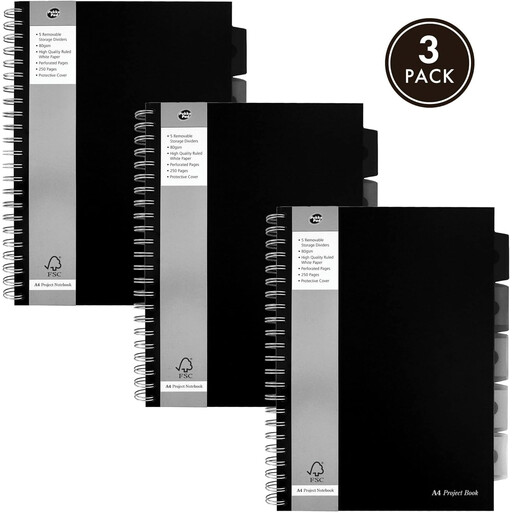
Why This Fits Their Persona: It is designed for office teams, teachers, students managing several modules and home-office users who need generous space for ongoing projects and documents.
The A4 format is supported by five colour-coded dividers, storage pockets and perforated pages, so a high page count remains manageable rather than becoming a disorganised block.
Three-book pack; 250 pages per book; wipe-clean polypropylene cover; 8 mm feint ruling; FSC certified 80 gsm paper.
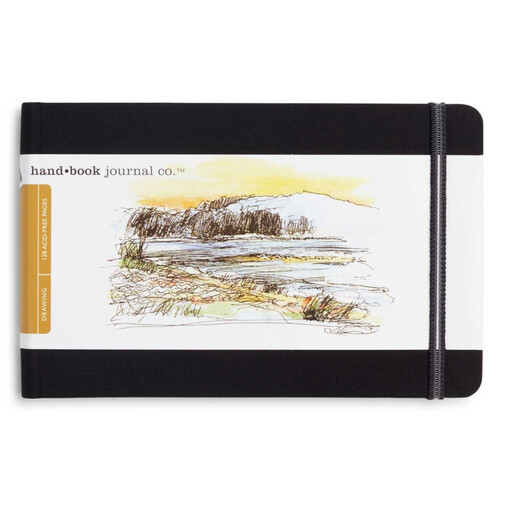
Why This Fits Their Persona: The landscape format and artist-grade paper make this a practical choice for sketching, visual notes and portable creative work during travel or outdoor visits.
Rather than selecting a decorative notebook for drawing, buyers can see the stated 140 gsm acid-free artist paper and intended compatibility with pen, ink, pencil and markers.
140 gsm acid-free paper; 64 sheets; landscape dimensions of 20.96 × 13.97 cm; internal clear storage envelope.
We have compiled a complete, real-time list of products that fully satisfy these strict selection criteria and UK safety regulations.
Paper products should be kept away from excessive moisture, including water bottles with loose lids. Store notebooks flat or upright without heavy pressure on the cover. Use a pen suited to the paper weight, particularly when using markers or liquid ink.
For notebooks with pockets or dividers, avoid overfilling them with documents, as this can strain the binding. Plush and silicone covers should be handled carefully and cleaned according to the product instructions rather than submerged.
Yes, when you need space for detailed notes, diagrams, handouts or project planning. A4 project books can be less convenient for daily commuting, so an A5 notebook may be more appropriate if portability is the priority.
For ordinary writing, 80 gsm is a common option. Choose 100 gsm for a more substantial feel, or around 120 gsm when using hand lettering, pencils or selected markers. Always consider the specific pen or marker, as paper weight alone does not guarantee that ink will not show through.
A bullet journal usually provides numbered pages with a plain, dotted or grid layout, allowing users to create their own calendars, trackers and lists. A lined notebook has a fixed ruling and is generally quicker for conventional notes, essays and meeting records. The right choice depends on whether you prefer a structured layout or a custom planning system.