
24/7 Customer Support

Free returns

Same-day & Next-day Delivery

Quality Guaranteed

Unlock Your Welcome Offers: FREE Delivery | Up to 80% OFF | Free 30-day JoyPlus trial
Download the APP
Choosing between notebooks and journals can seem straightforward until you compare page size, paper weight, binding and organisational features. A low-priced notebook may become awkward to carry, difficult to file or uncomfortable to write in after only a few weeks.
This guide focuses on the details that make a practical difference, helping students, teachers, professionals, home-office users and journal writers choose stationery that suits how they actually work.
A4 notebooks provide generous space for meeting notes, coursework and printed documents, but they can be bulky in smaller bags. A5 notebooks are easier to carry and fit neatly into desks, backpacks and drawers, although the writing area is more limited.
B5 sits between the two. It offers more room than A5 while remaining relatively portable, which can be useful for students moving between classrooms or professionals working away from a permanent desk.
Page quantity should be considered alongside paper weight, ruling and binding. A notebook with many thin pages may not suit fountain pens, markers or heavy writing pressure. Conversely, a smaller journal with 100gsm or 120gsm paper may offer a more comfortable surface for longer writing sessions.
Also check whether the stated count refers to sheets or pages. A product listing may describe 96 sheets, which represents 192 writing sides, while another may list its total page count differently.
A wirebound notebook can open flat or rotate through 360 degrees, making it convenient on a crowded desk. However, wire can catch on other items in a bag if the cover is not sufficiently protective. Stitch-bound notebooks can also lie flat, but they are generally lighter and may offer less capacity for bulky inserts.
If you regularly archive notes, look for perforated pages, punched margins or dividers with pockets. These features are more useful than decorative covers when managing school stationery, office notebooks or project paperwork.
Check the external dimensions if the notebook needs to fit a particular organiser, drawer or laptop bag. A5+ formats can be slightly larger than standard A5.
Paper weight is measured in gsm, or grams per square metre. 80gsm paper is common for everyday ballpoint and pencil notes. 100gsm paper generally feels more substantial and may reduce show-through with some pens, while 120gsm paper can be preferable for hand lettering, creative writing and selected markers. Results still depend on the ink and writing pressure, so avoid assuming that any paper is completely bleed-resistant.
Lined notebooks are a sensible choice for conventional notes and essays. Check the line spacing: 8mm ruling gives room for standard handwriting, while margins help structure assignments and meeting notes. Numbered pages can be valuable in bullet journals and writing journals where cross-referencing matters.
Consider:
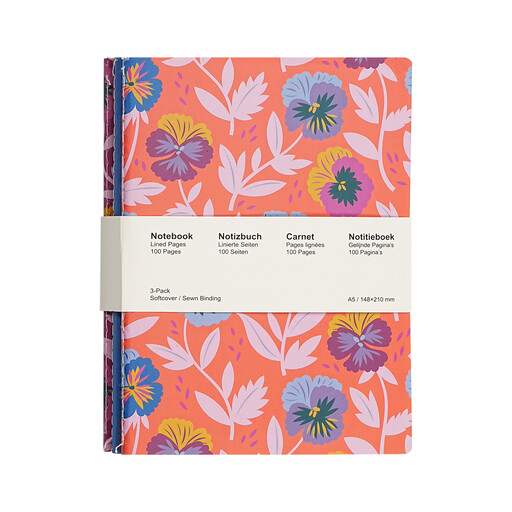
Why This Fits Their Persona: A three-pack gives students, new journal writers and home users separate books for different subjects or routines without committing to one large notebook.
The A5 format is portable, while stitch binding is designed to lie flat. The pack format also avoids paying for features that may not be needed for basic notes.
Three A5 notebooks, 50 sheets per book, cream 80g ruled paper and a lightweight softcover.
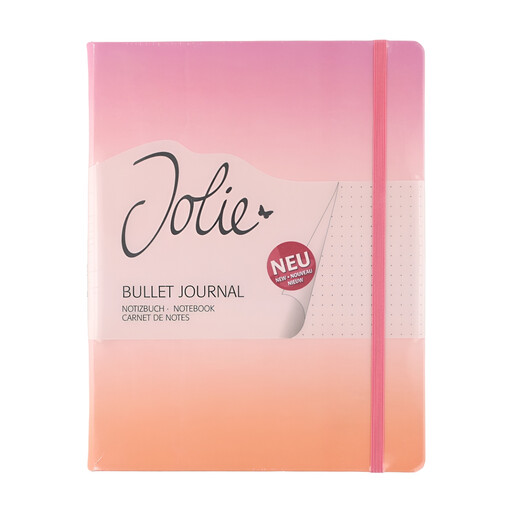
Why This Fits Their Persona: Journal writers, stationery enthusiasts and artists may value a firm cover, numbered pages and a format suited to structured creative work.
The 180-degree lay-flat design removes the inconvenience of writing close to a raised spine, and the paper specification is clearly stated at 120 g/m².
A5+ 17 × 22cm format, 200 numbered pages, 120g/m² paper and a sturdy hardcover.
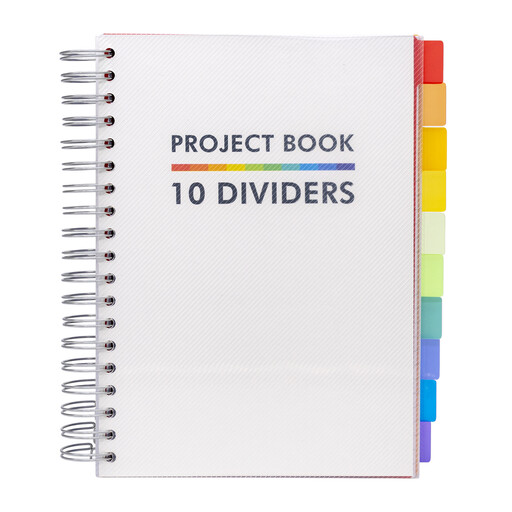
Why This Fits Their Persona: Students, teachers and professionals managing several modules, clients or assignments can separate subjects without carrying multiple books.
Ten repositionable dividers make the layout adaptable, while perforated pages allow selected notes to be removed rather than tearing through the binding.
B5 dimensions, 400 pages of 80gsm FSC-certified paper, repositionable dividers and a wipe-clean translucent cover.
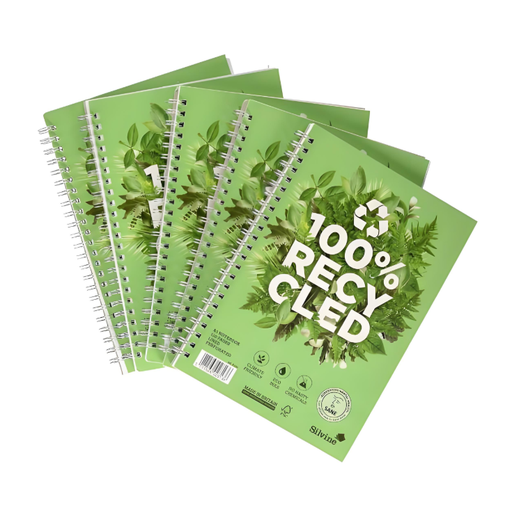
Why This Fits Their Persona: University students, home-office users and busy households can keep a supply of compact notebooks for lectures, lists, planning and everyday notes.
The listing states the paper is recycled and pre-punched, helping buyers assess material and filing needs rather than relying on cover design alone.
Five A5 notebooks, 120 lined pages per book, 80gsm recycled paper, four-hole punching and 360-degree wirebound opening.
We have compiled a complete, real-time list of products that fully satisfy these strict selection criteria and UK safety regulations.
For school stationery, A4 project books with dividers and pockets can keep assignments separated. For office notebooks, true A4 wirebound designs with punched margins are useful if pages need to be filed. A5 journals are more appropriate for commuting, personal reflections and daily planning.
Artists and bullet journal users should prioritise page weight, a firm cover and a binding that opens flat. Disney fans and gift shoppers may place greater importance on licensed artwork and cover design, but should still check the page layout and size before buying.
If you need a diary rather than a blank notebook, confirm the structure carefully. The Collins 44 A4 Desk Diary 2026 Blue is listed with lay-flat binding, three-year calendars, forward planning pages, an expenses tracker and a bills organiser. Its product title should be checked against the intended diary period before purchase.
Yes, particularly for short meeting notes, revision points and personal planning. A5 is easier to carry than A4, but users writing lengthy reports or filing full-size documents may prefer A4 or B5.
For ordinary ballpoint pens and pencils, 80gsm can be adequate. If you use gel pens, heavier ink or markers, consider 100gsm or 120gsm paper and look for product information about the paper type. No paper specification guarantees that every ink will avoid show-through.
Lifespan depends on page usage, storage and binding quality. A hardcover, protected cover and wire or stitch binding may help with regular handling, while moisture can damage paper regardless of price. Store notebooks flat or upright in a dry place and avoid overloading the spine.