Parents packing for a nursery with food rules
Check the setting’s packed-lunch and allergy policy before buying a multipack. The NHS advises asking the nursery about its food rules; a bar that works at home may not be accepted there.


A reduced-fat label alone is not a reason to put a cereal bar in a nursery lunch: it compares fat with another product, but does not establish that the bar meets a child’s needs or the nursery’s rules. Check the setting’s food and allergy policy first, then compare the exact pack’s nutrition, ingredients and portion size alongside the rest of the lunch.
Check the setting’s packed-lunch and allergy policy before buying a multipack. The NHS advises asking the nursery about its food rules; a bar that works at home may not be accepted there.
Compare total fat on the same per-100g basis, then read the saturated fat, sugars, salt and per-bar figures. A reduced-fat description does not answer those other questions.
Use the current pack’s ingredients, allergen declaration and any may-contain warning for the exact bar. Check them against the child’s requirements and the nursery’s controls rather than relying on a brand name.
Start with whether the nursery permits the bar and its ingredients. If it does, compare like-for-like nutrition figures before deciding how the bar fits into lunch.
| Priority | What to check | Your needs |
|---|---|---|
| Fat claims | Read what the reduced-fat claim compares. Check total fat per 100g on the nutrition panel, then the amount in one bar. | I want to compare fat content without assuming that a front-of-pack claim settles the whole lunchbox decision. |
| Full nutrition panel | Compare saturated fat, sugars and salt per 100g. Check the per-bar figures and how many bars you intend to pack. | A smaller-looking bar could still change what I pack alongside it, so I need the portion figures as well as the per-100g figures. |
| Allergens and nursery rules | Read the current contains and may-contain statements. Confirm the nursery’s packed-lunch and allergy policy before buying. | I need a bar the child can have and the nursery will accept; the NHS advises checking the setting’s own food policy. |
| The rest of lunch | Consider the bar alongside the main food, fruit, vegetables and drink being packed. Follow the setting’s guidance on food for the child’s age. | I am packing a lunch, not replacing it with a snack. England’s Department for Education early-years guidance calls for balanced, nutritious food where meals and snacks are provided. |
The claim concerns a comparison in fat content; it does not tell you the bar’s sugars, salt, portion size or allergens.
Read the full panel and ingredients, compare bars per 100g, then check the amount you would actually pack.
A nursery’s food or allergy policy can rule out a bar even when its nutrition figures suit your comparison.
Ask the nursery about packaged snacks and allergens, then check the current pack’s contains and may-contain statements.
That description does not give you the bar’s total fat, saturated fat, sugars or allergen information.
Compare the complete label and portion size, and consider what else is in the lunch.
Percentages based on an average adult reference intake do not set a nursery child’s portion.
Use the grams per 100g to compare products and the per-bar figures to understand what you are packing.
These figures refer to named products, not to every bar from each brand. Check the pack of the variant you intend to buy.
The Kellogg’s UK pages for Special K Red Berry Bar and Frosties Cereal Milk Bar provide figures for two different products.
Nature Valley’s UK page describes its Crunchy Cocoa & Hazelnut Flavour Bars as a wholegrain oat product.
Graze markets its Oat Boost flapjacks using a comparison about sugar content.
These bars offer different pack sizes and varieties to check for a nursery lunch. Their inclusion does not mean a reduced-fat claim applies or that a nursery will accept them; use each current pack and the setting’s policy to decide.
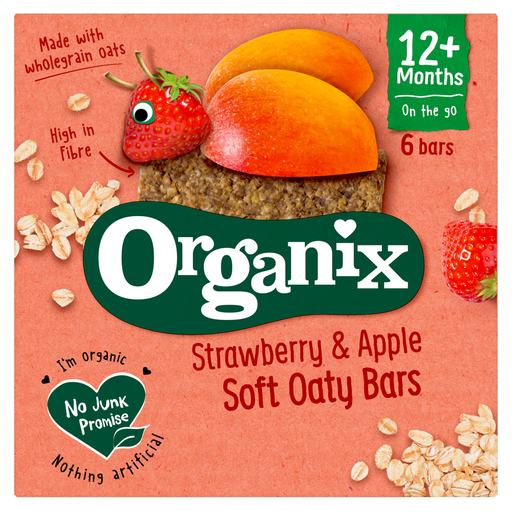 Image unavailable
The soft oaty format may be worth considering where the nursery permits a bar for a child aged 12 months or over. Check the current pack’s nutrition and allergen statements, including any may-contain warning, before packing one.
 Image unavailable
The 21.5g bar size lets you check the nutrition for the portion you would pack. Read this exact variant’s current panel and allergen declaration rather than applying figures from a differently sized Special K bar.
Image unavailable
If the nursery allows this type of bar, compare the 21.5g portion’s full nutrition panel with other options. Check the dark chocolate variant’s own ingredients and allergen statements; another Special K flavour is not a substitute for its label.
No. It is a comparison with another product, not a verdict on the bar as a whole. Read the actual fat figures alongside saturated fat, sugars, salt and the portion you would pack.
No. The NHS advises checking the nursery’s own food policy. Ask about packaged snacks and allergy rules before choosing a bar, then check the exact pack against those rules.
No. A wholegrain or fibre description does not tell you the bar’s fat, sugars, portion size or allergens. Check the full label and consider the other foods in the lunch.
Check all ingredients and the contains and may-contain statements on the exact current pack. Bars can differ by variety, so compare that declaration with the child’s requirements and the nursery’s allergy controls.
No. Consider a permitted bar as one component rather than the lunch itself. England’s Department for Education early-years guidance calls for balanced, nutritious food where meals and snacks are provided; check the nursery’s own lunch guidance when deciding what else to pack.