Do not rely on dried fruit for the protein component of a nursery lunch. Whitworths lists 0.5g protein per 14g box of Sunny Raisins; Sainsbury’s lists less than 0.5g per 14g serving of Mini Snack Raisins and 0.7g per 30g serving of Mixed Dried Fruit. Choose a separate age-appropriate food for the protein role, and consider dried fruit only as a small accompaniment that suits the child’s age and the nursery’s food policy.
Who is this lunch choice for?
Parents choosing a protein component
If protein is the purpose of this part of lunch, choose it separately from dried fruit. The Whitworths and Sainsbury’s raisin and mixed-fruit labels cited here each list less than 1g protein per stated 14g or 30g serving.
Parents packing lunch for a young child
A small dried-fruit portion still calls for an age-appropriate serving method and a check of the nursery’s food policy. Department for Education guidance says babies under 1 should not be given whole raisins or dried fruit.
Parents considering snack frequency
Cambridge University Hospitals NHS Foundation Trust notes that dried fruit contains sugar and can be sticky and hard to remove from teeth. That matters when deciding whether to pack it with a meal or offer it repeatedly between meals.
What should you check before packing dried fruit?
Decide what the food needs to contribute to lunch, then check the intended portion, serving method and meal timing.
| Priority |
What to check |
Your needs |
| Protein contribution |
Read protein per intended serving, not just per 100g. Compare the exact pack and portion you plan to serve; fruit wording does not establish its protein contribution. |
If I need this food to supply protein, I will choose that lunch component separately. Whitworths lists 0.5g protein per 14g box of Sunny Raisins, while Sainsbury’s lists less than 0.5g per 14g Mini Snack Raisins serving and 0.7g per 30g Mixed Dried Fruit serving. |
| Age and preparation |
Check the child’s age, the size and texture of the pieces, and the nursery’s serving rules. Department for Education guidance says not to offer raisins as a snack to babies under 12 months and to cut dried fruit into small pieces for babies under 1. |
A convenient pack does not settle whether my child can manage the fruit as served. I need an age-appropriate portion prepared in line with the nursery’s food-safety policy. |
| Sugars and meal timing |
Compare sugars for the stated serving size and consider how often dried fruit is offered. Cambridge University Hospitals NHS Foundation Trust notes that dried fruit contains sugar and can stick to teeth. |
I would rather consider a small portion within lunch than make dried fruit a frequent between-meal snack. |
What is easy to overlook?
-
Taking fruit wording to mean high protein
Whitworths lists 0.5g protein in a 14g box of Sunny Raisins. A fruit portion and a protein component serve different purposes in this lunch decision.
Check protein for the portion the child will eat. If protein is the goal, choose that component separately.
-
Assuming a snack pack suits a baby as served
Individual packaging does not change the choking concern from whole raisins or dried fruit. Department for Education guidance says not to offer raisins as a snack to babies under 12 months.
Do not serve whole dried fruit to a baby under 1. If it is included in a meal, cut it into small pieces and follow the nursery’s food-safety rules.
-
Offering dried fruit repeatedly between meals
Sainsbury’s lists 9.7g sugars per 14g serving of Mini Snack Raisins and 22.2g per 30g serving of Mixed Dried Fruit. Cambridge University Hospitals NHS Foundation Trust also notes that dried fruit can stick to teeth.
Consider any dried-fruit portion as part of lunch rather than making it a frequent standalone snack.
Which brand examples help with comparison?
These label and range examples help distinguish a portioned fruit accompaniment from a food chosen to supply protein.
Whitworths
Sunny Raisins provide a clearly stated 14g box for comparing a planned portion.
- Whitworths lists 0.5g protein and 9.3g sugars per 14g box.
- The portioned format does not make Sunny Raisins a protein component for lunch.
Sainsbury’s
Its Mini Snack Raisins and Mixed Dried Fruit show why the serving size matters when comparing labels.
- Sainsbury’s lists less than 0.5g protein per 14g Mini Snack Raisins serving and 0.7g per 30g Mixed Dried Fruit serving.
- The listed portions contain 9.7g and 22.2g sugars respectively; neither listed protein amount makes the fruit a suitable substitute for the lunch’s protein component.
Tesco
Tesco Groceries lists several dried-fruit types, including raisins, sultanas, dates and prunes.
- The range lets shoppers compare different fruit types and pack formats.
- Fruit type alone does not establish protein per serving; check the nutrition panel of the specific product.
Joybuy product option
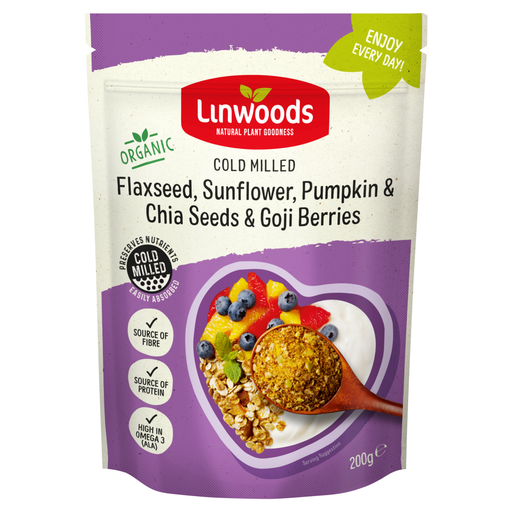
The option below is a seed mix with goji berries, not a dried-fruit protein component. Before considering it for a child’s lunch, check protein for the intended portion, the ingredients, serving texture and the nursery’s food policy.
 No image available
Linwoods Flaxseed, Sunflower, Pumpkin & Chia Seeds with Goji Berries 200g
If protein is the reason for considering this mix, compare the pack’s protein figure for the portion you intend to serve rather than relying on its dried berries. The 200g pack contains flaxseed, sunflower, pumpkin and chia seeds with goji berries; check its ingredients and serving texture against the child’s needs and nursery policy.
View on Joybuy
Questions about dried fruit at nursery
Is dried fruit a high-protein choice for a nursery lunch?
Do not choose it as the lunch’s protein component on the basis of these serving labels. Whitworths lists 0.5g protein per 14g box of Sunny Raisins; Sainsbury’s lists less than 0.5g per 14g serving of Mini Snack Raisins and 0.7g per 30g serving of Mixed Dried Fruit. Choose an age-appropriate protein component separately.
Can a baby under 1 have raisins in a nursery lunch?
Do not offer whole raisins as a snack to a baby under 12 months. Department for Education early-years guidance also says not to give babies under 1 whole raisins or dried fruit and to cut dried fruit into small pieces if it is served as part of a meal.
Does a small raisin box make it suitable for every nursery child?
No. A stated portion helps you see how much fruit the pack contains, but you still need to consider the child’s age, how the fruit will be served and the nursery’s food policy. For babies under 1, Department for Education guidance specifically warns against whole raisins and dried fruit.
Should dried fruit be a regular between-meal snack?
Consider it as a small part of a meal rather than a frequent standalone snack. Cambridge University Hospitals NHS Foundation Trust notes that dried fruit contains sugar and can be sticky and hard to remove from teeth.


