What matters when choosing?
Start with the child’s needs and the nursery’s arrangements, then compare labels for products that meet those conditions.
| Priority | What to check | Your needs |
|---|
| Ingredients and sugars |
Read the ingredients for added sugar or sweeteners. Compare sugars per 100g on the exact products; “no added sugar” does not mean sugar-free. |
I’d start with plain yoghurt if my child will eat it, but I may want a fruit option. The label matters more than “natural” or “organic” on the front. |
| Storage |
Follow the pack’s unopened and opened storage directions. For food that needs refrigeration, ask whether lunchboxes are chilled; the NHS advises an insulated box and ice pack if they are not. |
Will this still be stored as directed by lunchtime, especially if I’ve opened a pack or filled a separate pot? |
| Milk and nursery rules |
Check the milk declaration on each pack, including lactose-free dairy. Ask the nursery about its food policy and the child’s allergy arrangements. |
I need to know the food is permitted at nursery and fits the child’s documented dietary requirements. |
| Serving format |
Check the portion size and serving directions. A family tub needs a clean, sealed portion pot and spoon; follow any supervision or pouch-cap warnings. |
A ready portion may be easier to pack, while a larger tub lets me serve an amount my child can manage. |
Brand and product-line references
These label examples help distinguish formats and ingredients; they do not imply that every product from a brand has the same recipe.
Onken
Onken Natural Set is a plain yoghurt made with milk and vitamin D, according to Onken’s ingredient list.
- Onken reports 4.7g sugars per 100g; Tesco labels the 1kg pot “No Added Sugar”.
- The refrigerated 1kg pot needs portioning for a lunchbox and contains milk.
Rachel’s
Rachel’s Organic lists natural low-fat yoghurt and a separate lactose-free natural yoghurt.
- Its Natural Low Fat Bio-Live Yogurt lists yoghurt from milk as its ingredient and reports 7.1g sugars and 5.0g protein per 100g.
- Rachel’s states that its lactose-free natural yoghurt still contains cows’ milk and is not suitable for people with milk allergy.
Tesco
Tesco Greek Style Yogurt is a natural yoghurt sold in a 500g tub.
- Tesco describes it as thick and spoonable and lists 4.2g sugars per 100g.
- It contains milk, needs refrigeration and must be portioned if the full tub is not being packed.
Activia
Activia’s Natural High Protein Yogurt lists milk yoghurt and cultures including Bifidobacterium lactis.
- Activia reports 9.8g sugars per 100g for this product, giving shoppers a figure to compare on the same per-100g basis.
- It contains milk; the presence of a named culture does not establish suitability for a child’s individual dietary needs.
Yeo Valley
Yeo Valley Organic Strawberry Yogurt is a fruit yoghurt sold in a 450g tub.
- Tesco’s listing names whole-milk yoghurt, strawberries and organic sugar, and reports 10.7g sugars per 100g.
- It needs refrigeration and, according to the listed storage directions, should be eaten within three days of opening.
Müller
Müller Corner Strawberry is a 136g split-pot yoghurt with a strawberry component.
- The individual pot offers a different packing format from a large family tub.
- Tesco’s listing includes sugar in the ingredients and reports 11.9g sugars per 100g. The pot needs refrigeration, and nursery acceptance still needs checking.
Joybuy yoghurt-containing options
These are portioned fruit-and-yoghurt pouches and pots for a nursery-lunch decision, rather than plain natural yoghurt tubs. Check each product’s milk ingredients, serving directions and storage instructions alongside the nursery’s policy.
 No image available
Ella’s Kitchen Organic Mango Greek Style Yoghurt Pouch, 6+ Months, 90g
This fruit-and-yoghurt pouch is a portioned option for a child who accepts mango flavour; the product information states no added sugar, not that it is sugar-free. It contains milk and is labelled for 6+ months. Serve it onto a spoon or into a bowl, keep the cap away from children under 36 months, and refrigerate after opening for use within 24 hours. Follow the pack’s unopened-storage directions and the nursery’s policy.
View on Joybuy
 No image available
Ella’s Kitchen Greek Yoghurt With Strawberry, 6+ Months, 90g
This 90g fruit-and-yoghurt pouch offers a strawberry option rather than plain yoghurt; its product information states no added sugar. It contains milk and is labelled for 6+ months. Serve it into a bowl or onto a spoon under supervision, keep the cap away from children under 36 months, and refrigerate after opening for use within 24 hours. Check the nursery’s policy and the pack’s storage directions.
View on Joybuy
 No image available
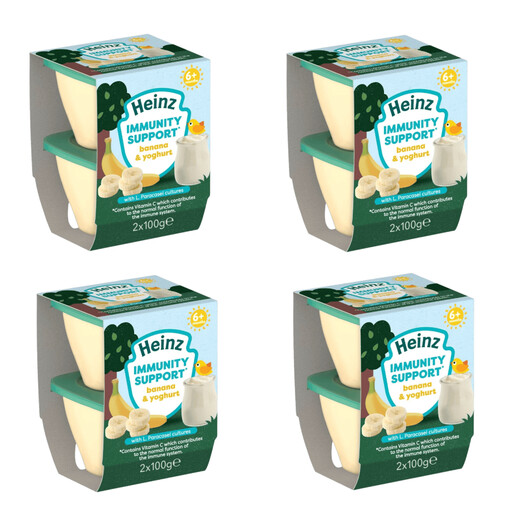
Heinz Banana & Yoghurt Immunity Support, 6+ Months, 8 × 100g Pots
This bundle contains eight individual banana-and-yoghurt baby-food pots, a portioned format rather than a plain yoghurt tub. The listed ingredients include banana, yoghurt and apple; the product contains milk and is labelled for 6+ months. Serve with a clean spoon and supervise the child. Refrigerate unused food from an opened pot and use it within 24 hours; check the pack’s storage directions and nursery policy.
View on Joybuy
 No image available
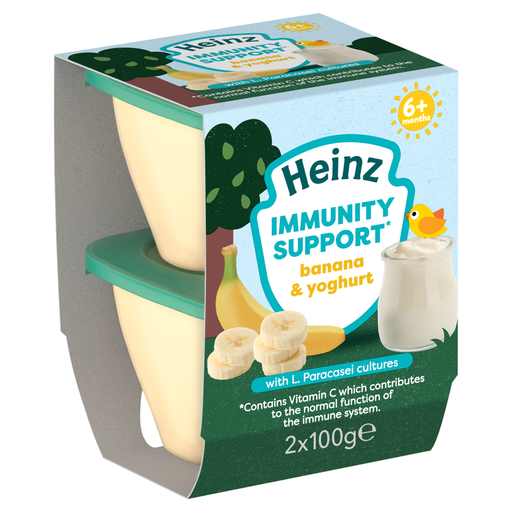
Heinz Banana & Yoghurt Immunity Support, 6+ Months, 2 × 100g Pots
This twin pack provides individual banana-and-yoghurt baby-food pots instead of a plain yoghurt serving. Its listed ingredients include banana, yoghurt and apple; it contains milk and is labelled for 6+ months. Serve with a clean spoon under supervision. Refrigerate unused food from an opened pot and use it within 24 hours, following the pack’s storage directions and the nursery’s policy.
View on Joybuy
Nursery lunch questions
Can I pack yoghurt in a nursery lunchbox?
Yes, if the nursery accepts it and you follow the product’s storage directions. For food needing refrigeration, NHS advice is to use an insulated lunchbox with an ice pack when lunchboxes are not kept in a fridge at nursery. Include a spoon if the child needs one.
Should I start with plain or flavoured yoghurt?
Plain unsweetened yoghurt is an NHS example worth considering if the child will eat it. For a flavoured option, check the exact ingredients and sugars per 100g: fruit yoghurts and plain products do not necessarily have the same ingredient profile.
Is lactose-free yoghurt suitable for a child with milk allergy?
Do not assume it is. Rachel’s Organic states that its lactose-free natural yoghurt contains cows’ milk and is not suitable for people with milk allergy. Follow the child’s individual allergy plan and the nursery’s procedure.
What should I check with the nursery before packing yoghurt?
Ask about its food and allergy policy, whether lunchboxes are refrigerated, and how staff handle the child’s documented dietary requirements. Those answers affect which product and packing format will work.
Does the same early-years guidance apply everywhere in the UK?
No UK-wide conclusion follows from the cited Department for Education early-years nutrition guidance: it is guidance for providers in England. Wherever the nursery is based, check its own packed-lunch, storage and allergy arrangements rather than assuming an England-specific document sets its policy.


