Who is choosing yoghurt for nursery?
The right format depends on whether one child brings lunch from home or the setting serves yoghurt to several children.
Parents packing one nursery lunch
An individual portion can keep the product label with the child’s lunch without asking staff to divide a large tub. Check that the nursery accepts yoghurt and the chosen container: the NHS advises parents to check their nursery’s food policy.
Nursery staff and childminders serving shared yoghurt
A large tub calls for a plan to refrigerate and portion it while managing allergens. Department for Education early-years guidance highlights careful food hygiene for young children, while Food Standards Agency guidance addresses refrigerated storage and allergen controls.
Families managing a milk allergy
The Food Standards Agency identifies milk as a common ingredient in yoghurt. Tell the nursery or childminder about the child’s food allergy, as the NHS advises, and check the exact product’s current allergen declaration. “Lactose-free” alone does not establish that a dairy yoghurt is milk-free.
What should you check before choosing?
Decide how the yoghurt will be served, then check the nursery’s rules and the exact pack before comparing recipes.
Individual pot or pouch
Choose when: One child brings lunch from home and the nursery accepts the packaged portion.
Trade-off: Staff need not portion a shared tub, but an individual pack still needs to meet the nursery’s storage and allergen rules.
Large natural yoghurt tub
Choose when: The nursery has agreed to serve several portions and can refrigerate and portion the tub under its food-safety procedures.
Trade-off: An opened shared tub adds handling and allergen-control steps; it is not a substitute for an agreed packed-lunch arrangement.
Nursery-agreed milk-free alternative
Choose when: Milk must be avoided for the child and the nursery has agreed on a suitable alternative.
Trade-off: Check that alternative’s own ingredients and allergen declaration; lactose-free dairy yoghurt is not necessarily milk-free.
| Priority |
What to check |
Your needs |
| Format and acceptance |
Ask whether the nursery accepts yoghurt from home and whether it permits pots, pouches or food portioned from a shared tub. Check the portion against the way staff will serve it. |
I’m packing lunch for one child, so I need a portion the nursery will accept and can serve as packed. |
| Milk and other allergens |
Read the current ingredients and allergen declaration for the exact flavour. Tell the nursery about the child’s food allergy; do not use “lactose-free” as a milk-allergy check. |
If milk must be avoided, I need a nursery-agreed choice whose current label I can check, not an assumption based on the product name. |
| Ingredients and nutrition |
Compare the ingredients and nutrition panel for the exact products, using the same per 100g basis where available. Check what any “no added sugar” wording applies to. |
I’d like to compare plain and fruit yoghurts by their actual labels rather than deciding from child-oriented packaging or brand claims. |
| Chilled storage |
Check the pack’s storage and after-opening instructions. For a shared tub, confirm who will refrigerate, portion and handle it under the nursery’s procedures. |
A large tub would need an agreed serving plan; for a packed lunch, I need to know how the chosen portion will be held until it is eaten. |
Brand ranges and formats to consider
These brand examples show formats to compare, not whether a particular product is available on Joybuy or accepted by your nursery.
Onken
Onken’s Natural 1kg yoghurt is a large-tub example for pre-agreed shared serving, rather than a single packed-lunch portion.
- Onken describes Natural 1kg as whole-milk yoghurt with no added sugar; Tesco also lists Onken natural yoghurt in 1kg formats.
- A large tub still needs nursery approval, refrigerated storage and a portioning plan.
Yeo Valley
Yeo Valley has both larger natural-yoghurt and smaller-pack formats to compare.
- Tesco lists Yeo Valley Organic Natural Yogurt 950g and a 4 x 110g natural multipack; Yeo Valley also describes smaller Little Yeos formats.
- Organic status and child-oriented packaging do not replace checking the exact recipe, milk declaration and nursery policy.
Rachel’s Organic
Rachel’s Organic lists both individual fruit-yoghurt multipacks and larger products.
- Its range includes Luscious Fruits yoghurt in a 4 x 110g pack and products in 450g formats.
- Check the current ingredients and allergen declaration for the exact flavour before sending an individual pack.
Activia
Activia offers several yoghurt formats; Tesco lists a Strawberry 4 x 115g multipack.
- Activia’s range includes fruit products and larger pots, giving different pack formats to inspect.
- Live-culture or gut-health branding does not establish nursery suitability. Check the exact pack’s ingredients, milk declaration and nutrition information.
Müller
Müller’s range includes individual and multipack options rather than one standard nursery-lunch recipe.
- Müller lists Corner and Light ranges, while Tesco lists Müller yoghurt multipacks.
- Recipes and formats differ across the range, so inspect the chosen product’s ingredients, nutrition panel and nursery acceptance.
Tesco
Tesco’s own-brand yoghurt listings provide larger-tub formats to compare with individual packs.
- Tesco lists own-brand Greek-style yoghurt in a 1kg format alongside its wider yoghurt range.
- Tesco advises reading the physical pack label because ingredients, nutrition and allergen information can change.
Individual yoghurt options on Joybuy
These options are individual yoghurt pouches and pots for a nursery lunch where the setting accepts food from home. They are not substitutes for an agreed shared tub or a milk-free alternative.
 Image unavailable
Ella’s Kitchen Organic Mango Greek Style Yoghurt Pouch 6+ Months 90g
The 90g pouch is an individual portion to consider if the nursery accepts pouches. The product information identifies milk; check the current pack’s allergen declaration, age guidance and storage instructions before sending it.
View on Joybuy
 Image unavailable
Ella’s Kitchen Greek Yoghurt with Strawberry Pouch 6+ Months 90g
This 90g pouch offers a single portion where pouches are accepted. The product information identifies milk and includes a cap warning for children under 36 months; check the current pack and agree how it will be served with the nursery.
View on Joybuy
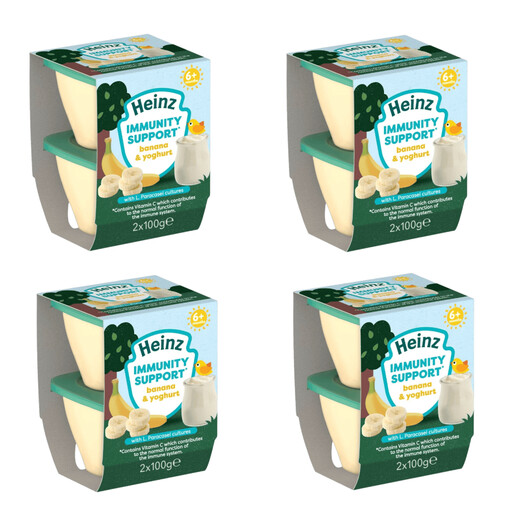 Image unavailable
Heinz Banana & Yoghurt Pot 6+ Months, 2 x 100g – Bundle of 4
The bundle contains eight individual 100g pots, so one pot can be packed where the nursery accepts this format. The product information identifies milk; check the current pack’s allergens, age guidance and instructions for any food left after opening.
View on Joybuy
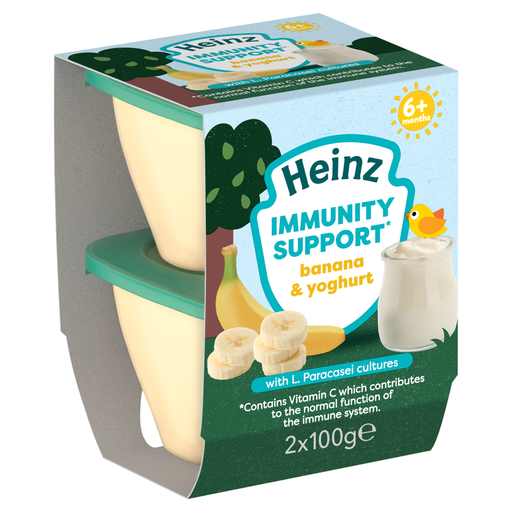 Image unavailable
Heinz Banana & Yoghurt Pot 6+ Months, 2 x 100g
This twin pack contains two individual 100g pots rather than a shared tub. If the nursery accepts pots, check the current pack’s milk declaration, age guidance and after-opening instructions before packing one.
View on Joybuy
Questions about nursery yoghurt
Can I send a 4-pint yoghurt bottle for nursery lunch?
Do not assume “4 pint” describes a suitable yoghurt lunch portion. Tesco identifies 4 pints as 2.272L on a milk product, while its yoghurt listings include individual packs and tubs around 950g–1kg. For one child, check which individual portions the nursery accepts; discuss refrigeration and portioning with staff before considering a shared tub.
Will a nursery accept yoghurt in a packed lunch?
Check the particular nursery’s food policy before packing it. The NHS advises parents to check nursery food policies, so confirm both whether yoghurt from home is accepted and which containers staff can serve.
Is lactose-free yoghurt suitable for a child with a milk allergy?
Lactose-free does not necessarily mean milk-free. The Food Standards Agency identifies milk as a common ingredient in yoghurt; check the exact product’s current allergen declaration and tell the nursery about the child’s food allergy, as the NHS advises.
Should I choose plain or fruit yoghurt for nursery?
Choose a recipe the nursery accepts and compare the exact packs’ ingredients and nutrition information. The NHS gives plain unsweetened yoghurt with sliced banana as a snack example for young children; a fruit flavour alone does not tell you what its nutrition panel says.
What needs arranging before a nursery serves yoghurt from a large tub?
Agree how the setting will refrigerate, portion and handle the tub alongside its allergen procedures, and follow the product’s storage instructions. Department for Education early-years guidance calls for particular care with food hygiene for young children; Food Standards Agency guidance addresses refrigeration and allergen controls.


