Small-batch nut choppers
If you mainly prepare chopped nuts, nut meal, herbs or small sauces for one or two people, a mini chopper keeps the bowl and storage commitment modest. Check the exact model’s permitted ingredients and batch size.


For small batches of nuts, start with a compact chopper whose instructions explicitly permit nuts and whose controls let you stop at the texture you want. Choose a separate grinding bowl if dry grinding is a regular job; a multifunction food processor takes more storage space and makes more sense when you will also use its slicing, grating or dough functions.
If you mainly prepare chopped nuts, nut meal, herbs or small sauces for one or two people, a mini chopper keeps the bowl and storage commitment modest. Check the exact model’s permitted ingredients and batch size.
If you regularly process dry spices or coffee as well as nuts, look for a stated grinding function or a dedicated grinding bowl rather than assuming every chopper handles those ingredients.
If you also slice, grate, whisk or knead regularly, a compact multifunction processor may justify the extra accessories and storage space. Check its working capacity, not just its total bowl size.
Choose when: Small batches of nuts, herbs or sauces are your regular jobs and limited storage space matters most.
Trade-off: The small bowl limits batch size; confirm that the exact model permits nuts.
Choose when: You frequently grind nuts, spices or coffee and want a dedicated container for dry ingredients.
Trade-off: There are more parts to store, and this format does not necessarily provide slicing or grating.
Choose when: Nut chopping sits alongside regular slicing, grating, whisking or kneading.
Trade-off: Its larger body and accessories need more cupboard space than a mini chopper.
For consumers choosing an appliance chiefly to chop nuts in a small kitchen, start with nut suitability, then weigh storage and cleaning against any extra preparation functions you will use.
| Concern | What to check | Who this matters to |
|---|---|---|
| Nut texture and suitability | Check the exact model’s instructions for nuts, grinding, pulse control and any stated batch limit. A motor rating alone does not establish nut-grinding suitability. | I want to stop at coarse pieces or continue towards a finer texture without guessing whether the appliance permits nuts; for around 50% of consumers, that control and suitability are the primary concern. |
| Storage and cleaning | Compare appliance dimensions, bowl size and whether food-contact parts can be removed and cleaned as instructed. | With little cupboard space, I need a chopper I can put away and clean after a small batch; roughly 30% of consumers put space and cleanup first. |
| Additional prep functions | Check which slicing, grating, whisking or kneading accessories are included, alongside working capacity and storage requirements. | If I regularly prepare more than nuts, I want those other jobs covered by the same appliance; extra functions come first for about 20% of consumers. |
A motor rating does not tell you which ingredients, quantities or textures the manufacturer permits for a particular model.
Check the exact model’s nut or grinding instructions, suitable blade or bowl, and controls before comparing motor ratings.
Extra bowls and attachments take up storage space even when slicing, grating and dough preparation are rarely needed.
Choose the multifunction format when those additional jobs are part of your regular cooking; otherwise, compare compact choppers that explicitly permit nuts.
Allow cupboard space for the processor and its accessories, as well as time to clean the parts you use.
Food Standards Agency-commissioned research identified inadequately cleaned kitchen equipment as a cross-contact concern in food settings. Residue matters particularly when someone who eats food prepared with the equipment has a nut allergy.
Check how the manufacturer instructs you to clean the bowl, lid, blade and other food-contact parts, and consider separate equipment where the household’s allergy precautions call for it.
Cuisinart UK offers small-batch options including the 900 ml Mini Prep Pro and 0.7 L Pixie Chopper.
Kenwood GB lists both mini choppers and the Duo Prep chopper/grinder for buyers considering a separate dry-grinding function.
Magimix UK offers the small-batch Le Micro alongside the broader-function Mini Plus processor.
These choppers are options to examine if small-batch nut preparation matters more to you than slicing or kneading. Compare their bowl arrangements with your storage space, and check each model’s instructions for your usual nut quantity.
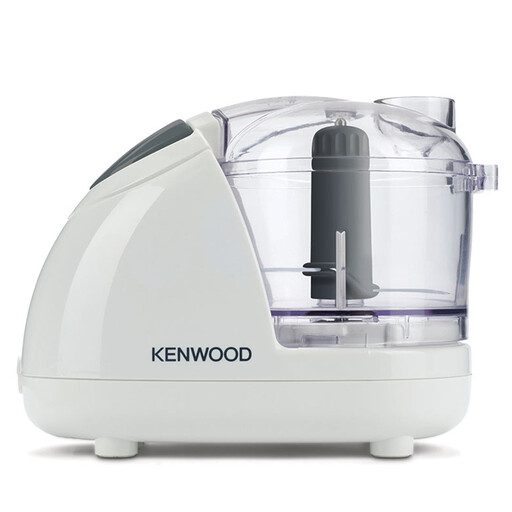 No image available
Consider this small-bowl chopper for modest nut batches if its instructions permit the quantity you normally make. The CH180B is listed as 300 W with two speeds and a dishwasher-safe bowl; check its dimensions against your storage space.
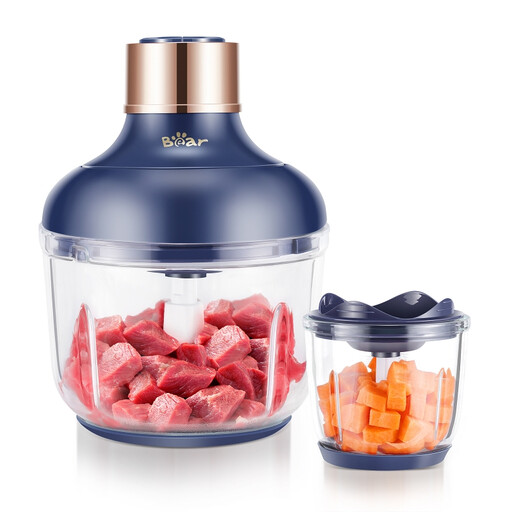 No image available
Consider the smaller bowl for modest batches if you also have room to store the second bowl. The QSJ-D03Q1 bundle lists 0.6 L and 2 L glass bowls and a 300 W motor; confirm the permitted nut quantity and how the model handles nuts before buying.
A mini chopper can suit small nut batches when the exact model permits nuts and its stated capacity fits your recipe. Cuisinart UK describes grinding with the Mini Prep Pro, while Magimix UK lists nuts for Le Micro; check the instructions for whichever model you choose.
Pulse control is useful if you want to stop between bursts and inspect the nut texture. Cuisinart UK specifies pulse operation for the Mini Prep Pro, and Kenwood GB lists pulse and continuous controls for the Duo Prep; also check that the appliance permits your intended nut quantity.
Choose a bowl that fits your usual batch before choosing the smallest appliance available. Cuisinart UK lists 0.7 L and 900 ml compact models; for broader preparation, Magimix UK lists a 1.7 L total bowl capacity but a 600 ml working capacity for the Mini Plus. Check the appliance’s full dimensions as well as its bowl size.
Treat shared equipment as a potential allergen cross-contact concern, not as automatically suitable after a quick rinse. Food Standards Agency-commissioned research identifies inadequate cleaning of kitchen equipment as a concern in food settings; follow the chopper’s cleaning instructions for all food-contact parts and consider separate equipment where the household’s precautions require it.