
24/7 Customer Support

Free returns

Same-day & Next-day Delivery

Quality Guaranteed

Unlock Your Welcome Offers: FREE Delivery | Up to 80% OFF | Free 30-day JoyPlus trial
Download the APP
A Nutribullet blender can make smoothies, protein shakes, sauces and food preparation more convenient, but the wrong model may quickly become an expensive cupboard resident. Buyers often focus on motor wattage or a long accessories list while overlooking capacity, cleaning, charging and intended use.
Before choosing, watch for three common traps:
The right choice depends on how often you blend, where you use it and whether you need a compact smoothie maker or a larger family appliance.
A 475ml portable Nutribullet blender is suited to an individual smoothie, shake or post-gym drink. It can be convenient for commuters, students and travellers, particularly when the cup doubles as a takeaway bottle.
For more generous portions, look at a Nutribullet personal blender with a 900ml cup, such as a 900 Series or Ultra model. These are more suitable for larger smoothies, shared servings or preparing ingredients in advance. A 1.6-litre jug is more appropriate for families, soups and batch preparation, although it requires more cupboard and worktop space.
Check the usable fill line rather than relying only on the advertised total capacity. Leave room for ingredients to circulate and follow the manufacturer’s instructions to reduce the risk of leaks or motor strain.
A 900W or 1200W blender provides a different level of electrical input from a 120W cordless blender. For frozen fruit, ice, nuts and leafy greens, a mains-powered high-performance blender generally offers more sustained power.
The Nutribullet 900 Series models listed here specify 900W motors and blade speeds of up to 24,000 or 25,000 RPM, depending on the model. The Nutribullet Ultra specifies a 1200W motor and a titanium-coated Rapid Extractor Blade. These figures are useful for comparing models within the range, but they should not be treated as a guarantee of a particular texture.
A portable or USB-C blender is designed around convenience. It is suitable for smaller portions and can be recharged from a compatible power source, but it should not automatically be treated as a direct replacement for a full-size mains blender. Always add sufficient liquid, cut large ingredients down and follow the supplied guidance for ice and frozen food.
Look for cups labelled BPA-free and check exactly which parts are dishwasher-safe. Many models allow the cups, lids and blade assemblies to go in the dishwasher, while the motor base must be wiped with a damp cloth and kept away from water.
A dishwasher-safe blender can reduce daily cleaning effort, but removable parts still need prompt rinsing after thick mixtures such as nut butter or protein shakes. Blades are sharp and should be handled carefully.
For UK households, also check the plug, voltage information, warranty and safety instructions supplied with the product. Do not blend hot liquids in models that are not designed for them. A dedicated hot and cold blender uses a suitable jug and vented lid system, but hot-liquid instructions must still be followed precisely.

Why This Fits Their Persona: A compact option for students, renters and first-time buyers making individual smoothies, dips or sauces in a smaller UK kitchen.
The 7-piece set focuses on practical cups and resealable lids rather than unnecessary attachments, with clearly stated 16oz and 20oz capacities.
10,000 RPM motor, BPA-free dishwasher-safe cups, two blending cups and one-touch operation.
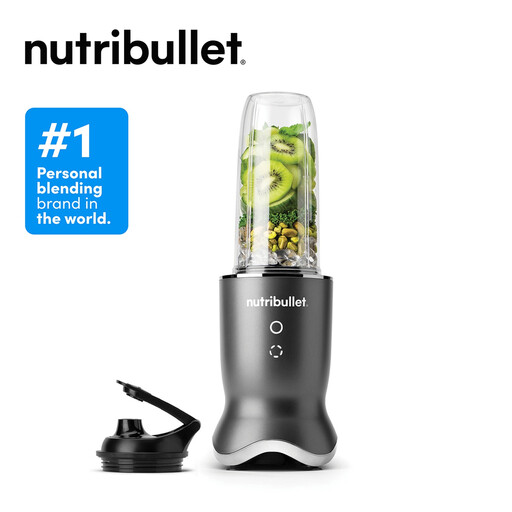
Why This Fits Their Persona: A strong fit for regular smoothie makers who want a larger personal cup, automated operation and a more refined countertop design.
Its specification clearly separates the 30-second automated cycle from manual pulse control, avoiding the assumption that one setting suits every recipe.
1200W motor, 900ml cup, titanium-coated Rapid Extractor Blade and dishwasher-safe Tritan Renew components.
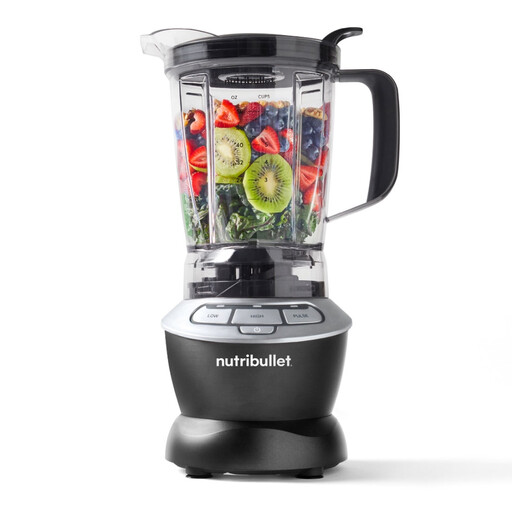
Why This Fits Their Persona: Designed for home cooks and families preparing larger batches of smoothies, soups, sauces and hot drinks in one appliance.
The 1.6-litre thermal-control pitcher is designed specifically for hot and cold preparation, unlike personal models that should not process hot liquids.
1000W motor, 1.6-litre capacity, preset programmes, variable speed, pulse control and self-cleaning function.
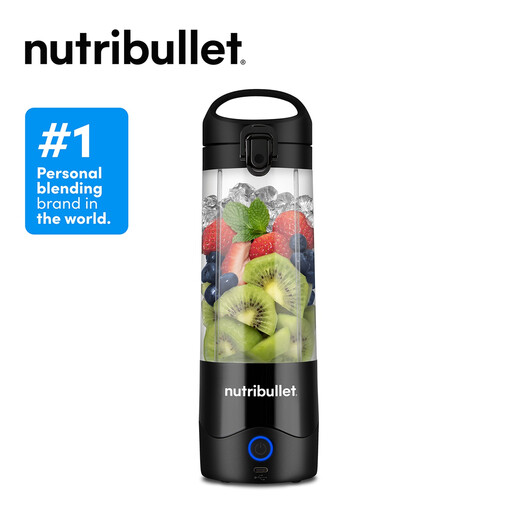
Why This Fits Their Persona: A cordless choice for office workers, gym users and travellers who need a personal drink without finding a mains socket.
The built-in rechargeable battery, USB-C cable, 475ml cup and takeaway lid make its portability functional rather than merely a compact design feature.
15+ blending cycles per charge, USB-C charging, BPA-free cup and dishwasher-safe removable parts.
We have compiled a complete, real-time list of products that fully satisfy these strict selection criteria and UK safety regulations.
Some models are specified for frozen fruit and ice, including the 900 Series and Ultra ranges. A portable model may also list these ingredients, but its smaller battery-powered motor is intended for more limited quantities. Use liquid where instructed, avoid overfilling and follow the model’s manual.
Lifespan depends on frequency of use, ingredient hardness, cleaning and whether the motor is allowed to cool between cycles. Avoid running beyond the recommended time, inspect cups and blades regularly, and replace damaged components rather than continuing to use them.
A cordless blender uses rechargeable electricity rather than running directly from the mains. Its running cost depends on battery capacity, charging frequency and your electricity tariff. The more significant trade-off is usually blending capacity and cycle duration, so choose cordless convenience only if it fits your routine.