What to check when choosing nuts
Start with the portion you intend to eat, then compare labels for that amount. Pack format and ingredients matter because neither a smaller pack nor a plain-looking nut tells you its serving calories.
| Priority |
What to check |
Your needs |
| Serving calories |
Compare kcal for the weight or nut count you plan to eat. Check whether the label gives values per serving, per 100g or both. |
I want to know the calories in my actual portion, rather than assume a handful is a small snack. The British Heart Foundation puts 30g of nuts at 180–225kcal, depending on the nut. |
| Ingredients and seasoning |
Read the ingredients and compare sugar, saturated fat and salt on the nutrition panels of the exact products. |
For fewer added ingredients, I would look for whole, plain nuts. A roasted or coated version needs its own label check rather than being treated as equivalent. |
| Pack format |
Check the pack weight and whether it contains separate portions. If it is one larger bag, decide how you will measure a serving. |
A larger bag suits me if I am happy to portion it at home; a small pack gives me a defined amount to start with, but its full contents are not necessarily under 100kcal. |
| Allergens and child safety |
Read the current pack’s ingredients, allergen statements and any age or choking warning. |
When buying for someone with an allergy or a young child, I need the exact pack’s warning. UK government guidance lists peanuts and tree nuts among the 14 declarable allergens, and Tesco’s mixed-nut listing warns that small children can choke on nuts. |
Brand and range references
These examples show why the exact product and serving matter more than a brand name when comparing nut snacks.
Tesco
Tesco lists own-label nut products in different pack sizes. Its Mixed Nuts 250g listing gives nutrition for a 25g serving.
- Tesco lists 165kcal and less than 0.01g salt per 25g serving of its Mixed Nuts 250g.
- Use the label for the specific pack you choose; those values do not describe every Tesco nut product.
KP
KP lists peanut snacks including a 30g Dry Roasted Snack Pack and Original Salted Peanuts.
- KP declares 179kcal for its 30g Dry Roasted Snack Pack, making the pack amount clear.
- That snack pack also lists 0.51g salt per 30g; a defined pack is not automatically a low-calorie or plain option.
M&S
M&S lists natural almonds, cashews, walnut halves and a nut medley among its nut products.
- Its listed formats include 750g packs of natural almonds, cashews and nut medley, plus 260g walnut halves.
- Choose by the particular pack’s ingredients, nutrition and serving size rather than treating the range as one nutritional option.
Joybuy nut and chestnut options
These Joybuy options include almonds for measuring portions from a larger bag and chestnuts in several pack sizes. Chestnuts and almonds are different foods, so use each product’s label when comparing serving calories rather than applying one nut’s figures to another.
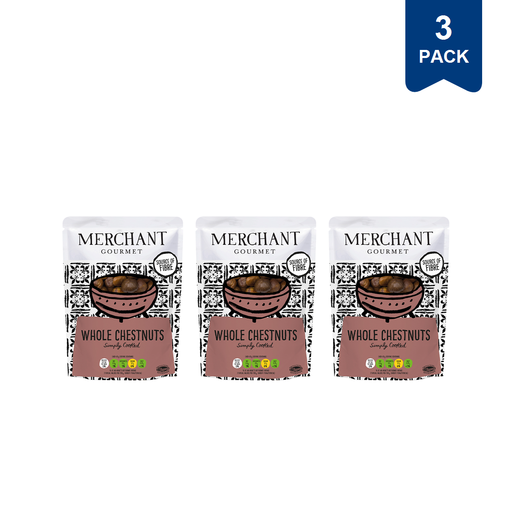 Image unavailable
Merchant Gourmet Whole Chestnuts, 3 × 180g
Three separate 180g packs give you distinct pouches, but each pouch still contains more than one possible serving. Check its nutrition label and measure the amount you intend to eat.
View on Joybuy
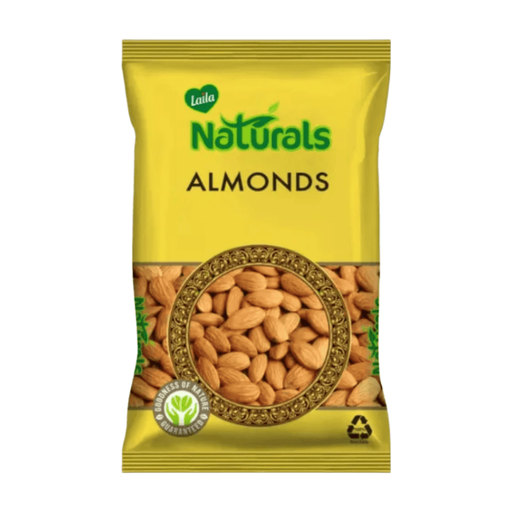 Image unavailable
Laila Almonds 500g
This 500g bag suits shoppers willing to measure their own almond servings. For a smaller counted snack, Kent Community Health NHS Foundation Trust lists 12 almonds at 80kcal as an example; check this pack’s label for its own nutrition values.
View on Joybuy
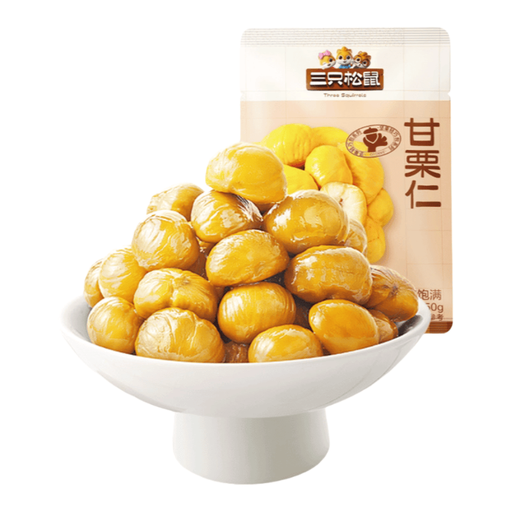 Image unavailable
Three Squirrels Light Pack Sweet Chestnut Kernels 50g
The 50g pack sets a clear amount to assess before snacking. Check the energy value for the full pack if you plan to eat it all; the name alone does not establish its calories.
View on Joybuy
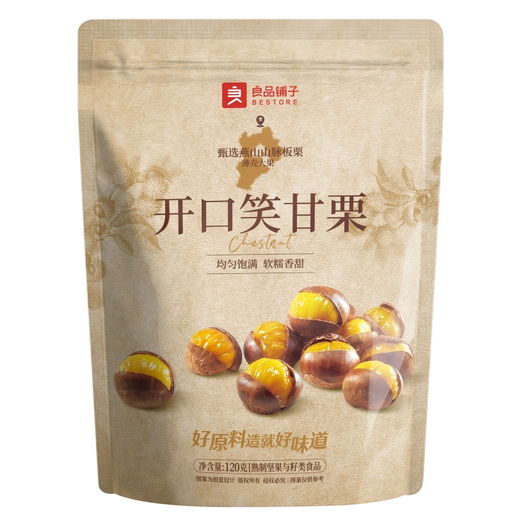 Image unavailable
Bestore Smiling Chestnuts 120g
This 120g bag leaves room to choose your own serving rather than treating the bag as a single portion. Read its nutrition and ingredient labels if you are comparing it with other chestnut snacks.
View on Joybuy
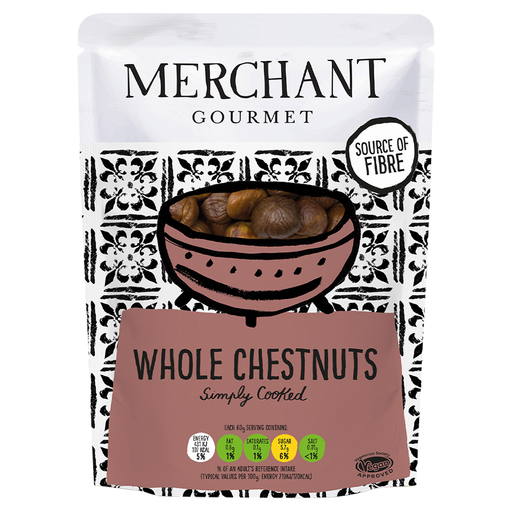 Image unavailable
Merchant Gourmet Whole Chestnuts 180g
This is one 180g pack, rather than the three-pack format listed above. Decide how much you will serve and use this pack’s nutrition label to work out the calories for that amount.
View on Joybuy
Questions about portions and labels
Are nuts a low-calorie snack?
Do not assume they are. The British Heart Foundation puts a 30g serving at 180–225kcal, depending on the nut, so compare calories for the portion you intend to eat.
What does a nut portion under 100kcal look like?
It can be smaller than a 30g handful. Kent Community Health NHS Foundation Trust lists examples including 12 almonds at 80kcal, 15g of pistachios at 90kcal and three Brazil nuts at 92kcal. Treat these as examples and check the nutrition label for your pack.
Should I choose plain, roasted or salted nuts?
If you want fewer added ingredients, start by comparing whole, plain nuts with the ingredients on roasted or salted alternatives. The British Heart Foundation notes that coatings can add calories, sugar and saturated fat, while salted products add salt; the exact amounts depend on the product.
What should I check when buying nuts for someone with an allergy?
Check the current physical pack’s ingredients and allergen information before serving it. UK government guidance lists peanuts and tree nuts among the 14 declarable allergens; do not rely on the label of a different nut product or an earlier pack.


