Backpackers packing individual snacks
Individual peanut packs give you a ready-to-eat portion without measuring out a larger bag at camp. Compare the declared protein and salt per pack, and check the current allergen label.


For a ready-to-eat camping snack, compare the protein in the portion you will carry, not just the figure per 100g: Tesco Groceries lists 15g in a 50g pack of KP Dry Roasted Peanuts and 6.5g in a 25g serving of Tesco Jumbo Peanuts. Plain peanuts offer a shorter ingredient list and much less salt in these examples; individual dry-roasted packs make portions easier to plan, but check their salt and allergen labels.
Individual peanut packs give you a ready-to-eat portion without measuring out a larger bag at camp. Compare the declared protein and salt per pack, and check the current allergen label.
Plain and seasoned peanuts can have very different salt figures. Tesco Groceries lists less than 0.01g salt per 25g serving of Tesco Jumbo Peanuts, compared with 0.80g in a 50g pack of KP Dry Roasted Peanuts.
A larger bag of peanuts can be divided between campers, while peanut butter can be used with food packed for breakfast or another meal. Plan how you will portion, serve and store either format.
Start with the portion you expect to eat, then compare its nutrition label and the practicalities of carrying it.
| Priority | What to check | Your needs |
|---|---|---|
| Protein per portion | Compare protein per pack or planned serving, then use the per-100g figure to compare products on the same basis. Tesco Groceries lists 15g per 50g KP Dry Roasted pack and 6.5g per 25g serving of Tesco Jumbo Peanuts. | I want to know how much protein is in the amount I will actually pack and eat. |
| Salt and seasoning | Read salt per serving as well as per 100g, and check the ingredients. Tesco Groceries lists 0.80g salt per 50g KP Dry Roasted pack and less than 0.01g per 25g serving of Tesco Jumbo Peanuts. | If I am choosing between plain and seasoned peanuts, the salt in my usual portion matters more than the flavour name alone. |
| Pack and storage | Check whether you are buying individual portions or a larger pack. Follow the storage instructions and plan how to keep an opened pack closed and dry. | For a walk, I may prefer separate packs; for shared meals, I can portion a larger bag before leaving. |
| Allergens | Read the current ingredients and any precautionary allergen statement. The Food Standards Agency explains that a ‘may contain’ statement communicates possible unintended allergen presence. | When packing for someone with an allergy, I need to check the exact product rather than assume all peanut snacks have the same ingredients or cross-contact warnings. |
| Food format | Check whether the product is whole peanuts, peanut butter or a mixed protein bar. Marks & Spencer lists 20g protein in its 55g Peanut Butter Protein Bar, which also contains protein ingredients beyond peanuts. | I might want nuts to eat on their own, a spread for food I am already packing, or a bar; those are different choices even when each contains peanuts. |
The portion in your bag may be much smaller than 100g. Tesco Groceries lists 15g protein in a 50g KP Dry Roasted pack and 6.5g in a 25g serving of Tesco Jumbo Peanuts.
Compare the protein in the pack or serving you plan to eat; use per-100g values when comparing the products themselves.
Seasoning changes the ingredients and can change the salt per portion. Tesco Groceries lists 0.80g salt in a 50g KP Dry Roasted pack, against less than 0.01g in a 25g serving of Tesco Jumbo Peanuts.
Check salt per portion and the ingredient list when deciding between these formats.
A peanut product can also list other ingredients or warn about possible cross-contact. The Food Standards Agency describes precautionary allergen labelling as a way to communicate possible unintended allergen presence.
Read the current pack’s ingredients and any ‘may contain’ statement for every product being taken on the trip.
A 300g bag of Tesco Jumbo Peanuts is a different packing proposition from individual 30g peanut packs: sharing and repeated opening need more thought.
Divide a large bag into the portions you intend to carry, or plan how you will close and protect it after opening.
These examples illustrate different nut-based formats and label details; each figure applies to the named product, not every item from the brand or retailer.
KP offers salted and dry-roasted peanut snacks in portion-sized formats.
Tesco Jumbo Peanuts are a plain-peanut option sold in a 300g bag.
M&S lists both 100% Crunchy Peanut Butter for serving with other food and a Peanut Butter Protein Bar for eating as a bar.
These options include larger bags of peanuts, individual dry-roasted portions and peanut-containing bars. Choose the format you can carry and serve, then check the current nutrition and allergen information for the exact pack.
 No image available
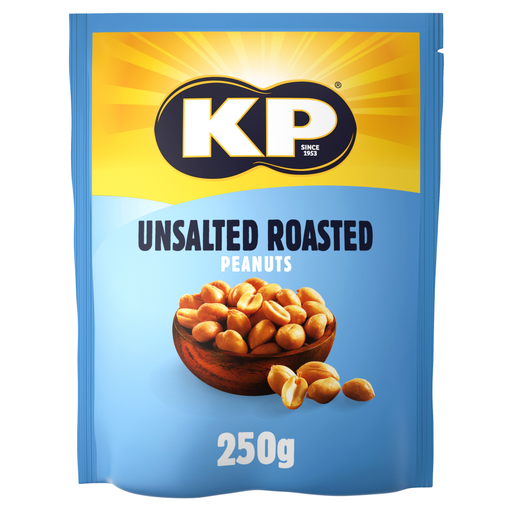
An unsalted roasted-peanut option for campers who would rather portion a larger bag than carry individual snack packs. Check the current ingredients, nutrition and allergen label before packing.
 No image available
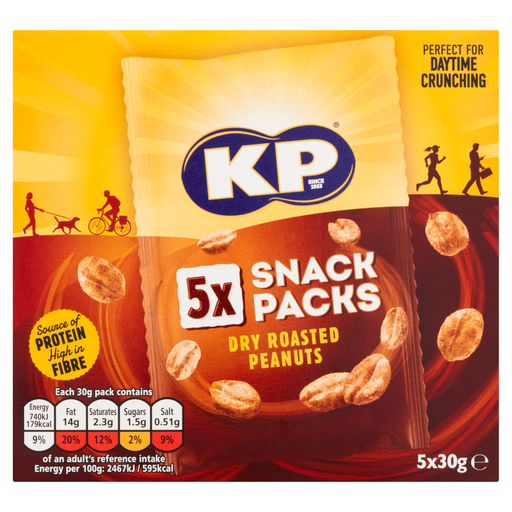
Five individual 30g packs make it straightforward to allocate snacks across a trip. Dry-roasted peanut recipes can include seasoning, so check salt per pack and the current allergen statement.
 No image available
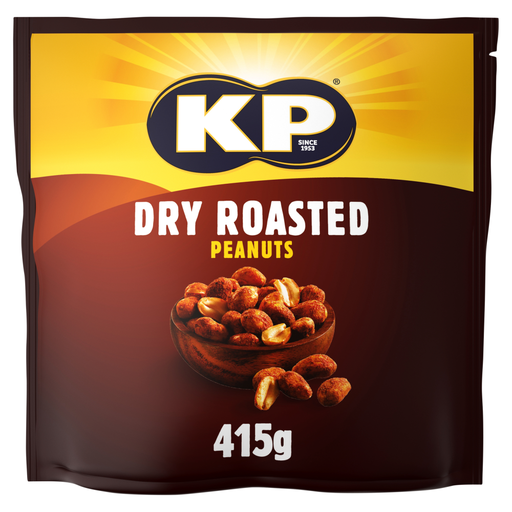
This 415g pack is a larger dry-roasted peanut format for food you plan to divide or share. Arrange portions and storage before departure, and check the exact pack’s salt and allergen information.
 No image available
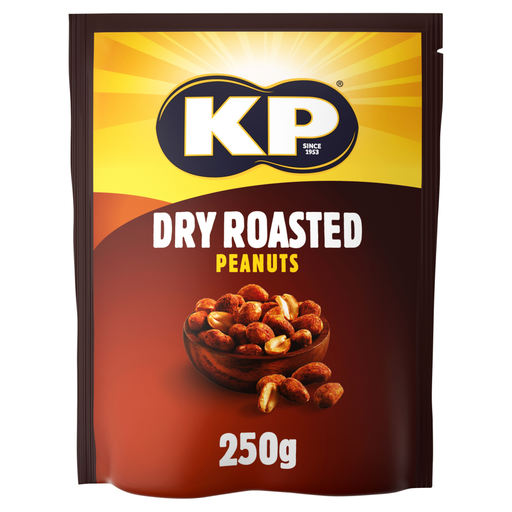
The 250g reclose-pack format suits campers planning to take several portions from one pack. Compare its salt per planned serving and read the current ingredient and allergen statements.
 No image available
Four 40g peanut-and-chocolate bars offer a different format from whole peanuts. Compare protein per bar on the current label and check the full ingredients and allergen information if choosing a mixed-ingredient snack.
It depends on the portion you pack. Tesco Groceries lists 15g protein in a 50g pack of KP Dry Roasted Peanuts and 6.5g in a 25g serving of Tesco Jumbo Peanuts; compare the serving or pack figure before relying on a per-100g number.
Choose by the label and pack format rather than assuming they are interchangeable. Tesco Groceries lists less than 0.01g salt per 25g serving of its plain Jumbo Peanuts, while a 50g KP Dry Roasted pack lists 0.80g salt; the plain product comes in a larger bag that you may want to portion yourself.
Check the current ingredients and precautionary allergen statement for every food you plan to bring. Peanuts and tree nuts need separate attention, and a ‘may contain’ statement can indicate possible unintended allergen presence, as the Food Standards Agency explains.
Follow each product’s storage instructions and protect opened food from moisture. Individual packs limit how often you need to open a shared supply; if taking a larger bag, plan how you will close it and divide portions.
No. Marks & Spencer lists 20g protein in its 55g Peanut Butter Protein Bar, but the bar includes protein ingredients other than peanuts. Check its full ingredient and allergen label rather than comparing its protein figure with whole peanuts as though the foods were identical.