People looking to reduce fat
If you want peanut flavour and are happy to prepare a snack, compare pressed peanut powder with whole nuts using the fat values per 100g. Powder is an ingredient, not a ready-to-eat handful.


If reducing fat is the priority, a pressed peanut powder can provide peanut flavour with less fat per 100g than the whole-nut examples below, but it needs to be mixed into food rather than eaten by the handful. For a ready-to-eat study-break snack, unsalted whole nuts are another option; compare their fat per 100g and per serving, because unsalted does not mean reduced fat.
If you want peanut flavour and are happy to prepare a snack, compare pressed peanut powder with whole nuts using the fat values per 100g. Powder is an ingredient, not a ready-to-eat handful.
If convenience matters more than reducing fat, whole peanuts or mixed nuts can be portioned into a bowl for a study break. Check salt and fat separately: an unsalted name tells you nothing about fat reduction.
Check the current pack’s ingredients and allergy statement before bringing or sharing a peanut or mixed-nut snack. Peanuts and tree nuts are distinct allergens, and mixed products may contain both.
Decide whether you need a prepared peanut-flavoured food or a snack you can eat straight away. Then compare the exact products’ labels on the same per-100g basis and check the portion you intend to use.
Choose when: Reducing fat matters most and you can stir the powder into another food. Tesco lists PBfit Pure Peanut Powder at 13g fat per 100g.
Trade-off: It takes preparation, is not a handful of whole nuts and still contains peanut.
Choose when: You want a ready-to-eat nut snack and are looking at salt rather than substantial fat reduction.
Trade-off: Unsalted varieties still contain fat; a mixed pack can also contain several kinds of nut.
| Priority | What to check | Your needs |
|---|---|---|
| Fat and format | Compare fat per 100g, then check what the stated serving represents. Tesco lists PBfit peanut powder at 13g fat per 100g and KP Unsalted Peanuts at 51g per 100g; the powder and whole nuts are used differently. | I want to know whether a product helps me reduce fat without mistaking an unsalted label for a fat comparison. In the Food Standards Agency and Ipsos Northern Ireland’s 2024 survey of 611 Northern Ireland adults, interviewed from September to November, 49% reported actively using traffic-light labelling when shopping for food; that measures general label use, not demand for reduced-fat revision snacks. |
| Portion size | Check both the pack’s per-serving and per-100g figures. Tesco lists 15g fat for a 30g serving of KP Unsalted Peanuts; Sainsbury’s lists 14.9g fat for a 25g serving of its Unsalted Mixed Nuts. | For a study break, I would rather put a chosen portion in a bowl than keep eating from the pack. The British Nutrition Foundation suggests portioning nuts this way or choosing smaller packs. |
| Salt | Read the salt figure for the exact variant, not just its flavour or product name. Tesco lists KP Unsalted Peanuts at 0.03g salt per 100g; salt and fat describe different things. | If I want a savoury snack without added salt, I still need to check whether its fat content suits what I am looking for. |
| Ingredients and allergies | Read the current pack’s ingredient and allergy statements, including cross-contact warnings. Sainsbury’s lists almonds, peanuts, hazelnuts and walnuts in its Unsalted Mixed Nuts. | Before taking nuts into a shared study space, I need to know whether peanuts or particular tree nuts pose a problem for anyone who might eat them. |
| Place in your routine | Consider whether the snack needs preparation and whether you have meals and drinks planned alongside it. The University of Surrey advises regular meals and mainly water to drink during exam revision. | A snack is useful between study sessions, but I do not want it to take the place of a meal or a drink. |
Tesco lists KP Unsalted Peanuts at 51g fat per 100g, while Sainsbury’s lists its Unsalted Mixed Nuts at 59.7g per 100g. Neither figure becomes lower because the product is unsalted.
If fat reduction is your aim, compare fat per 100g first. Consider pressed peanut powder only if you are happy to prepare it as part of another food.
It is harder to keep track of a serving while reaching back into the bag. The British Nutrition Foundation suggests putting nuts in a bowl or choosing smaller packs.
Check the pack’s serving information, put out the amount you intend to eat and put the bag away before returning to revision.
A mixed-nut product can contain both peanut and several tree nuts. The Food Standards Agency distinguishes peanuts, which are legumes, from tree nuts such as almonds and hazelnuts.
Read the current pack’s ingredients and allergy warnings for the exact product before eating or sharing it; do not rely on the category name or an older listing.
A short claim cannot show every difference that matters here, including fat per 100g, the stated serving, salt and ingredients.
Use front-of-pack information to start a comparison, then read the nutrition panel and ingredient list for the variant you intend to buy.
These product listings illustrate different formats and label checks; a retailer’s inclusion here does not describe every nut product it sells.
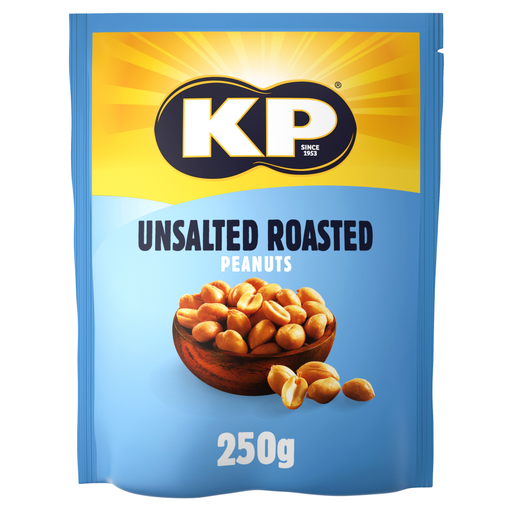
KP Unsalted Peanuts are a ready-to-eat whole-peanut example, not a reduced-fat powder.
Tesco’s listings show why pressed peanut powder and whole peanuts need separate buying decisions.
Sainsbury’s Unsalted Mixed Nuts provide a ready-to-eat example containing almonds, peanuts, hazelnuts and walnuts.
M&S lists separate roasted-peanut and roasted-and-salted-peanut products.
Asda provides another listing for KP Unsalted Peanuts 250g, a whole-peanut snack.
These Joybuy listings are whole-nut snack options for a revision break, not examples of pressed peanut powder. If reducing fat is your main reason for shopping, compare each current pack’s nutrition panel rather than assuming a ready-to-eat nut snack meets that aim.
 No image available
A ready-to-eat choice if you want unsalted peanuts for a study break rather than an ingredient to prepare. Check the current pack’s fat per 100g, serving size and allergy statement; unsalted does not mean reduced fat.
 No image available
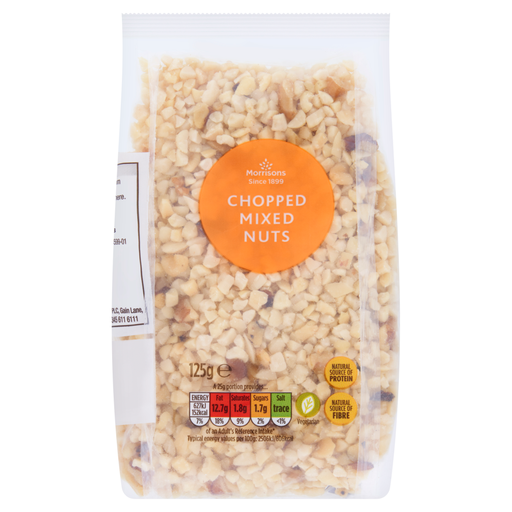
Chopped mixed nuts offer a different ready-to-eat format from whole peanuts. Check the current pack for the nuts included, allergy warnings, salt, fat per 100g and serving size before choosing it for a shared study space.
 No image available
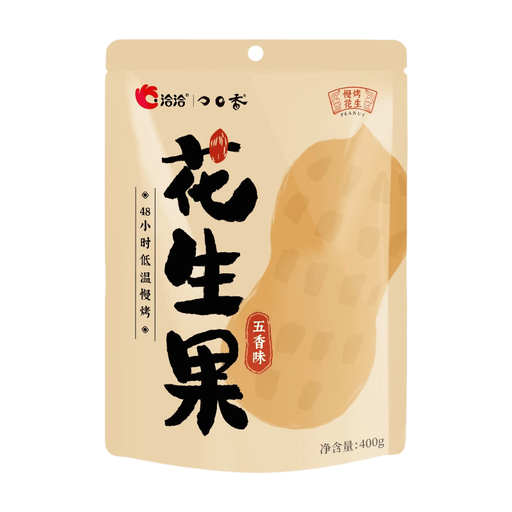
A five-spice peanut option if you want a flavoured, ready-to-eat snack. Before buying it for a reduced-fat or lower-salt aim, compare the current pack’s fat and salt per 100g and check its ingredients and allergy statement.
Not necessarily: unsalted describes salt, not fat. Tesco lists KP Unsalted Peanuts at 51g fat per 100g, and Sainsbury’s lists its Unsalted Mixed Nuts at 59.7g per 100g. Compare the per-100g and per-serving figures for the product you are considering.
Pressed peanut powder is worth comparing if you can mix it into food rather than eat it as a handful of nuts. Tesco lists PBfit Pure Peanut Powder at 13g fat per 100g and describes its roasted peanuts as pressed to remove most fat. It still contains peanut.
Start with the serving shown on the pack and put the amount you intend to eat in a bowl. The British Nutrition Foundation suggests portioning nuts rather than eating from a large pack; Tesco’s KP listing uses a 30g serving, while Sainsbury’s Unsalted Mixed Nuts listing uses 25g.
Read the current pack’s ingredients and allergy statement, including cross-contact warnings. The Food Standards Agency distinguishes peanuts from tree nuts; Sainsbury’s Unsalted Mixed Nuts list peanuts alongside almonds, hazelnuts and walnuts.
No. The University of Surrey’s exam-revision advice covers regular meals, drinking mainly water and considering fruit and vegetables as snack options. Treat nuts or a peanut-based food as a snack alongside meals, not a substitute for them.