Who is this choice for?
The useful checks differ depending on whether you are planning a snack, counting carbohydrate or avoiding a particular allergen.
People with diabetes choosing snacks
Diabetes UK suggests unsalted nuts as a snack option, but the portion and the rest of your eating plan still matter. Compare the pack’s total carbohydrate information rather than relying on a “diabetic” description.
People who count carbohydrate
Check total carbohydrate for the amount you actually eat, especially if carbohydrate counting forms part of your insulin plan. Diabetes UK notes that insulin-to-carbohydrate ratios differ between people; a snack label cannot supply your personal ratio.
Shoppers avoiding a food allergen
Identify the exact allergen before choosing a product. Peanuts and tree nuts are different allergen categories, so read both the ingredients and any precautionary statement on the current pack; having diabetes alone does not establish a need for allergen-free food.
What should you check?
Choose the format you want, then compare its nutrition information for your portion. Treat allergen avoidance as a separate check against the exact product.
| Priority | What to check | Your needs |
|---|
| Total carbohydrate |
Read total carbohydrate per 100g and, where shown, per serving. Work from the amount you intend to eat; front-of-pack traffic lights do not show total carbohydrate, according to Diabetes UK. |
I count carbohydrate, so the figures need to make sense for my actual portion—not just the serving suggested on the pack. |
| Ingredients and salt |
Look for a plain or unsalted format if that is your preference. Compare the ingredients, sugars and salt of coated, honey-roasted, flavoured or fruit-containing products individually. |
For an everyday nut snack, I would start with an unsalted option, then decide whether a flavoured alternative fits my eating plan. |
| Portion format |
Check the pack weight and any stated serving size. A larger bag and a portioned pack both require you to establish how much you will eat. |
A defined serving helps me plan a snack; if I use a larger bag, I can portion it before eating. |
| Named allergen |
Check the exact nut or other allergen in the ingredients and any “may contain” statement. The Food Standards Agency distinguishes peanuts from tree nuts and explains that precautionary wording signals possible unintended presence. |
If I must avoid an allergen, “free from” is useful only when it addresses that specific allergen and the current pack information fits my requirements. |
Brand and retailer references
These information sources can help you identify products to compare, but the current product label remains important for ingredients and allergens.
KP
KP Snacks publishes product ingredient and allergen information, including information for its unsalted roasted peanuts.
- KP advises shoppers to check the ingredients on each pack.
- KP’s August 2026 allergen list includes its unsalted roasted peanuts among products that may contain nuts; the unsalted name is not an allergen assurance.
Tesco
Tesco lists nut mixes and coated nuts, including an unsalted mixed-nut product.
- The different formats give shoppers products to compare by ingredients and nutrition values.
- Tesco says its dietary filters are not an alternative to medical advice and directs shoppers to check the label.
M&S
M&S lists natural, roasted, flavoured and chocolate-covered nuts and seeds.
- Its range includes natural almonds and cashews as well as prepared varieties.
- Catalogue categories do not establish that a product suits an individual diabetes plan; compare each product’s label.
Sainsbury's
Sainsbury's publishes allergen information for its own-brand and in-store prepared products.
- Its allergen-specific lists offer a starting point when checking an own-brand product against a named allergen.
- Sainsbury's advises checking packaging because ingredients can change, and cautions about allergen absence in open in-store preparation areas.
Joybuy product options
These options include peanuts, mixed nuts, walnuts and chestnuts, plus chia seeds as an alternative ingredient. They are different foods and formats: compare the current labels and your intended portions rather than treating them as nutritionally interchangeable.
 No image available
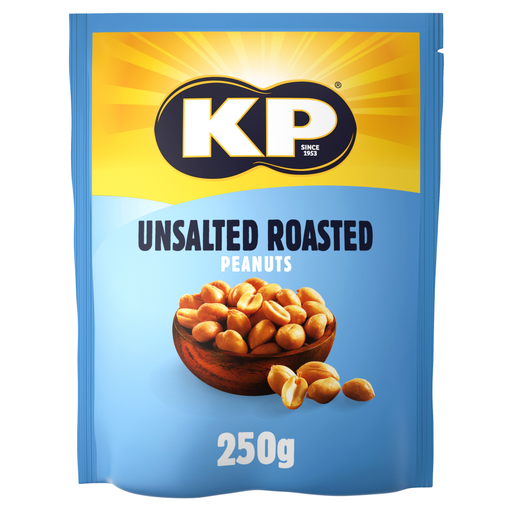
KP Snacks Unsalted Roasted Peanuts 250g
An unsalted peanut option for comparing snack portions. KP Snacks lists its unsalted roasted peanuts among products that may contain nuts, so check the current pack if you avoid tree nuts; this is not an option for someone who must avoid peanuts.
View on Joybuy
 No image available
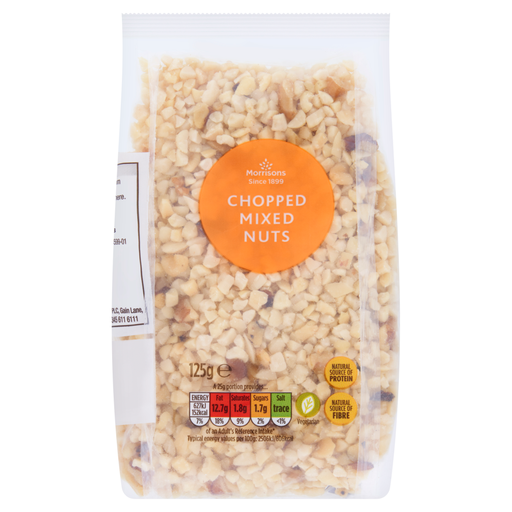
Morrisons Chopped Mixed Nuts 125g
A chopped nut mix for shoppers who prefer that format. Check the pack for its exact nut ingredients, total carbohydrate for your portion and any precautionary allergen statement.
View on Joybuy
 No image available
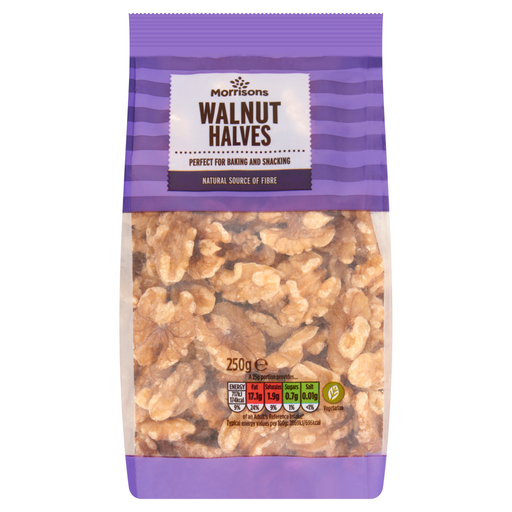
Morrisons Wholefoods Walnut Halves 250g
Walnut halves may suit a shopper who wants to choose their own portion for home use. If you need a ready-to-eat snack, check the pack’s preparation directions; use its current nutrition panel for carbohydrate planning and avoid the product if walnuts are an allergen for you.
View on Joybuy
 No image available
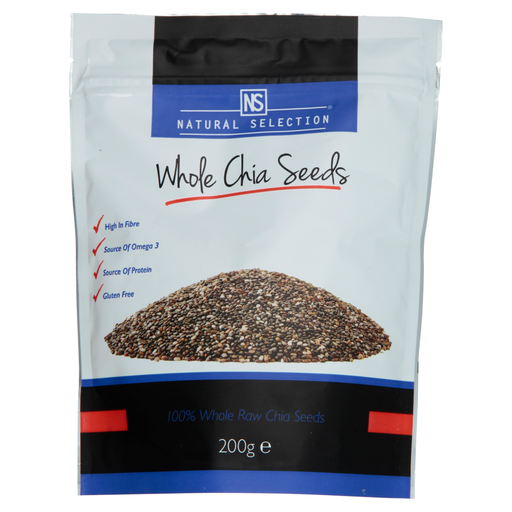
Natural Selection Whole Chia Seeds 200g
Chia seeds are an ingredient option rather than a pack of nuts to snack on in the same way. If adding them to another food, consider the portion and nutrition information for the whole serving, and follow the pack’s usage directions.
View on Joybuy
 No image available
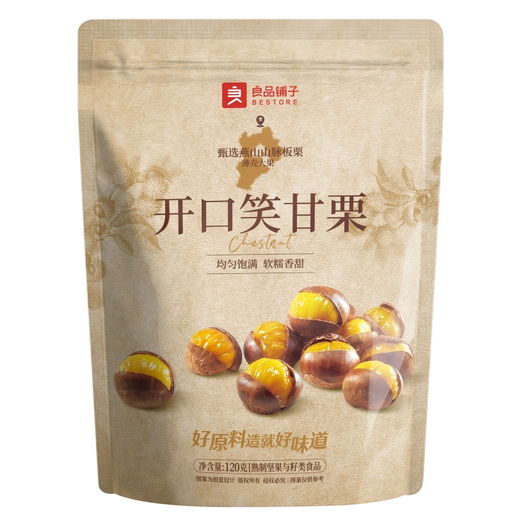
Bestore Smiling Chestnuts 120g bag
Chestnuts are a different choice from peanuts or walnut halves. Check total carbohydrate for the portion you plan to eat rather than assuming the nutrition figures will be similar, and read the pack for ingredients and allergens.
View on Joybuy
Questions about nuts and labels
Should I look for nuts labelled “diabetic”?
No special “diabetic” category is needed. Diabetes UK says there is no single “diabetic” diet; choose by the product’s ingredients, nutrition information, the portion you will eat and your individual eating plan.
Should I check sugars or total carbohydrate?
Check total carbohydrate for the portion you will eat, rather than sugars alone. Diabetes UK notes that front-of-pack traffic lights omit carbohydrate; look on the back label for the per-100g figure and, where provided, the per-serving figure.
Do I need “free-from” nuts because I have diabetes?
Diabetes alone does not establish a food-allergen avoidance requirement. If you must avoid a particular allergen or ingredient, name it first, then check the current pack’s ingredients and any precautionary statement.
Are peanuts and tree nuts the same for allergen checks?
No. The Food Standards Agency describes peanuts as legumes and distinguishes them from tree nuts such as almonds, cashews and hazelnuts. Check the exact ingredients and allergen wording for the product you intend to buy.
What does “may contain” mean on a nut pack?
It warns that a named allergen could be unintentionally present, as the Food Standards Agency explains. If you must avoid that allergen, do not treat its absence from the recipe ingredients as an assurance; assess the current pack’s warning against your individual allergy advice.


