Day hikers planning a small snack
If you have a calorie allowance in mind, compare labels on the same weight basis and portion the snack before leaving. A whole bag and a stated serving are not necessarily the same amount.


For a calorie-controlled hike, compare the pack’s calories per 100g, then measure the amount you plan to take; a small portion matters more than calling a nut variety “low calorie”. Tesco and Sainsbury’s labels for the almond and mixed-nut examples discussed here list 604–658 kcal per 100g, while their stated serving sizes differ. A larger portion may suit a different snack plan, but its calories still need to be counted.
If you have a calorie allowance in mind, compare labels on the same weight basis and portion the snack before leaving. A whole bag and a stated serving are not necessarily the same amount.
If you want to carry a larger snack, check both the pack weight and the calories in the amount you expect to eat. Choosing more food changes the calorie total even when the product stays the same.
Check each pack’s current ingredients and allergen information before sharing it. Peanuts and tree nuts are distinct ingredients, as the Food Standards Agency notes.
Start with a like-for-like label comparison, then decide how much of the chosen product to pack.
| Priority | What to check | Your needs |
|---|---|---|
| Calorie comparison | Compare kcal per 100g before comparing stated servings. Tesco Mixed Nuts list 658 kcal per 100g and a 25g serving; Tesco Almonds list 635 kcal per 100g and a 30g serving, according to Tesco Groceries. | I want to compare products without mistaking a smaller stated serving for a lower-calorie product. |
| Portion and pack | Read the pack weight and serving size, then calculate the calories for the amount you will take. If using a larger bag, measure your portion before the walk. | A measured amount is easier for me to plan than eating from an open bag. |
| Ingredients and seasoning | Read the ingredients and nutrition panel for the particular plain, mixed or seasoned product. Check salt information if that matters to your choice. | I may prefer a plain product, but I will not assume that “plain” means fewer calories. |
| Allergen information | Check the current ingredients and any precautionary allergen statement on each pack. Do not substitute peanuts for tree nuts, or vice versa, based on the product name alone. | If I am packing snacks for someone with a relevant allergy, I need product-specific information before sharing them. |
A 25g serving and a 30g serving do not provide a like-for-like comparison. Tesco Groceries lists 25g for its Mixed Nuts serving and 30g for its Almonds serving.
Compare kcal per 100g first, then work out the calories in the amount you intend to pack.
Convenient packaging does not determine the calories inside it. KP lists 178 kcal per portion for its Dry Roasted Snack Pack.
Check the stated portion calories against your plan, or measure a different amount from another pack.
Peanuts and tree nuts are distinct ingredients, and the relevant information depends on the particular product.
Read the current ingredients and allergen statements before packing or sharing the snack.
Eating from the bag makes the amount consumed harder to track against a planned snack allowance.
Measure the amount you want into a separate container before setting out.
These examples help illustrate label and pack checks; they are not a ranking of brands or a list of Joybuy products.
Tesco’s almond and mixed-nut listings show why both serving weight and calories per 100g matter.
Sainsbury’s Whole Almonds provide another labelled almond example for comparison.
KP offers a dry-roasted peanut snack-pack format.
M&S describes its Nut Collection as containing almonds, Brazil nuts, cashews and hazelnuts.
A Tesco Groceries listing describes Planters Protein Nuts Mix as containing peanuts, almonds and cashews.
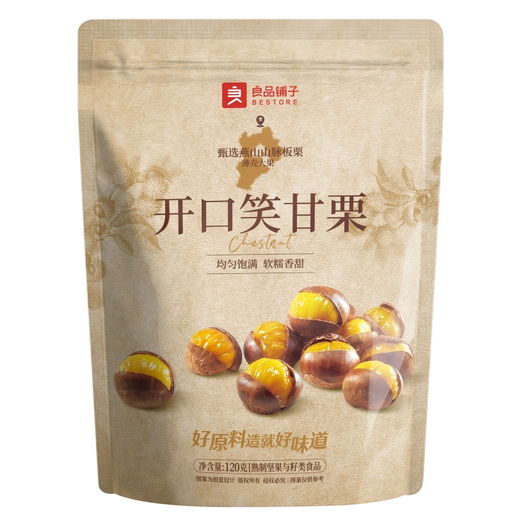
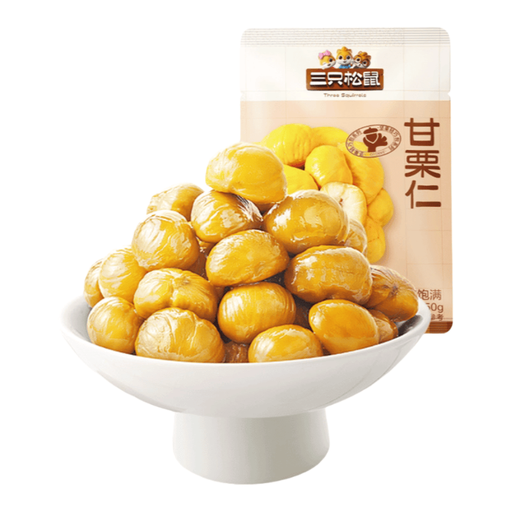
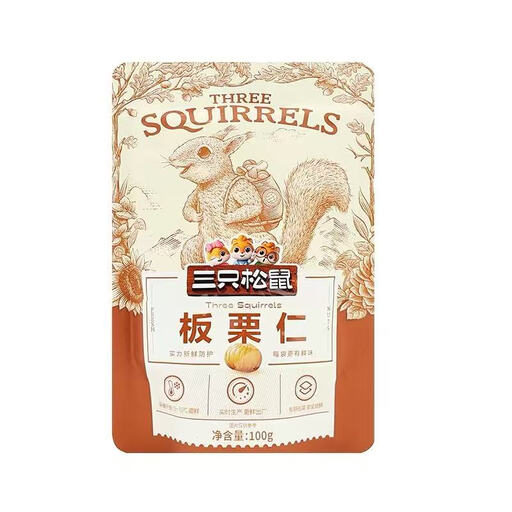
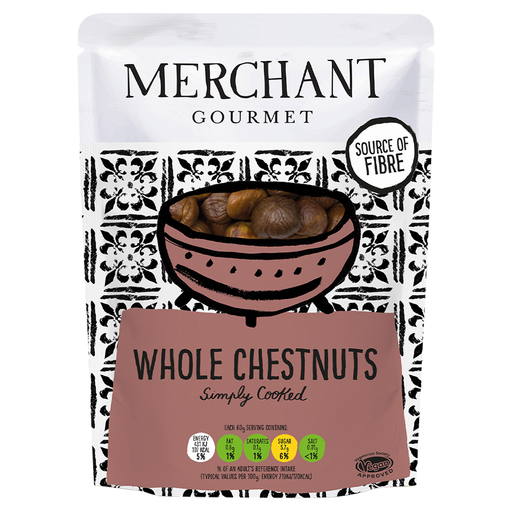
These chestnut packs offer different pack weights for a hiking snack. Check each product’s current nutrition label and the amount you intend to eat before comparing it with the almond, mixed-nut or peanut examples above; pack weight is not a serving recommendation.
 No image available
The 120g bag can be divided before a walk if you want to take less than the full pack. Check the label for calories in your chosen amount.
 No image available
The 50 g pack is smaller than the other chestnut packs listed here. Check its calories per 100g and per pack before deciding whether to take the whole pack.
 No image available
For the 100g pack, decide whether the whole pack or a smaller measured amount fits your snack plan. Use its current nutrition label for the calorie calculation.
 No image available
The 180g pack allows you to measure out a smaller hiking portion. Check the current ingredients and allergen information as well as the calories for the amount you choose.
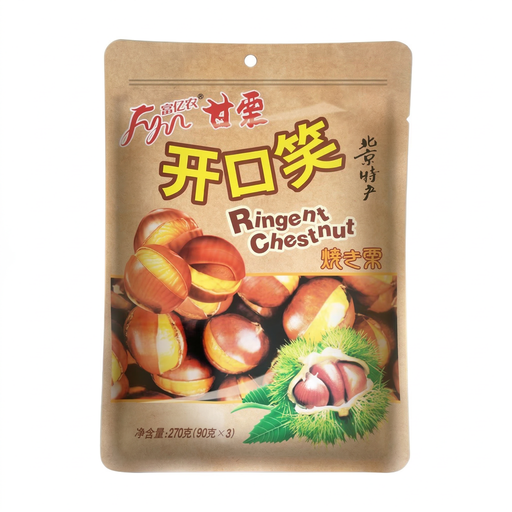 No image available
The listed bundle contains three packs, so you can choose how many to carry. Check the label and your planned amount rather than treating the bundle weight as one portion.
No. Compare the particular product’s kcal per 100g and the amount you will eat. Sainsbury’s lists its Whole Almonds at 604 kcal per 100g, while Tesco Groceries lists Tesco Almonds at 635 kcal per 100g and Tesco Mixed Nuts at 658 kcal per 100g; these are product examples, not a ranking of all nuts.
Use the nutrition label of the product you buy to work out a portion. As an illustration rather than a guarantee for every pack, Kent Community Health NHS Foundation Trust lists 24 pistachios weighing 15g at 90 kcal and 12 almonds at 80 kcal.
No. KP states that its Dry Roasted Snack Pack contains 178 kcal per portion. Compare that stated amount with the snack allowance you have chosen rather than judging by the packaging format.
Read the current ingredients and allergen information on each pack, including any precautionary statement. The Food Standards Agency distinguishes peanuts from tree nuts, so a product name alone is not enough to assess it for someone with a relevant allergy.
Use it for an initial comparison, then check the physical pack before eating. Tesco Groceries advises customers to read product labels because food products can be reformulated.