What matters when choosing nuts?
Compare packs on the same 100g basis first, then look at the serving you would actually eat.
| Priority |
What to check |
Your needs |
| Fat and calories |
Compare fat in grams and energy in kcal per 100g. The low-fat solid-food claim threshold listed by legislation.gov.uk is 3g fat per 100g; a product with less fat than another nut can still exceed it. |
I want to distinguish a relatively lower-fat nut from a food that qualifies for a low-fat claim, without assuming that either is low in calories. |
| Portion |
Check the labelled serving weight in grams, then calculate your choice from the pack’s figures if needed. Do not compare serving figures from packs with different serving sizes as though they refer to the same amount. |
A small serving might fit my plan, so I need to decide the amount before comparing what it contributes. |
| Salt and ingredients |
Read the ingredients for added oil and salt; compare salt and fat per 100g with a plain version. ASDA Groceries lists 0.04g salt and 48g fat per 100g for its natural cashews, versus 1.0g salt and 51g fat for its roasted-and-salted cashews. |
I like savoury nuts, but I want to see what changes when the recipe is seasoned rather than assuming every cashew product is alike. |
| Allergens |
Read the current pack’s ingredients, allergen declaration and possible cross-contact warnings for the exact product. The Food Standards Agency distinguishes peanuts, which are legumes, from tree nuts such as cashews. |
When buying for someone with an allergy, I need the warnings on the pack I am purchasing, not an assumption based on the nut’s name. |
Joybuy product options
These options include whole cashews and a chopped nut mix, followed by fruit-and-nut or peanut bars. The bars are different snacks from a portion of whole nuts, so compare their labels separately rather than treating them as interchangeable.
 Image unavailable
Three Squirrels Purple-Shell Cashews 500g
A whole-cashew option if you want nuts rather than a bar. Check fat, calories and salt per 100g on the pack, then decide how much to serve.
View on Joybuy
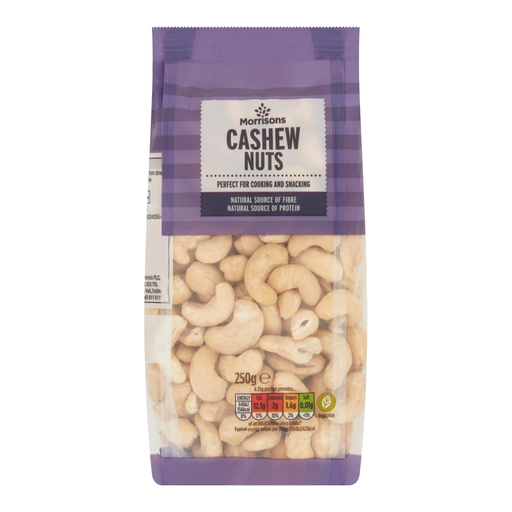 Image unavailable
Morrisons Cashew Nuts 250g
Another whole-cashew option for comparing packs on a per-100g basis. Check the current nutrition and allergen labels before choosing a portion.
View on Joybuy
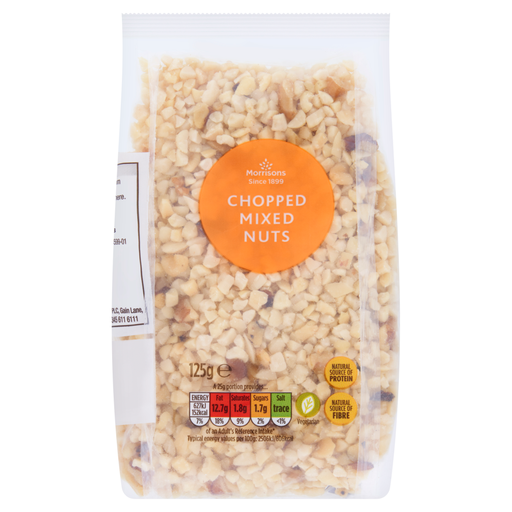 Image unavailable
Morrisons Chopped Mixed Nuts 125g
A chopped mix if you prefer several nut types or want a topping. Compare its fat and calories per 100g with the cashews; a mixed-nut name alone does not establish either figure.
View on Joybuy
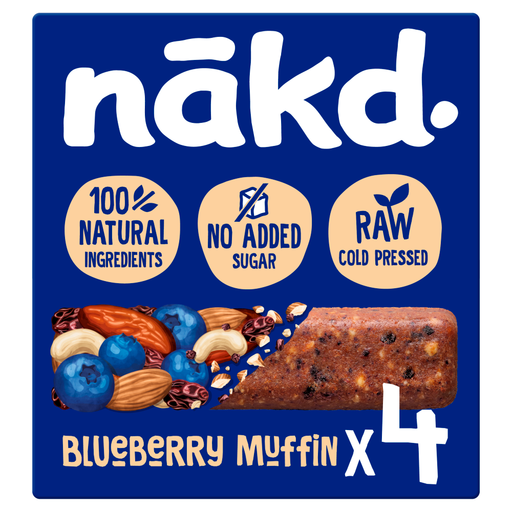 Image unavailable
Nakd Blueberry Muffin Raw Fruit & Nut Bars 4 x 35g
A fruit-and-nut bar rather than a serving of whole nuts. Compare the nutrition table per 100g and per 35g bar, including sugars, before using it as an alternative snack.
View on Joybuy
 Image unavailable
Nature Valley Protein Peanut & Chocolate Bar 4 x 40g
A peanut-and-chocolate bar rather than plain nuts. Check its ingredients and nutrition per 100g and per 40g bar instead of assuming the word “protein” answers the fat or calorie question.
View on Joybuy
Questions about nuts and low-fat diets
Are the whole nuts compared here low in fat?
No. The natural cashews listed by Marks & Spencer and ASDA contain 43.8g and 48g fat per 100g respectively. Both exceed the 3g-per-100g low-fat solid-food claim threshold listed by legislation.gov.uk; “lower than another nut” is a different statement from “low fat”.
Which sampled whole nut has the lowest fat figure?
M&S Natural Cashews have the lowest figure in this comparison at 43.8g fat per 100g, according to Marks & Spencer. ASDA Cashews and KP Dry Roasted Peanuts each list 48g, while Sainsbury’s Unsalted Mixed Nuts list 59.7g. These are figures for specific products, not a recommendation for a prescribed diet.
Does unsalted mean lower in fat or calories?
No. “Unsalted” does not describe fat or energy content. Sainsbury’s lists less than 0.01g salt per 25g serving for its Unsalted Mixed Nuts, alongside 59.7g fat and 660kcal per 100g.
Does roasting or seasoning change the comparison?
It does for the ASDA cashews compared here: ASDA Groceries lists 48g fat, 583kcal and 0.04g salt per 100g for plain Cashews, versus 51g fat, 622kcal and 1.0g salt for Roasted & Salted Cashews containing rapeseed oil and salt. Check each recipe rather than assuming all roasted nuts have the same values.
Can this comparison identify a suitable nut for someone with an allergy?
No. The Food Standards Agency distinguishes tree nuts from peanuts, which are legumes, but a category name cannot establish whether an individual product is suitable. Read the current physical pack’s ingredients, allergen declaration and possible cross-contact warnings, and follow individual clinical advice.


