Shoppers comparing fat content
If you are choosing between nuts and a reduced-fat spread, check what the spread is compared with, then read fat, energy and ingredients on a per-100g basis. The amount you plan to eat matters too.


Choose an unsalted nut pack if you want a ready-to-eat snack and salt is your main concern; unsalted does not mean reduced fat. If reducing fat is the priority, a reduced-fat peanut butter offers a comparison with a standard spread, but it is a different food format: Tesco labels its checked spread 30% less fat than Tesco smooth peanut butter, while listing 35.1g fat and 551kcal per 100g. Compare the nutrition panels and the amount you would use before deciding.
If you are choosing between nuts and a reduced-fat spread, check what the spread is compared with, then read fat, energy and ingredients on a per-100g basis. The amount you plan to eat matters too.
An unsalted nut mix or peanut pack addresses a salt preference without answering a separate question about fat. Sainsbury's lists less than 0.01g salt but 14.9g fat per 25g serving for its checked Unsalted Mixed Nuts.
Check each pack's ingredients and may-contain statement when peanuts, tree nuts or cross-contact matter in your household. The Food Standards Agency distinguishes peanuts, which are legumes, from tree nuts such as almonds and hazelnuts.
Decide whether you need a snack or a spread before comparing their labels. For a quick nut purchase, separate your fat, salt and ingredient priorities rather than treating one claim as an answer to all three.
Choose when: You want a ready-to-eat nut snack and are checking salt.
Trade-off: Unsalted is not a fat-reduction claim; Sainsbury's checked mix lists 59.7g fat per 100g.
Choose when: You need a spread and want to compare its fat content with a standard spread.
Trade-off: It does not replace a handful of nuts as a ready-to-eat snack; Tesco's checked spread still lists 35.1g fat per 100g.
| Priority | What to check | Your needs |
|---|---|---|
| Fat and format | Check whether “reduced fat” compares the spread with a similar product. Compare fat and energy per 100g, then the amount you would use; Tesco labels its checked peanut butter 30% less fat than Tesco smooth peanut butter. | I'm trying to reduce fat, but I also need to decide whether I want a spread or nuts to eat as a snack. |
| Salt and additions | Read salt per serving and the ingredients for oil, coatings or other additions. Sainsbury's lists less than 0.01g salt per 25g serving for its checked unsalted mix; that serving also has 14.9g fat. | An unsalted snack matters more to me than a reduced-fat claim, and I want to know what else is in the pack. |
| Serving amount | Compare products per 100g before using their serving figures: packs can declare different serving sizes. Check how the labelled portion relates to the amount you intend to eat. | I want the nutrition figures to reflect my likely snack or spread portion, not just the pack's suggested serving. |
| Household suitability | Check the named allergens, may-contain wording and any child-safety warning on the current pack. The Food Standards Agency identifies peanuts and tree nuts separately. | I'm buying for someone whose allergen information needs checking, or for a household with a young child. |
Salt and fat are separate figures. Sainsbury's checked Unsalted Mixed Nuts list less than 0.01g salt alongside 14.9g fat per 25g serving.
If fat is your priority, compare fat and energy with a relevant alternative on the same measurement basis.
A spread and a ready-to-eat snack serve different purposes. Tesco's checked reduced-fat peanut butter contains 67% roasted peanuts alongside other ingredients, including dried glucose syrup and palm oil.
Choose the format you need first, then compare ingredients, fat, sugars and energy for the portion you would use.
Tesco's listing for Planters Energy Mix includes milk-chocolate-covered honeycomb and declares 15.8g sugars per 100g.
Read the ingredient list if you are looking for a simple nut snack rather than a mix with sweet components or coatings.
Peanut and tree-nut ingredients need separate attention. The checked Sainsbury's and KP labels also carry warnings about nuts or peanuts and small children.
Check the current pack's allergens, may-contain wording and safety information rather than relying on its front-of-pack name.
These examples illustrate differences between labelled products and ranges; a brand name alone does not establish a product's fat content or ingredients.
Its checked Unsalted Mixed Nuts are a ready-to-eat mix of almonds, peanuts, hazelnuts and walnuts.
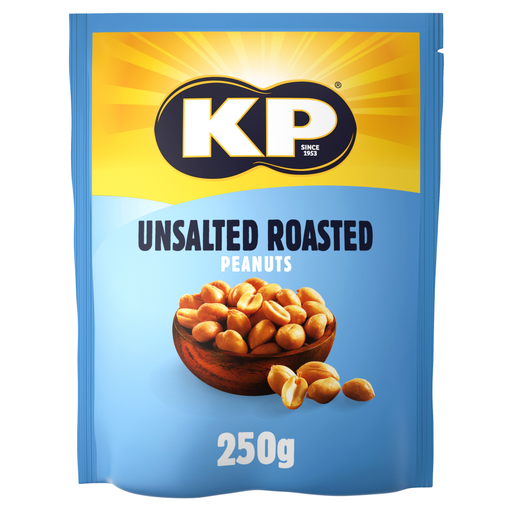
The checked Unsalted Roasted Peanuts offer a single-nut snack in a 250g pack.
Its checked Reduced Fat Smooth Peanut Butter is a spread, not a whole-nut snack.
The checked Tesco listings include both a Protein Nuts Mix and an Energy Mix with sweet components.
The M&S Food range includes roasted, salted, honey-roasted, chilli-coated and mixed-nut formats.
These Joybuy options are a pack of unsalted roasted peanuts and a pack of chopped mixed nuts for a nut top-up. Compare their individual labels if reducing fat, rather than salt or added ingredients, is your main aim.
 No image available
A ready-to-eat option when you want unsalted peanuts rather than a spread. The checked KP 250g product lists sunflower oil and 15g fat per 30g serving, so compare the fat declaration as well as the salt figure. Check the pack's allergen and child-safety warnings.
 No image available
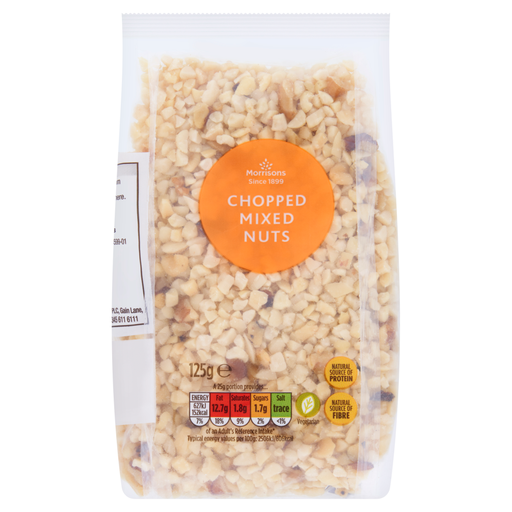
A chopped-nut format for a top-up shop. Compare its fat declaration with other packs rather than assuming mixed or chopped nuts are reduced fat. Check the current pack for named nut ingredients, other-nut or soya warnings, and any shell-fragment caution.
No: it describes a reduction against a comparator, not the product's total fat content. Tesco labels its checked Reduced Fat Peanut Butter 30% less fat than Tesco smooth peanut butter, while listing 35.1g fat and 551kcal per 100g. Read both the comparison and the nutrition panel.
Not on the strength of its unsalted label. Sainsbury's checked Unsalted Mixed Nuts list less than 0.01g salt per 25g serving but 59.7g fat per 100g. Compare fat on the pack if that is the figure guiding your choice.
Compare fat, saturates, sugars, salt and energy on the same per-100g basis, then check the serving amount and ingredients. GOV.UK explains that traffic-light labels, where present, indicate high, medium or low amounts of fat, saturates, sugars and salt; they do not replace the full label.
No. The Food Standards Agency identifies peanuts as legumes and tree nuts as including almonds, cashews and hazelnuts. Check the ingredients and may-contain statement on each pack; the checked KP peanut listing, for example, warns that it may contain other nuts, milk, soya and gluten.
Do not assume a whole-nut snack is suitable. The checked Sainsbury's and KP product labels warn that small children can choke on nuts or peanuts. Follow the current pack's safety information and choose an age-appropriate alternative where needed.