What matters when choosing an oven?
Decide whether the existing oven is available when you bake. If you need a separate appliance, establish permission and a safe place for it before comparing tin fit and baking controls.
| Concern | What to check | Who this matters to |
|---|
| Independent access and worktop space |
Check kitchen permission, the available heat-resistant surface and the exact model’s clearance instructions. |
If the communal oven is occupied when I need to bake, I want another option without taking over the shared counter. Around 38% of consumers put independent access first. |
| Tin fit and baking control |
Compare the tin’s outside dimensions with the usable rack and cavity; check the thermostat and tray provision. |
I need my usual tin to fit and want to judge the results of repeat batches, rather than choose by advertised litres alone. For around 31% of consumers, tin fit and baking control are the primary concern. |
| Cleaning and intended use |
Agree who cleans shared equipment and check the appliance’s permitted use; food sellers must assess applicable hygiene and registration requirements. |
Where other people prepare food, I need a workable routine for crumbs, utensils and allergen cross-contact. Cleaning and intended-use requirements come first for around 31% of consumers. |
Joybuy countertop oven options for oat bars
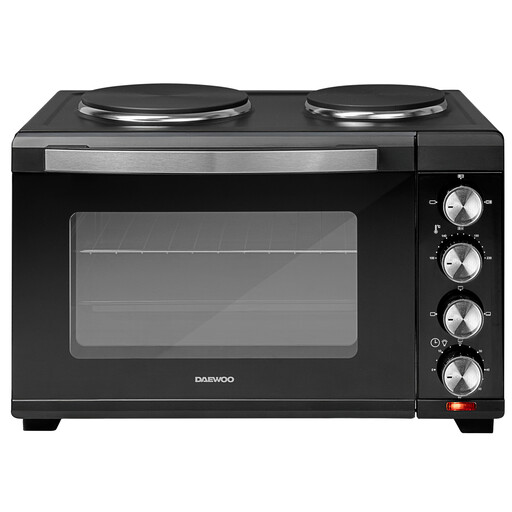
These countertop models are options to assess if you need separate oven access for oat-bar baking. The DAEWOO model also has hotplates; for either oven, confirm tin fit, kitchen permission and safe placement before choosing.
 No image available
DAEWOO SDA1609GE 32L Oven with Dual Hotplates, 3000W
Consider this countertop model if you need separate baking access and would also use the hotplates. Its stated capacity is 32L and its total power is 3000W.
Compare your tin with the usable oven and tray dimensions, and check the model’s clearance instructions and the shared kitchen’s electrical arrangements before buying.
View on Joybuy
 No image available
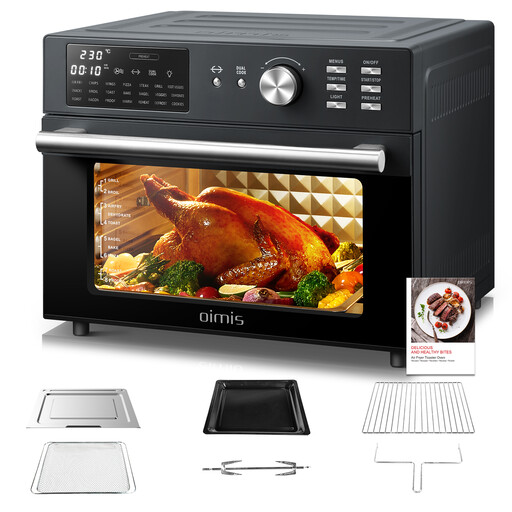
OIMIS 30L Air Fryer Toaster Oven, 21 Presets, Gray
Consider this countertop oven for modest batches if you would also use its other cooking modes. Its name specifies 1800W, rotisserie and dehydrator functions, and room for a 13-inch pizza; none of those details confirms that your oat-bar tin fits.
Check the usable cavity, baking controls, supplied accessories and required clearance for your intended setup.
View on Joybuy
Questions about oat-bar baking ovens
Can I use a countertop oven in a shared flat kitchen?
Check the accommodation or kitchen rules and the exact oven’s safety instructions before using one. For the Russell Hobbs 22780, the manufacturer specifies a stable, level, heat-resistant surface, at least 50mm clearance around the appliance and no use near or below combustible materials.
Is a 30L mini oven large enough for my oat-bar tin?
Not necessarily: capacity in litres does not establish usable tin space. Measure the tin’s outside dimensions, including handles, and compare them with the exact oven’s rack and cavity dimensions.
Do oat bars need a fan-assisted oven?
A fan is not a prerequisite established for oat bars here; what matters is how your recipe bakes in the oven you use. Which? identifies temperature accuracy and heat distribution as oven-testing measures, so try a small batch before relying on a dial setting for repeat results.
How should I handle allergens in a shared kitchen?
Use a defined routine for ingredients, tins, racks, utensils and worktops rather than relying on a quick wipe. Food Standards Agency guidance for food businesses calls for practices that prevent allergen cross-contamination; any allergen-free claim needs appropriate controls behind it.
Do I need to register if I sell the oat bars?
If you start or take over a food business, the Food Standards Agency’s UK registration service says to register with the local authority at least 28 days before trading or food operations start. That obligation concerns the food-business activity, not simply owning an oven; confirm what applies to your premises and plans.


