Afternoon-tea hosts
If a chocolate coating is part of the request, distinguish a layered oaty biscuit from a plain oatcake or a biscuit with chocolate pieces.


For an older guest who can eat a crunchy biscuit, a chocolate-layered oaty biscuit meets the request for a ready-to-serve coating, but it is not a traditional oatcake. Choose a plain oatcake if you want to add the topping yourself, or a chocolate-chip oat biscuit if pieces of chocolate will do. If the guest has swallowing difficulties or follows a modified-texture diet, use their individual clinical guidance rather than assuming any of these dry products is suitable.
If a chocolate coating is part of the request, distinguish a layered oaty biscuit from a plain oatcake or a biscuit with chocolate pieces.
Check the exact pack against a guest’s restrictions. A gluten-free-labelled chocolate biscuit can still contain oats, as the Food Standards Agency’s guidance on gluten-free oats makes clear.
For someone with swallowing difficulties or a prescribed modified-texture diet, follow their individual clinical advice before serving a dry, crunchy or crumbly biscuit.
Start with the kind of chocolate the guest wants, then compare the portion, ingredients and texture of the product you would actually serve.
| Priority | What to check | Your needs |
|---|---|---|
| Chocolate format | Look for a stated layer or coating if that matters. Chocolate chips sit within the biscuit; a plain oatcake needs a separately chosen topping. | I want to put a coated biscuit straight on the tea tray—or choose the topping myself. |
| Serving and sugars | Compare total sugars on the same basis, such as per 100g, and check the size of each serving. Include anything added to a plain oatcake when considering the finished snack. | A smaller-looking biscuit is not necessarily a comparable portion; I want to know what each guest will be served. |
| Texture | Check whether the product is dry, crunchy or crumbly. Kent Community Health NHS Foundation Trust identifies such biscuits as potentially difficult for people with dysphagia. | If my guest has swallowing difficulties, I need to follow their individual texture guidance, not assume a chocolate layer makes the biscuit soft. |
| Ingredients | Read the current pack’s ingredients and precautionary allergen wording. Check for an explicit gluten-free label where relevant; do not treat that label as meaning oat-free. | Someone at tea has an ingredient restriction, so the exact variant and its pack label matter more than the word ‘oaty’. |
A biscuit with chocolate pieces will not have the exterior layer requested by someone asking for a coated product.
Check the description for a layer or coating, and consider chip biscuits as a separate option.
McVitie’s listed gluten-free milk-chocolate Hobnobs contain oats, alongside other ingredients and precautionary allergen wording.
Match the delivered pack’s full label to the guest’s restrictions; do not rely on the product category alone.
Kent Community Health NHS Foundation Trust identifies dry, crunchy and crumbly biscuits as potentially difficult for people with dysphagia.
If the guest has swallowing difficulties, follow their individual clinical texture advice before offering a biscuit.
Its listed milk- and dark-chocolate Hobnobs are chocolate-layered oaty biscuits, rather than traditional Scottish oatcakes.
Its cited range provides a choice between dark-chocolate-chip oat biscuits and plain rough oatcakes.
Its listed rough oatcakes are a plain, crunchy option for serving as they are or with a chosen topping.
Its listed rough oatcakes are plain and supplied in four packs of six.
Its cited Scottish Oatcakes are a plain, crisp option rather than a coated biscuit.
These options cover chocolate-coated or dipped oat-based snacks and biscuits with chocolate pieces. They are not a selection of plain traditional oatcakes.
 No image available
Consider these when the guest wants a chocolate-coated oaty biscuit rather than a traditional oatcake. Check the pack’s ingredients and the guest’s texture guidance before serving.
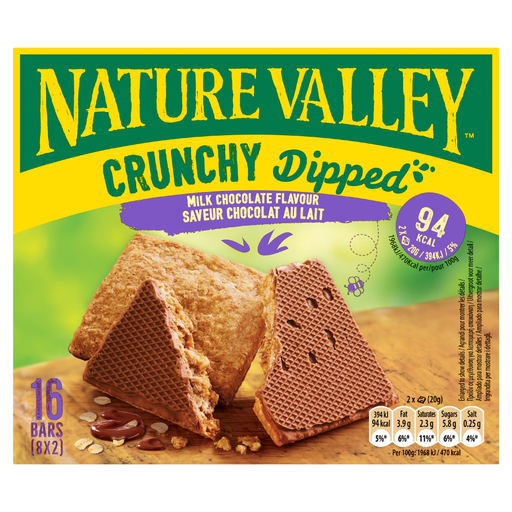 No image available
The dipped format is an option if a chocolate-covered oat-based snack will do instead of an oatcake. Its crunchy description makes individual swallowing guidance important where applicable.
 No image available
Consider this dark-chocolate oat-biscuit option if that chocolate format suits the tea tray. Check the current ingredients, including sweeteners and allergen information, against the guest’s needs.
 No image available
Choose this type of oat biscuit if chocolate pieces are acceptable instead of a coating. Its described crumbly texture calls for care when serving someone with swallowing difficulties.
 No image available
This is a chocolate-piece alternative to a coated biscuit. Its gluten-free name does not mean oat-free; check the exact pack for ingredients, allergen warnings and texture before serving.
No. McVitie’s listed Gluten Free Milk Chocolate Hobnobs contain gluten-free oats and milk-chocolate ingredients. Check the chosen pack’s full ingredients and precautionary allergen statements.
Do not decide on the basis of age or the biscuit’s name. Kent Community Health NHS Foundation Trust identifies crunchy and crumbly dry biscuits as potentially difficult for people with dysphagia; follow the person’s individual speech and language therapy advice.
The cited packaged plain oatcakes are presented as ready to eat. Waitrose advises keeping its rough oatcakes in an airtight container after opening; follow the storage and best-before instructions on the pack you choose.
Check the actual pack’s ingredients and allergen information for the exact variant. UK government guidance requires allergen information for prepacked food, while the Food Standards Agency makes clear that oats must still be identified as an allergen when they are gluten-free.