Who these oats may suit

Shoppers comparing fibre content

For people choosing porridge specifically for its fibre content and comparing nutrition panels per 100g as well as per serving. NHS guidance says adults should aim for 30g of fibre daily as part of a healthy, balanced diet, and identifies porridge oats as a source of fibre.

Christmas hosts planning breakfasts or baking

For shoppers who want oats for more than one bowl of porridge, including flapjacks, baked oats and make-ahead breakfasts during busy Christmas meal planning. Plain rolled oats offer a simple ingredient list and flexible cooking options, while jumbo oats give a heartier texture.

People checking gluten and allergens

For shoppers whose choice depends on gluten-free labelling, wheat or barley cross-contact statements, or nut warnings. Coeliac UK advises that standard oats are not automatically suitable for a gluten-free diet.

Buying priorities

Oat-bran porridge

Choose it when: Fibre concentration matters more than having a plain-oat recipe.

Consider: Oat bran may be combined with other ingredients, such as chicory inulin, rather than consisting solely of rolled oats.

Bran-enriched rolled oats

Choose it when: You want a rolled-oat format with more fibre than standard plain oats.

Consider: Wheat bran is unsuitable when wheat needs to be avoided.

Plain rolled oats

Choose them when: A short ingredient list and flexibility for porridge, flapjacks or overnight oats matter most.

Consider: Plain oats generally list less fibre per 100g than the bran-based options compared here.

Priority What to check Your needs
Fibre content Compare fibre per 100g across dry products first. Then compare the stated fibre per serving, as portions differ between brands. In Great Britain, a high-fibre claim requires at least 6g per 100g or 3g per 100kcal under retained Regulation (EC) No 1924/2006. I want to see how much fibre the product provides before choosing a bowl size, rather than relying on front-of-pack wording.
Recipe and ingredients Check whether the product is plain oats, oat bran, or oats with wheat bran or inulin. Read the ingredient list alongside the nutrition panel. A simple oat recipe may suit baking and overnight dishes, while a bran-based blend may suit a fibre-led choice.
Gluten and allergens Look for a gluten-free label where required and read the allergen panel and any may-contain statement. “Plain”, “organic” and “100% oats” do not establish gluten-free suitability. I need a product that fits the dietary requirements of everyone eating breakfast or Christmas baking.
Texture and preparation Check the oat cut, serving format and pack directions. Jumbo oats are associated with a thicker texture, while portioned sachets can suit a short microwave preparation. I want oats that fit the time available and the dish I am making, whether that is a quick breakfast, flapjacks or a make-ahead recipe.

Buying pitfalls to avoid

  • Assuming plain or organic oats are gluten free

    Standard oats can be affected by cross-contact with wheat, barley or rye. A plain-oat name or a “100% oats” ingredient list does not replace gluten-free labelling for someone with coeliac disease.

    For coeliac disease, choose oats labelled gluten free and review the current allergen panel and any may-contain statement each time.

  • Comparing fibre by bowl without checking portion size

    Serving sizes among the compared products range from 40g to 45g, so a larger stated portion can make a lower-fibre product look closer to a higher-fibre option.

    Compare fibre per 100g first, then use the stated serving figure to judge the contribution from your usual bowl.

  • Choosing bran-enriched oats without reading allergen warnings

    Wheat bran is an ingredient in some higher-fibre rolled oats, and oat-bran products can carry manufacturing warnings for other allergens.

    Use the ingredient list and allergen statement to decide whether a product is suitable; fibre content alone cannot answer that question.

  • Increasing fibre sharply without adjusting fluids

    NHS Fife advises increasing fibre gradually to help minimise flatulence and bloating, while maintaining adequate fluid intake.

    Introduce a higher-fibre oat product progressively and keep vegetables, fruit, pulses and wholegrains in the wider diet.

Relevant porridge-oat brands

Mornflake

Relevant for shoppers seeking an oat-bran porridge option rather than conventional rolled oats.

  • Mornflake Fibreful Oatbran Porridge lists 25.6g fibre per 100g and 10.2g per 40g portion, according to Mornflake.
  • Its formula includes oat bran and chicory inulin, so it is not a plain-oats product; check the pack for the stated allergen warning.

Waitrose

Relevant for comparing a basic rolled-oat product with a wheat-bran-enriched alternative.

  • Waitrose Essential Porridge Oats list 9.9g fibre per 100g, while Porridge Oats with Wheatbran list 13.8g per 100g.
  • The bran-enriched product contains wheat bran, and Waitrose advises checking the pack because recipes, nutrition and allergen information may change.

Quaker

Relevant for conventional plain rolled oats, jumbo oats and quick-cook formats.

  • Quaker Traditional Rolled Oats and Traditional Jumbo Oats each list 9.0g fibre per 100g; jumbo oats are described by Quaker as whole, uncut oats for a thicker texture.
  • Quaker states that the traditional rolled oats may contain wheat and barley, so this does not establish gluten-free suitability.

Flahavan's

Relevant for wholegrain Irish rolled oats in standard, quick and jumbo formats.

  • Flahavan's Irish Porridge Oats list 100% wholegrain rolled oats; the manufacturer states that a 40g serving provides 1g beta-glucan.
  • The available product information does not provide a fibre figure per 100g for this product.

Jordans

Relevant for traditional and organic wholegrain rolled-oat porridge products.

  • Jordans Chunky Traditional and Organic Porridge each list 8.1g fibre per 100g.
  • The manufacturer warns that these products may contain other gluten sources and nuts; check the current pack.

Joybuy porridge oat options

Joybuy product options for high-fibre porridge, from oat-bran choices to plain oat flakes for straightforward breakfasts and selected make-ahead uses.
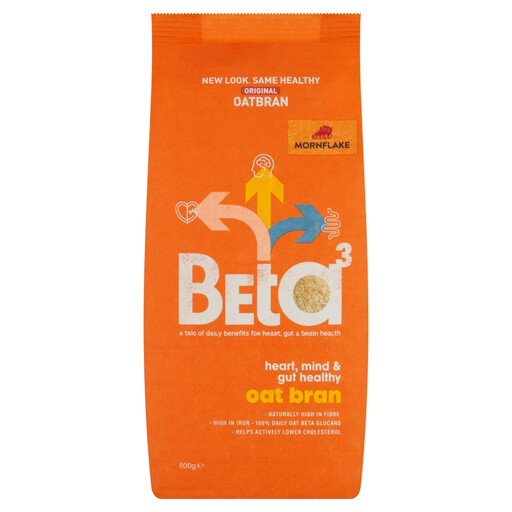
Mornflake Mighty Oats Original Oatbran 800g

Mornflake Mighty Oats Original Oatbran 800g

For a fibre-priority porridge choice, this listing states 19.4g fibre per 100g and 100% oatbran.

It lists 3g beta-glucans per 45g portion. The listing states that it is not suitable for wheat or barley allergy sufferers; check pack directions if using it beyond porridge.

Joybuy

Morrisons Free From Gluten Free Oats 1kg

Morrisons Free From Gluten Free Oats 1kg

For breakfast and baking, the listing describes 100% oat flakes with 8.6g fibre per 100g and 3.4g per 40g portion.

The listing identifies the flakes as gluten free and wheat free. Check the current physical pack and allergen panel for individual dietary requirements.

Joybuy
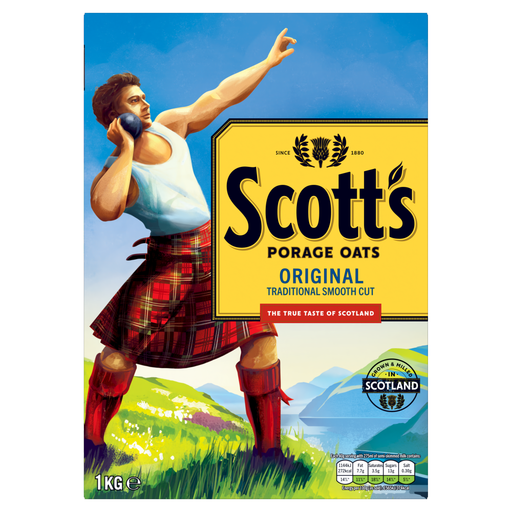
Scotts Porage Oats Original Porridge Oats 1kg

Scotts Porage Oats Original Porridge Oats 1kg

For a plain oat base, this listing gives 9.0g dietary fibre per 100g and 3.6g per 40g portion.

It lists 100% oatmeal with no added ingredients, but may contain wheat and barley. Check the pack for preparation guidance and allergen information.

Joybuy

Quaker Oat So Simple Big Bowl Original 6 Pack 231g

Quaker Oat So Simple Big Bowl Original 6 Pack 231g

For a short breakfast preparation, the listing states that individual 38.5g sachets microwave in 2½ minutes.

It lists 100% wholegrain rolled oats, 9.0g fibre per 100g and 3.5g per sachet. Sachets offer less flexibility for adjusting portions or batch baking.

Joybuy

Flahavan's Organic Porridge Oats 1kg

Flahavan's Organic Porridge Oats 1kg

For a simple organic oat-flake base, the listing gives 8.3g fibre per 100g and 3.3g per 40g serving.

It specifies 100% organic wholegrain oat flakes. The listing identifies oats as containing gluten, so check the current pack if gluten-free suitability is required.

Joybuy

Frequently asked questions

What does “high fibre” mean on a UK porridge-oat product?

In Great Britain, a high-fibre claim requires at least 6g of fibre per 100g or at least 3g per 100kcal under retained Regulation (EC) No 1924/2006. Compare the nutrition panel per 100g when products have different serving sizes.

Are plain porridge oats high fibre?

They can be. The plain rolled-oat products compared here list 8.1g to 9.9g fibre per 100g, which is above the threshold for a high-fibre claim. Oat-bran and wheat-bran options can provide more fibre per 100g.

Are ordinary oats suitable for a gluten-free diet?

Not automatically. Coeliac UK explains that standard oats can be contaminated with wheat, barley or rye, and that “100% oats”, “pure oats” and “organic oats” do not establish gluten-free status. For coeliac disease, choose oats labelled gluten free and check the current pack.

Can porridge oats be used for Christmas baking as well as breakfast?

Some can. Waitrose Essential Porridge Oats are described as suitable for porridge and flapjacks, while Quaker Jumbo Oats are described as suitable for hearty porridge and baking. Choose jumbo oats for a thicker texture and standard rolled oats for a more conventional porridge texture.

Should fibre intake be increased quickly before Christmas?

NHS Fife advises increasing fibre gradually to help minimise flatulence and bloating, while maintaining adequate fluid intake. A higher-fibre oat product can form part of a varied diet alongside other fibre-containing foods.