For the greatest fibre density, oat bran and oat-bran porridge are the clearest options: the compared products list 19.4g to 25.6g of fibre per 100g, compared with 8.1g to 9.1g for the plain rolled and jumbo oats in this comparison. For an everyday bulk purchase, rolled or jumbo oats can be more versatile, but compare fibre per 100g, pack format, allergen wording and storage space before ordering.
Who these oats suit
Households stocking everyday breakfast oats
Useful for households that use oats often enough to consider larger packs for porridge, overnight oats and baking. Mornflake product information highlights multi-pack jumbo oats, while storage instructions make a dry, sealed cupboard space an important part of the decision.
Shoppers prioritising fibre density
Oat bran is worth considering when fibre per 100g is the main comparison point. Mornflake product pages list higher fibre figures for its oat-bran products than for its plain jumbo oats, while Quaker traditional oats provide a standard rolled-oat reference point.
Allergen-conscious oat buyers
Anyone checking for gluten, wheat, barley or other allergens should read the exact current label before buying a large quantity. GOV.UK allergen guidance includes oats among cereals containing gluten, and individual oat products can carry additional warnings.
Buying priorities
High-fibre oat bran
Choose it when: Fibre density matters most and a finer, bran-led texture works for porridge, baking or mixing into other foods.
Consider: Oat bran is not a like-for-like texture substitute for rolled oats, and product-specific allergen wording still matters.
Plain jumbo or rolled oats
Choose it when: You want a familiar oat texture for regular porridge, overnight oats and baking, with larger pack formats available from some brands.
Consider: Plain oats in the comparison are less fibre-dense than oat bran, so check the nutrition panel rather than relying on the format alone.
Oats with wheat bran
Choose it when: You want a conventional porridge-oat format with more declared fibre than the standard plain-oat examples.
Consider: Added wheat bran changes the ingredient and allergen profile, so it is not suitable where wheat must be avoided.
| Priority |
What to check |
Your needs |
| Fibre comparison |
Compare fibre per 100g across products; distinguish oat bran, plain oats and oats with wheat bran; use serving figures only alongside the stated serving size. |
I want to compare the dry-product fibre figure on the same basis, rather than assuming all oat formats provide the same amount. |
| Pack and storage |
Check total pack weight, separate inner packs where supplied, the storage instructions and how quickly the household will use the oats after opening. |
A larger pack only suits me if I can keep it cool, dry and sealed and use it at a realistic pace. |
| Allergen wording |
Read ingredients, wheat-bran content and any wheat or barley warnings; where required, look for a specifically gluten-free label. |
I need the exact product label to fit the food restrictions in my household, not an assumption based on oats or brand name. |
Bulk-buying pitfalls
-
Assuming all porridge oats have the same fibre level
Fibre figures in the compared products range from 8.1g per 100g for Jordans Organic Jumbo Porridge Oats to 25.6g per 100g for Mornflake Fibreful Oatbran Porridge.
Compare fibre per 100g first, then decide whether oat bran, wheat-bran oats, rolled oats or jumbo oats suit the texture and uses you have in mind.
-
Buying the largest pack without a storage plan
Large packs need dry, cool storage and a reliable way to keep opened oats sealed. Mornflake gives product-specific storage guidance for its oat products.
Estimate weekly use, choose a pack that can be finished within the label guidance and use clean airtight containers where appropriate.
Poor storage can leave a household with oats that are no longer in their best condition before they are used.
-
Treating oats as universally suitable for gluten or wheat avoidance
Oats are included in UK allergen guidance for cereals containing gluten, while individual plain-oat products may also state wheat or barley warnings. Oats with wheat bran contain wheat.
Read the current pack label every time, especially after a recipe or packaging change. Choose a specifically gluten-free labelled product where that is required.
-
Letting one nutrition claim decide the whole purchase
Fibre figures describe the dry oat product, while toppings, milk and other additions change the nutrition of the prepared bowl.
Use the nutrition panel to compare oats, then consider serving size and the rest of the meal separately.
Relevant brand references
Mornflake
A useful reference for bulk buyers because its range includes larger jumbo-oat packs as well as oat-bran products with higher declared fibre figures.
- Mornflake lists a 4 x 3kg Jumbo Oats pack and 9.1g fibre per 100g for its Jumbo Oats.
- Its Fibreful Oatbran Porridge lists 25.6g fibre per 100g, while Original Oatbran lists 19.4g per 100g.
- Its Jumbo Oats page says the product is not suitable for wheat or barley allergy sufferers because of manufacturing methods.
Quaker
A familiar rolled-oat option for shoppers looking for standard porridge formats in several pack sizes.
- Traditional Rolled Oats are listed as 100% rolled oats in 500g, 1kg and 1.5kg packs.
- Quaker lists 9.0g fibre per 100g for Traditional Rolled Oats.
- The product page states that the oats may contain wheat and barley.
Flahavan's
A wholegrain rolled-oat route for shoppers choosing between standard Irish oats, organic variants and jumbo oats.
- Flahavan's Irish Porridge Oats are listed as 100% wholegrain rolled oats.
- The brand states that a 40g serving provides 1g of oat beta-glucan.
- Compare the nutrition panel on the chosen variant where fibre per 100g is a deciding factor.
Jordans
An organic jumbo-oat option for buyers who prefer a textured wholegrain oat format.
- Waitrose lists Jordans Organic Jumbo Porridge Oats with 8.1g fibre per 100g.
- The product is supplied in a 750g pack.
- The Waitrose listing states that it may contain nuts and other gluten sources.
Waitrose
An own-label option for comparing standard oats with a wheat-bran-enriched porridge-oat formulation.
- Waitrose Porridge Oats with Wheatbran lists 13.8g fibre per 100g.
- The ingredients include wholegrain oat flakes and 12% wheat bran.
- The retailer advises checking the label because recipes and allergen information can change.
Joybuy product options
These Joybuy options cover oat bran and plain porridge-oat formats for households comparing fibre density, pack size and manageable storage.
 No image available
Mornflake Mighty Oats Original Oatbran 800g
An 800g oat-bran option for buyers who prioritise fibre density over a conventional rolled-oat texture.
Declared fibre: 19.4g per 100g. Store cool and dry, and use an airtight container after opening.
Check the allergen statement, as the listing states it is not suitable for wheat or barley allergy sufferers.
Joybuy
 No image available
Flahavan's Organic Porridge Oats 2kg (2 x 1kg)
Two 1kg packs offer a practical plain-oat format for regular household porridge use.
The separate packs can help keep one portion unopened while the other is in use.
Check the current label for allergen and storage information before placing a larger order.
Joybuy
 No image available
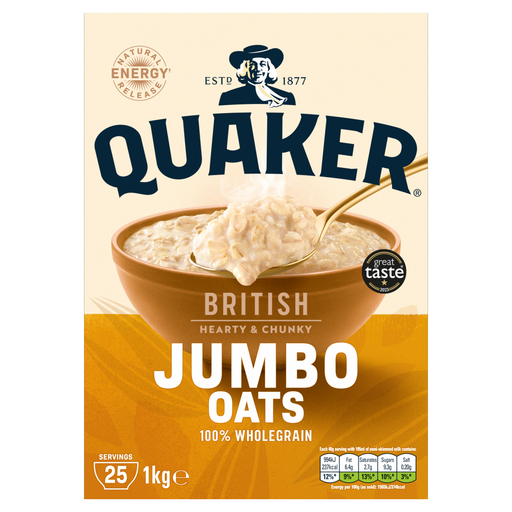
Quaker Jumbo Rolled Oats 1kg
A 1kg jumbo rolled-oat option for porridge, overnight oats or baking.
The pack format is a smaller bulk commitment than a multi-kilogram purchase.
Check the current allergen label, particularly if wheat avoidance is required.
Joybuy
 No image available
Morrisons Free From Gluten Free Oats 1kg
A 1kg oat option for buyers who need a specifically gluten-free labelled product for breakfast or baking.
The 1kg size is suited to shoppers who prefer to assess household use before ordering multiple packs.
Read the current pack label for ingredients, allergen information and storage guidance.
Joybuy
 No image available
Scotts Porage Oats Original Porridge Oats 1kg
A 1kg plain porridge-oat format for regular household breakfasts.
The listing identifies this as original porridge oats in a pantry-sized pack.
Check the current label if wheat or barley warnings affect your choice.
Joybuy
Frequently asked questions
What counts as “high fibre” on a UK porridge-oat label?
A food may use a “high fibre” claim only when it contains at least 6g of fibre per 100g or 3g per 100 kcal. This threshold is set out in the retained nutrition-and-health-claims rules referenced by GOV.UK guidance. Compare nutrition panels per 100g when choosing between oat bran, rolled oats and jumbo oats.
Are ordinary rolled oats high enough in fibre for bulk buying?
They can be. The plain-oat examples compared here list 8.1g to 9.1g of fibre per 100g, while oat bran is more fibre-dense. Choose plain oats where their texture and versatility matter more to the household than maximising fibre per gram.
How should I store a large bag or multipack of oats?
Keep oats cool, dry and away from strong odours, using a sealed or airtight container after opening where the pack advises it. Mornflake states that its creamy porridge oats keep for around 12 months when stored sealed in a cool, dry place, while its Original Oatbran listing advises use within two months after opening and by the best-before date. Follow the specific product label where it differs.
Are porridge oats automatically gluten-free?
No. GOV.UK allergen guidance includes oats among cereals containing gluten for allergen-information purposes. If you need a gluten-free product, choose one specifically labelled gluten-free; Food Standards Agency material states that food labelled gluten-free must contain no more than 20mg/kg gluten. Also check for product-specific wheat or barley warnings.


