Hosts serving both dairy and dairy-free foods
An oat drink for cereal, tea or coffee can sit alongside dairy milk, but give it a clearly identified place and separate pouring equipment.


For cereal and everyday drinks, start with an explicitly dairy-free original oat drink; choose a barista variant if foamed coffee matters, or a no-sugars variant if guests want that option. For anyone with a milk allergy or a gluten-, wheat- or oat-related restriction, check the exact carton’s suitability statements and keep serving equipment separate from dairy foods.
An oat drink for cereal, tea or coffee can sit alongside dairy milk, but give it a clearly identified place and separate pouring equipment.
Check the exact carton’s allergen and suitability statements with the guest in mind. Marks & Spencer describes its Plant Kitchen Whole Oat Drink as vegan but also marks it unsuitable for people with a milk allergy.
A barista oat drink may suit foamed coffee. If a guest also has a gluten-, wheat- or oat-related restriction, check that particular product’s statements before putting it out.
Start with guests’ dietary requirements, then decide whether one general-purpose carton covers the drinks and food you plan to serve.
| Priority | What to check | Your needs |
|---|---|---|
| Milk allergy and serving | Read the exact carton’s milk-allergy suitability statement, not just its vegan or dairy-free description. Keep the jug and utensils separate from dairy milk and toppings. | I need a dairy-free choice that the intended guest can use, without shared pourers or spoons bringing dairy into it. |
| Gluten, wheat and oats | Check the carton for a gluten-free claim and any coeliac or wheat-allergy warning. The Food Standards Agency notes that oats remain an allergen even in a gluten-free product. | If a guest has a coeliac, wheat-related or oat-allergy requirement, I need to check that specific drink rather than assume all oat drinks are interchangeable. |
| Storage and everyday uses | Check whether the carton can be stored at room temperature before opening and follow its instructions afterwards. Match its stated uses to cereal, tea, coffee or cooking. | I would rather put out one suitable drink for several buffet uses than buy a coffee-focused carton I do not need. |
| No-sugars option | Check the named variant and its nutrition panel rather than treating every original oat drink as sugar-free. Sainsbury’s lists less than 0.1 g sugars per 100 g for its Alpro Oat No Sugars product. | Some guests may want a separately labelled no-sugars choice; I can check the pack I buy before describing it that way. |
| Foamed coffee | Look for a barista product described for steaming or foam if you plan to make lattes or cappuccinos. Check its allergen statements independently of its coffee use. | For a latte station, I want a drink intended for foaming. For cereal and ordinary hot drinks, that feature may not matter. |
Marks & Spencer labels its Plant Kitchen Whole Oat Drink vegan while also stating that it is unsuitable for people with a milk allergy. A plant-based description cannot settle an individual guest’s allergy question.
Ask about the guest’s requirements, check the exact carton and use separate serving equipment.
Gluten-free status varies by product. Marks & Spencer marks its Only 3 Ingredients Oat Drink unsuitable for coeliacs and people with a wheat allergy; a gluten-free claim does not remove oat-allergy considerations.
Check the particular carton’s gluten-free claim and its coeliac, wheat and oat statements against the guest’s requirements.
Barista products are positioned for coffee preparation, while original oat drinks are also described for uses such as cereal and everyday drinks.
Choose a barista variant when you plan to make foamed coffee; otherwise match an original or no-sugars variant to the foods and drinks being served.
The carton you serve carries the product-specific ingredients, suitability statements and storage instructions needed for the final serving decision.
Read it before opening, including any “not suitable for” warning, and follow its storage and date instructions.
These examples show why the variant matters: coffee use, fortification and allergen statements can differ within the oat-drink category.
Oatly describes its UK Original Oat Drink for coffee, tea, cooking and baking, with room-temperature storage before opening.
Alpro Original, No Sugars and Barista oat drinks address different buffet uses rather than sharing one set of product claims.
Minor Figures positions its Barista Oat for lattes, cappuccinos and other coffee preparation.
Tesco’s oat-drink category includes own-label products and named brands, with different variants to compare for buffet use.
Sainsbury’s listings distinguish Alpro Original, No Sugars and Barista oat drinks.
M&S lists oat drinks with different ingredient lists, fortification and suitability statements.
These cartons cover general-purpose, no-sugars-named and barista options for a buffet. Match the intended use first, then check the physical pack for each guest’s dietary requirements.
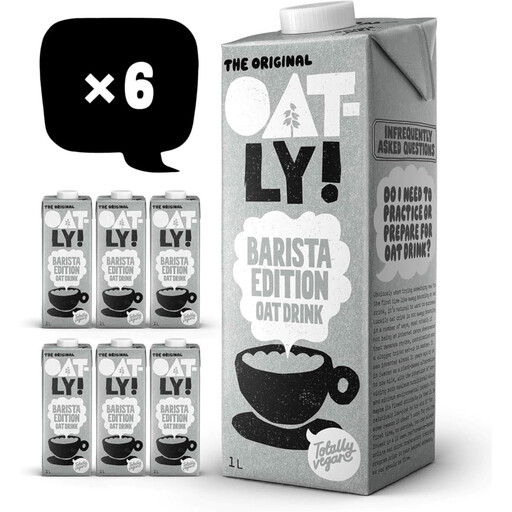 Image unavailable
A barista option for a buffet with foamed coffee; its product description also lists cereal, smoothies, baking and cooking uses. The pack contains six 1-litre cartons. Check the carton’s allergen and storage instructions before serving.
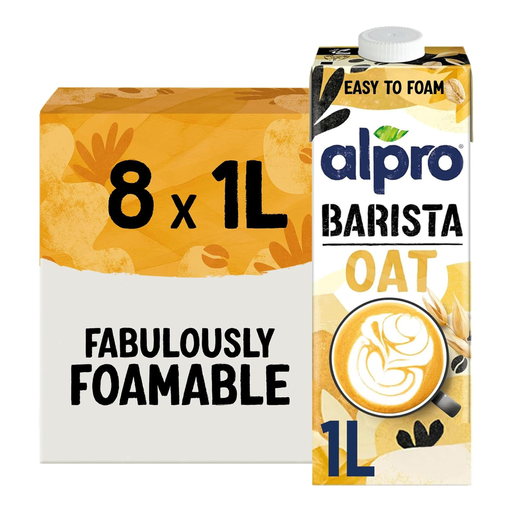 Image unavailable
This eight-carton long-life pack is described for foamed coffee, including lattes and cappuccinos. Check the exact carton for gluten-, wheat-, oat- and milk-allergy requirements before putting it at the coffee station.
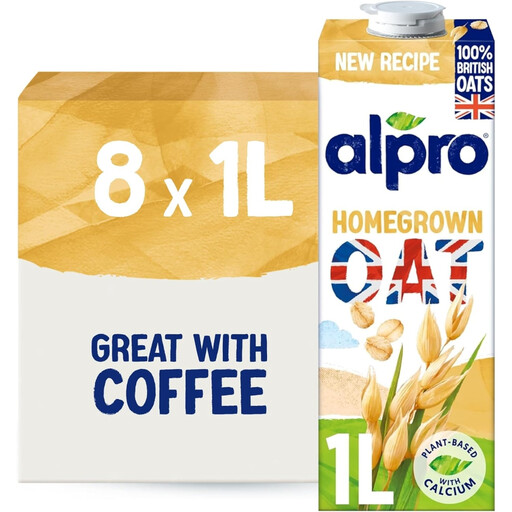 Image unavailable
A general-purpose option described for cereal, smoothies and hot drinks, supplied as eight 1-litre long-life cartons. Its product description specifies cool, dry storage before opening; follow the carton’s instructions after opening and check its allergen statements.
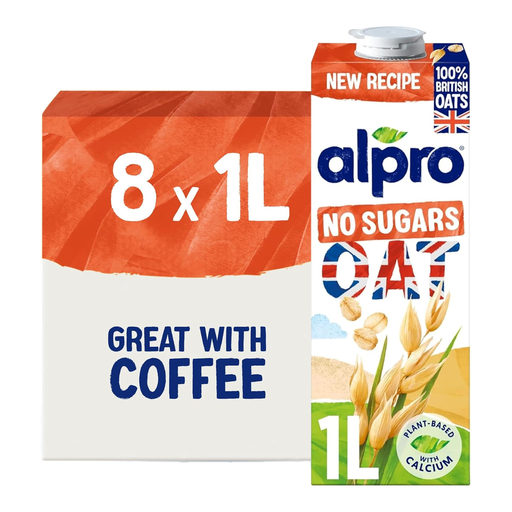 Image unavailable
The named No Sugars variant comes in eight 1-litre long-life cartons and is described for cereal, smoothies, tea and coffee. Check the physical carton’s nutrition panel before describing its sugar content to guests, as well as its allergen statements.
 Image unavailable
This six-carton barista product is described for steaming and frothing, as well as tea, hot chocolate, baking and cooking. Check the pack’s unopened storage instructions when planning ahead, and read its allergen statements before serving.
Not automatically. Check the exact product’s milk-allergy suitability statement and avoid dairy cross-contact when serving. Marks & Spencer describes its Plant Kitchen Whole Oat Drink as vegan but marks it unsuitable for people with a milk allergy.
Check that the particular drink is labelled gluten-free and suitable for the guest; the word “oat” alone does not establish that. The Food Standards Agency defines gluten-free as no more than 20 mg/kg gluten as sold and notes that oats remain an allergen even in a gluten-free product. Also check any separate wheat- or oat-allergy requirement.
Use a clearly labelled carton or separate jug, with its own spoon, pourer or frother away from dairy milk, cream and toppings. Check the product with guests who have allergy requirements before serving it.
It can be if the particular carton permits room-temperature storage before opening. Oatly says this applies to its Original Oat Drink; by contrast, Marks & Spencer instructs shoppers to refrigerate its Only 3 Ingredients Oat Drink at 0°C to +5°C. Follow the storage directions on the pack you buy.
Choose one if you plan to make foamed drinks such as lattes or cappuccinos. Alpro and Minor Figures describe their barista products for that use, while Tesco describes Alpro Original for coffee alongside cereal, smoothies and cooking. A barista label does not replace an allergen check.