For a canteen serving mainly tea, cereal and general lunch drinks, start with an everyday oat drink and test its flavour in the drinks staff actually make. Choose a barista formulation when hand-made coffee needs foam; consider a machine-specific product only after confirming compatibility with the automated equipment. Before service, check the exact carton’s allergen statement, storage instructions and post-opening life.
Who is choosing?
The useful starting point is how the canteen serves oat drink, not the word “mild” on its own.
Buyers covering several lunch-time uses
If one carton will go into tea, coffee and cereal, compare flavour descriptions in those uses, then check its storage format and allergen information. Decide whether fortification matters to the selection rather than assuming all everyday drinks have the same formulation.
Teams making barista-style coffee
For lattes or cappuccinos, test a coffee-formulated drink with the canteen’s preparation method. An automated machine is a separate compatibility decision: Oatly markets Baristamatic for that use, but the machine operator should confirm what the equipment accepts.
Managers handling allergen information
Keep the information for the exact carton being served. Food Standards Agency guidance identifies oats among cereals containing gluten in the 14 declarable allergen groups; a vegan description or a gluten-free label does not replace a product-specific allergy check.
What should a canteen check?
Start with the drinks and food actually served, then check whether the chosen carton fits the preparation method and daily turnover.
| Priority | What to check | Your needs |
|---|
| Flavour and uses |
Look for an exact product’s neutral or subtle-flavour description. Try it separately in the canteen’s tea, coffee and cereal; brand descriptions are not cross-brand taste tests. |
I want one carton that does not dominate the drinks and cereal served at lunch. |
| Coffee preparation |
For hand-made coffee, test mixing and foam with the actual equipment. For an automated machine, confirm permitted alternatives, product compatibility and cleaning instructions with its operator. |
If we make lattes, foam matters; if a machine dispenses the drink, compatibility matters too. |
| Allergen information |
Read the current ingredient and allergy statements for the exact variant. Check gluten-free claims and any stated exclusions for coeliac disease, wheat allergy or milk allergy separately. |
Staff need accurate information about the oat drink in their cup, not an assumption based on another carton. |
| Storage and turnover |
Check unopened storage conditions, refrigeration after opening and the carton’s own use-by-opening instructions. Match carton size to likely daily use. |
Our fridge space and lunch-time demand need to accommodate an opened carton without relying on another product’s storage period. |
| Ingredients and fortification |
Compare ingredient lists and nutrition information on the exact cartons. M&S describes its Only 3 Ingredients drink as unfortified, while Minor Figures describes Everyday Oat as fortified. |
I may prefer a short ingredient list or want fortification considered, but these are different checks from whether the drink tastes mild. |
Common buying mistakes
-
Treating “mild” as a comparable flavour grade
Oatly’s neutral-taste and Minor Figures’ subtle-sweetness descriptions come from the manufacturers. They do not establish which carton staff will prefer in tea, coffee or cereal.
Shortlist by the stated flavour, then run a small tasting trial in each intended use before ordering for regular service.
-
Buying a barista carton for every use
Coffee-focused formulations serve a different purpose from a simple everyday drink. For example, M&S lists oils, protein and other functional ingredients in its Barista Oat Drink, while its Only 3 Ingredients drink contains water, oats and sea salt.
Decide whether the canteen actually needs foam, then compare the exact ingredient lists and nutrition panels.
-
Assuming oat drinks have interchangeable allergy advice
A gluten-free claim does not remove the need to identify oats, and suitability statements differ between products. M&S labels its Only 3 Ingredients drink unsuitable for coeliacs and people with a wheat allergy; its Barista Oat Drink is labelled unsuitable for people with a milk allergy.
Maintain information for the carton currently in use and avoid making suitability claims beyond that product’s label.
-
Overlooking instructions after opening
M&S specifies three days after opening for its chilled Only 3 Ingredients drink and five days for its Barista Oat Drink. Neither period should be applied to another variant.
Check each label, date opened cartons and plan refrigeration and stock rotation around expected use.
Low lunch-time demand can leave an opened carton unused when its stated consumption period ends.
Relevant brand ranges
These product-line examples illustrate different selection checks; a brand name alone does not establish mildness or allergy suitability.
Oatly
Its Barista Edition is positioned for prepared hot drinks, while Baristamatic is marketed for automated coffee machines.
- Oatly describes Barista Edition as neutral-tasting and micro-foamable in coffee, tea and hot chocolate.
- Baristamatic’s machine and sedimentation claims do not establish compatibility with every workplace machine.
Minor Figures
Everyday Oat is presented for tea and cereal as well as other drinks; Barista Oat is positioned around coffee.
- Minor Figures labels Everyday Oat gluten free and fortified, and describes Barista Oat as having subtle oat sweetness.
- Its flavour and foam descriptions do not compare mildness independently across brands.
M&S
Its Only 3 Ingredients Oat Drink and Barista Oat Drink illustrate a short ingredient list versus a coffee-focused formulation.
- The Only 3 Ingredients drink lists water, oats and sea salt.
- That drink is unfortified, requires chilled storage and carries exclusions for coeliacs and people with a wheat allergy. M&S labels its Barista Oat Drink unsuitable for people with a milk allergy.
Alpro
Alpro describes British-oat sourcing for its UK oat-drink range.
- Alpro says its UK oat drinks use British oats.
- Sourcing does not establish an individual carton’s flavour, gluten status, allergy suitability or coffee performance; check the variant.
Joybuy oat drink options
These options include everyday cartons for mixed lunch-time uses and barista cartons for hand-made coffee. Compare each variant with the canteen’s drinks, allergen requirements and carton turnover; this list does not establish a mildest flavour.
 Image unavailable
Oatly Long Life Barista Milk 6 x 1 L
A barista option to trial when the canteen makes hot drinks by hand. The listing describes a mild flavour and uses in coffee and cereal; test both in service rather than treating that description as a taste comparison. Check the carton’s allergen and after-opening instructions.
View on Joybuy
 Image unavailable
Alpro Oat Original Long Life Drink 8 x 1 L
Consider this everyday variant when one carton needs to serve cereal and hot drinks. Its listing describes a subtle flavour, which is worth testing in the canteen’s tea and coffee. Check the exact carton’s allergen statement and storage instructions.
View on Joybuy
 Image unavailable
Alpro Oat No Sugars Long Life Drink 8 x 1 L
An everyday variant to consider for tea, coffee and cereal, with the listing describing a subtle oat flavour. Check the exact carton’s sugar and allergen information before using its name or description in canteen information, and trial the flavour in the drinks served.
View on Joybuy
 Image unavailable
Alpro Barista Oat Long Life Drink 8 x 1 L
A coffee-focused option when staff prepare drinks that call for foam. Trial it with the canteen’s equipment and taste it separately before choosing it for tea or cereal. Check the exact carton’s allergen and after-opening instructions.
View on Joybuy
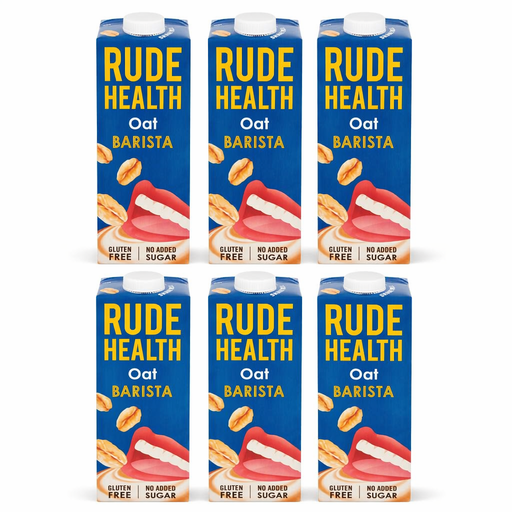 Image unavailable
Rude Health Barista Oat 1 L
A single-carton barista option to trial for coffee service; its listing also mentions cereal. Test the flavour in each intended use rather than assuming it will suit tea or taste mild. Check the exact carton’s allergen and storage statements.
View on Joybuy
Questions about serving oat drink
Does a workplace canteen need to provide oat-drink allergen information?
Food businesses serving food or drink in England, Wales and Northern Ireland must provide allergen information for prepacked and non-prepacked items under Food Standards Agency and GOV.UK guidance. Keep the information tied to the exact oat drink served; oats are included among cereals containing gluten in the 14 declarable allergen groups.
Is every oat drink suitable for someone with coeliac disease or a wheat allergy?
No. Check the exact label and its suitability statement. Food Standards Agency information defines “gluten-free” as no more than 20 mg/kg gluten and says oats must still be emphasised as an allergen; M&S labels its Only 3 Ingredients Oat Drink unsuitable for coeliacs and people with a wheat allergy.
Does a vegan oat drink automatically suit someone with a milk allergy?
No. Check the product-specific allergy statement rather than relying on “vegan”: M&S describes its Barista Oat Drink as vegan but labels it unsuitable for people with a milk allergy.
How long can a canteen use an opened carton?
Follow that carton’s storage and consumption instructions. M&S specifies refrigeration at 0°C to +5°C and consumption within three days of opening for its Only 3 Ingredients Oat Drink; its Barista Oat Drink specifies refrigeration after opening and consumption within five days. Do not transfer either period to another product.


