Teams stocking routine drinks
Care-home managers and caterers buying cartons for breakfast, cereal and drinks need to plan both unopened storage and the handling of each carton after opening.


Choose a larger carton or case of oat drink only when its serving use, expected turnover and storage instructions fit the home. Compare fortification for routine menus, consider a no-sugars drink only where it fits an individual plan, and use barista products where hot-drink preparation calls for them. The Care Quality Commission says care providers must assess residents’ nutritional needs and provide food and drink that meet them; a bulk format does not replace that assessment.
Care-home managers and caterers buying cartons for breakfast, cereal and drinks need to plan both unopened storage and the handling of each carton after opening.
A resident’s documented needs determine whether a particular oat drink belongs on their menu. The Care Quality Commission requires providers to assess nutritional needs and provide food and drink that meet them.
Where staff make foamed coffees or other hot drinks, a barista formulation may serve that task. Carton size and case quantity still need to match storage space and expected use.
Start with the residents and serving occasions, then compare exact cartons and the quantity the home can use within their storage instructions.
| Priority | What to check | Your needs |
|---|---|---|
| Resident suitability | Compare the exact drink’s declared energy, protein and ingredients with the relevant care plan. Check whether specialist dietary or texture requirements apply. | I need a drink that fits the people being served, rather than one house carton chosen solely for convenience. The Care Quality Commission requires food and drink to meet assessed nutritional needs. |
| Fortification | Read the label for added calcium, iodine and vitamins; do not assume all oat drinks contain them. Tesco lists added micronutrients for its Long Life Oat Original, while M&S identifies its Only 3 Ingredients Oat Drink as unfortified. | If oat drink appears regularly on our menu, I want to compare what each named product declares before choosing a routine carton. |
| No-sugars choice | Check the current sugars declaration for the exact product and whether it fits an individual dietary plan. Alpro UK declares 0.0g sugars per 100ml for Alpro Oat No Sugars. | A resident’s plan may call for a no-sugars option, but I would not substitute one without considering their other nutritional requirements. |
| Allergens and gluten | Check the current carton and the resident’s documented requirements. Product-specific warnings and gluten-free claims must not be carried across to other oat drinks. | Before a shared drink reaches the dining room, I need to know which residents can be served that exact variant. |
| Pack and storage | Confirm carton count, unopened storage instructions, refrigeration after opening and the stated use period. Minor Figures lists its Barista Oat as a 6 x 1L case. | A case makes sense for us only if we have room for it and can use opened cartons within their own label instructions. |
| Hot-drink service | Decide whether staff need a formulation intended to froth, then check its nutrition and allergen details separately. Oatly describes its named Barista Edition as micro-foamable. | We prepare foamed drinks often enough to consider a barista carton, but that does not make it the default drink for every resident. |
Oat drinks differ in their declared nutrition and fortification. A general substitution may not fit a resident’s assessed needs.
Compare the exact carton with the menu and individual care plan; seek appropriate dietetic input for specialist dietary requirements.
Buying several cartons does not extend the period allowed after each one is opened.
Estimate use at each serving point, mark opened cartons and follow the refrigeration and use instructions on each product.
Cartons left open beyond their stated period may have to be discarded.
Named products carry different gluten-related information and precautionary allergen statements; a vegan description does not settle those questions.
Check the current pack for the exact variant against each resident’s documented allergy-management requirements.
A barista formulation addresses hot-drink preparation, not whether it meets every resident’s nutritional needs.
Use the serving task to shortlist cartons, then check the chosen product’s nutrition and allergens before adding it to a routine menu.
These named product lines illustrate label and format differences; a brand name alone does not establish suitability for a resident.
Tesco lists a Long Life Oat Original carton for routine stock planning.
Alpro UK identifies Original and No Sugars as distinct oat-drink products.
Minor Figures positions its Barista Oat around coffee preparation.
M&S lists both an Only 3 Ingredients Oat Drink and a separate Barista Oat Drink.
Oatly describes a 1.5L Barista Edition intended for hot beverages.
These oat drinks cover case-format barista options and no-sugars options for care-home purchasing. Check each carton against the intended serving use and residents’ plans.
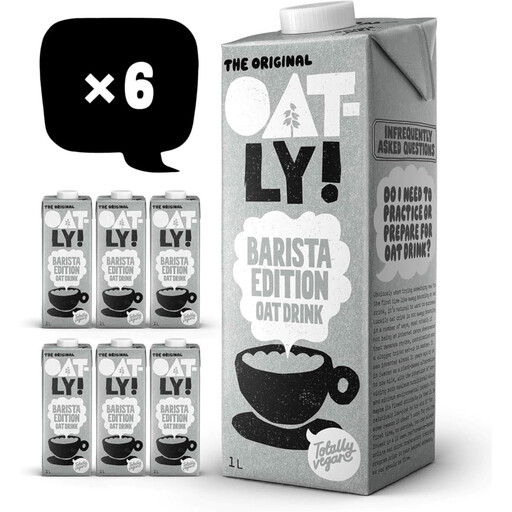 No image available
Consider this 6 x 1L long-life barista pack for planned hot-drink service. Check storage instructions, the current allergen label and whether the drink fits each intended resident’s plan.
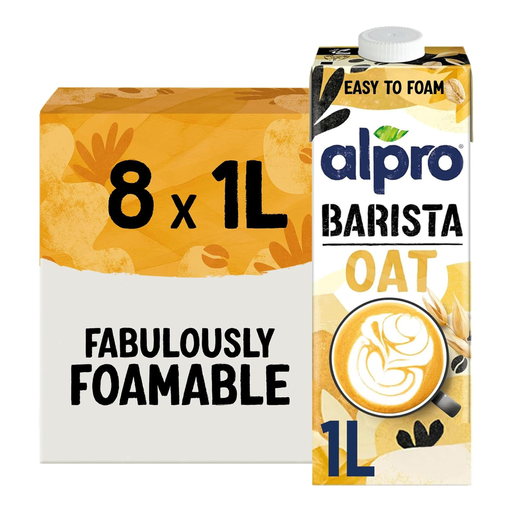 No image available
The 8 x 1L long-life pack is an option for a home planning barista oat-drink use across several cartons. Check expected turnover and the current pack’s gluten and allergen information before serving.
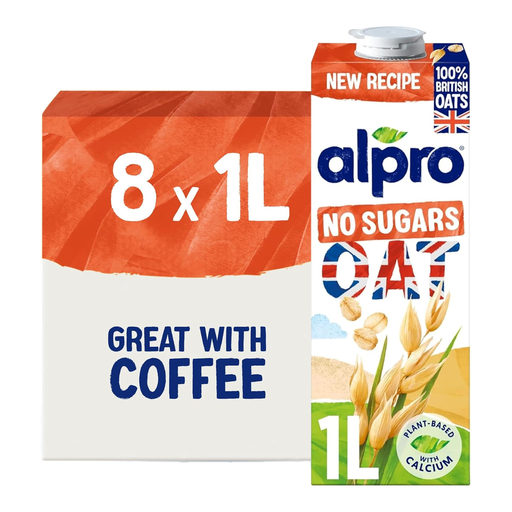 No image available
This 8 x 1L long-life pack is relevant where a no-sugars oat drink fits an individual plan. Check the current carton’s sugars declaration before relying on that choice, as well as its allergens and other nutrition information.
 No image available
This 6 x 1L barista oat-drink pack can be considered for planned hot-drink service. Read the exact carton’s nutrition and ingredient declarations rather than assuming it has the same fortification as another Oatly variant.
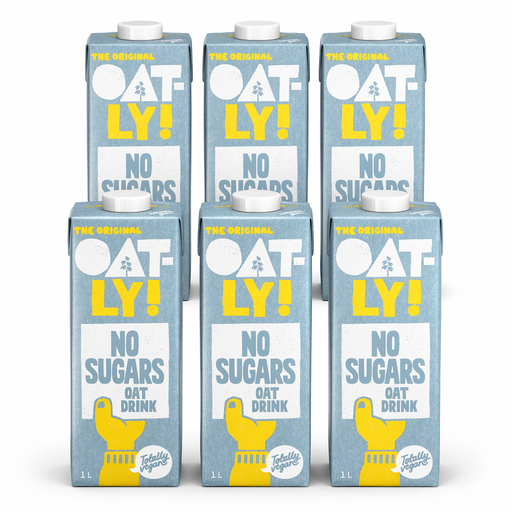 No image available
The named 1L no-sugars drink may be relevant to an individual dietary plan. Confirm the number of cartons before ordering it as a case, and check the current nutrition and allergen label for those being served.
Do not make that the default assumption. The Care Quality Commission requires providers to assess nutritional needs and provide food and drink that meet them, so check the proposed drink against the relevant residents’ plans and preferences.
No. Tesco Groceries lists added micronutrients for its Long Life Oat Original, whereas M&S calls its Only 3 Ingredients Oat Drink unfortified. Compare the declarations on the exact cartons being considered for routine use.
No. Alpro UK declares 0.0g sugars per 100ml for its named No Sugars drink, but that figure alone cannot determine whether it fits a resident’s assessed nutritional or specialist dietary requirements.
Check the current label of the exact variant against the resident’s documented requirements. M&S says its named three-ingredient and barista oat drinks are not suitable for coeliacs, while Minor Figures describes its named Barista Oat as gluten free; neither statement applies to every oat drink.
Match carton quantity to storage space and expected use after opening. For example, Tesco’s listed Long Life Oat Original requires refrigeration and use within five days of opening; follow the instructions on the particular cartons the home buys.