Hosts planning pasta and coffee
Work out how much oat drink the meal and hot drinks will use before choosing cartons. A coffee-focused drink may suit one part of the menu, but its pack size and storage instructions still matter.


Plan around the amount your recipes and drinks need, rather than treating four pints as a required oat-drink pack size: Tesco lists four pints as 2.272L, while the oat drinks in its reviewed listings are mainly 1L cartons. Choose a barista-labelled drink if after-dinner coffee and foam matter; for other uses, check the exact carton’s ingredients, fortification, allergen wording and storage instructions. Three 1L cartons exceed 2.272L, so consider whether you will use the remainder.
Work out how much oat drink the meal and hot drinks will use before choosing cartons. A coffee-focused drink may suit one part of the menu, but its pack size and storage instructions still matter.
If cappuccinos or lattes are planned, look for a product with a stated coffee or foaming use. Check the ingredients and allergen statement on that product rather than relying on its barista label alone.
Check the current carton for a gluten-free claim and coeliac suitability. Product wording differs: Minor Figures calls its Barista Oat gluten free, while the M&S oat drinks reviewed here say they are not suitable for coeliacs.
Start with the quantity your menu calls for, then decide whether coffee use, ingredients or a guest’s dietary requirements narrow the choice.
| Priority | What to check | Your needs |
|---|---|---|
| Quantity | Convert the recipe total to litres. Tesco lists four pints as 2.272L; three 1L cartons provide 3L. Check each carton’s instructions for use after opening. | I need enough for the food and drinks without opening more cartons than the evening calls for. |
| Coffee use | Look for a product-specific statement about foaming or use in hot coffee. Oatly describes its Barista Edition as micro-foamable; Minor Figures describes dense foam for its Barista Oat. | If cappuccinos are on the menu, I want a drink intended for that use, not just one labelled as oat milk. |
| Ingredients and fortification | Read the ingredients and nutrition panel on the exact carton. M&S says its three-ingredient oat drink is not fortified, while its Barista Oat lists calcium, iodine, vitamin B12 and vitamin D. | For regular use as a dairy alternative, I want to compare fortification as well as fat, saturates, sugar and salt. The NHS advises checking those nutrition values. |
| Gluten and allergens | Check the finished product’s gluten-free claim and allergen statement. The Food Standards Agency says oats remain an allergen even when a food is labelled gluten free. | A guest’s coeliac requirement or oat allergy changes which carton I can serve; an oat-based or vegan label does not settle either question. |
| Storage | Check whether the carton needs chilling before opening and how long it can be kept once opened. M&S says to consume its three-ingredient chilled oat drink within three days of opening. | I may use oat drink again after dinner, so the instructions on each carton affect how much I open at once. |
Tesco’s four-pint listing refers to 2.272L of dairy milk; its reviewed oat-drink listings include 1L cartons. A pack-size search alone may not help you choose the drink needed for the menu.
Add up the quantities for cooking and drinks, then choose cartons that cover that amount while accounting for use after opening.
Coffee-performance descriptions are product-specific. Oatly says its Barista Edition is micro-foamable, and Minor Figures describes dense foam for its Barista Oat; those claims do not describe every standard oat drink.
If lattes or cappuccinos matter, check the coffee-use description on the exact product. Otherwise, give more weight to the ingredients, quantity and other uses you need.
Minor Figures calls its Barista Oat gluten free, while the reviewed M&S oat drinks are labelled not suitable for coeliacs. The Food Standards Agency also notes that oats remain an allergen when a food is gluten free.
For a guest with coeliac disease, check the current product’s gluten-free and suitability wording. Do not use a gluten-free claim as clearance for an oat allergy.
M&S lists water, oats and sea salt in its three-ingredient drink and states that it is not fortified. Its Barista Oat lists added calcium, iodine, vitamin B12 and vitamin D.
If oat drink will also be a regular dairy alternative, compare the exact cartons’ fortification and nutrition labels rather than judging by ingredient-list length.
These examples show differences between specific product lines; a brand name alone does not establish the ingredients, allergens or uses of every carton.
Oatly offers Barista Edition in several sizes, including 1L, for menus involving coffee as well as cooking.
Minor Figures describes its Barista Oat for coffee use and lists a 6 × 1L case.
Tesco lists Alpro Oat Original Long Life among its 1L oat drinks.
Tesco’s oat-drink listings include 1L cartons, giving shoppers pack sizes to compare with a four-pint quantity target.
M&S lists both a three-ingredient oat drink and a 1L Barista Oat Drink, with different ingredients and fortification.
These options include barista-labelled oat drinks for a coffee-led menu and an original oat drink for more general use. Compare their carton counts with the amount needed for dinner; the product label remains the place to check ingredients, allergens and instructions.
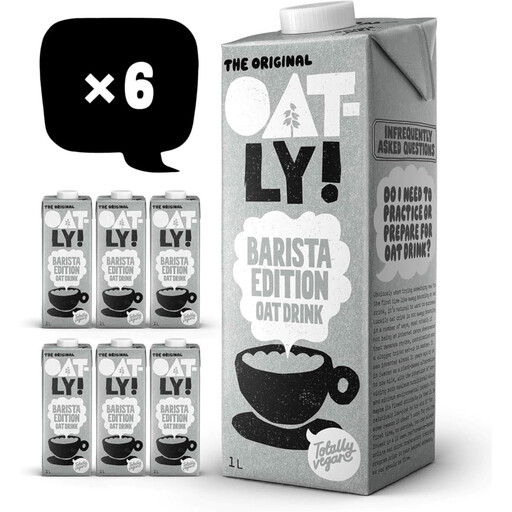 No image available
A barista-labelled option to consider when coffee is part of the menu. The six 1L cartons provide considerably more than the 2.272L four-pint target; check the current cartons’ allergens and storage instructions before choosing the bundle.
 No image available
For a coffee-led menu, this barista-labelled bundle contains eight 1L cartons. That is well above a four-pint quantity target, so consider how much you will use and check the current pack’s allergen and opening instructions.
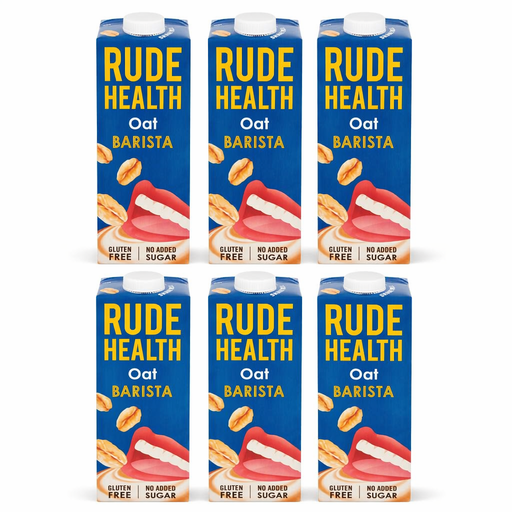 No image available
The 1L carton lets you build towards the meal’s required quantity in smaller units than a multipack. If serving it to a guest with coeliac disease, check the finished drink’s current gluten-free and suitability wording rather than relying on an ingredient description.
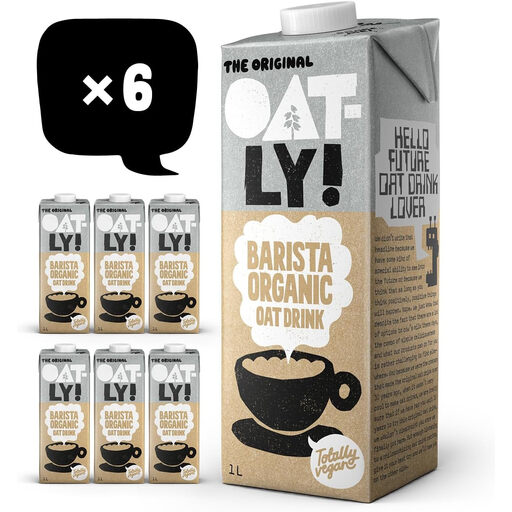 No image available
This organic barista-labelled variant comes as six 1L cartons, rather than the 2.272L represented by four pints. Treat it as a distinct Oatly variant when checking its coffee-use description, allergen wording and storage instructions.
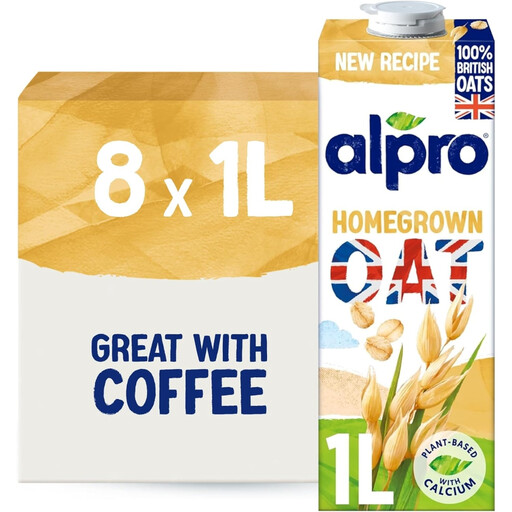 No image available
This original oat-drink variant is an option to assess for general use rather than choosing by a barista label. Its eight 1L cartons exceed the four-pint quantity target; check the current pack for ingredients, allergens and suitability for the recipes you plan.
No. Tesco lists four pints as 2.272L. Three 1L cartons provide 3L, so measure what the menu needs and check how you will use any remainder within each carton’s instructions after opening.
Look for a barista drink with a stated coffee use. Oatly describes its Barista Edition as micro-foamable and resistant to separation in coffee, while Minor Figures describes dense foam for its Barista Oat. These are the brands’ descriptions of their own products, not a comparison test.
No. Check the specific carton: Minor Figures calls its Barista Oat gluten free, whereas the reviewed M&S oat drinks say they are not suitable for coeliacs. The Food Standards Agency defines a gluten-free claim as no more than 20mg/kg gluten in food as sold; oats remain an allergen in their own right.
No. M&S says its three-ingredient oat drink is not fortified, while its Barista Oat lists calcium, iodine, vitamin B12 and vitamin D. If you also use oat drink regularly as a dairy alternative, compare the exact cartons’ nutrition and fortification information; the NHS advises checking fat, saturates, salt and sugar on labels.
Follow each product’s storage instructions rather than applying one carton’s timeframe to another. M&S says to keep its three-ingredient chilled oat drink at 0°C to +5°C and consume it within three days once opened, so account for when you will use any oat drink left after the meal.